Not all oil giants are prospering from the Iran war

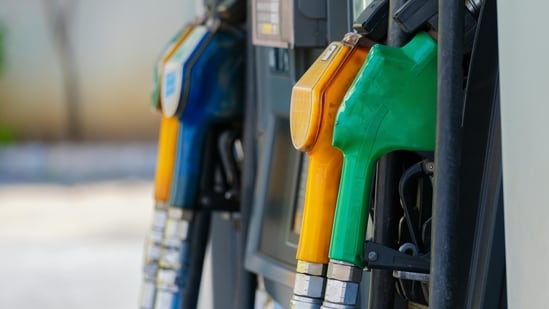
In volatile markets, traders can make huge profits exploiting price discrepancies. (PEXEL)


The third gulf war should, in theory, be a huge blessing for big oil. In January most analysts had expected Brent crude, the global oil-price benchmark, to average $60 a barrel in 2026. It ended the first quarter at $118; refined products have risen faster still. With most Gulf oil trapped behind the Strait of Hormuz, exports from America, Africa and Brazil are up. Western majors should therefore be collecting fatter margins on every barrel—and selling more of them, too.

In volatile markets, traders can make huge profits exploiting price discrepancies. (PEXEL)

Since the war began the share price of Shell, a British giant, has risen by 4%; those of TotalEnergies, BP and Eni, its big European rivals, have soared by 15–17%. But Chevron and ExxonMobil, America’s twin colossi, are down by 1% and 3%, respectively. The war’s effect on Western majors, it turns out, is uneven. First-quarter results, released in recent days, point to three reasons: hedging positions, trading gains and the location of production assets.

In the three months to March 31st Chevron and Exxon reported net incomes of $2.2bn and $4.2bn—down by 37% and 46%, respectively, from a year before. These sharp declines are largely accounting illusions. Oil-and-gas sales are typically agreed weeks or months before delivery. To guard against price swings, the majors buy hedges—contracts that pay if oil prices fall in the interim. When prices soar, the hedges lose value, causing paper losses. These amounted to $2.9bn for Chevron and $3.9bn for Exxon in the quarter.

Those markdowns will be offset by higher revenue when the sales are completed. But American rules require firms to recognise hedging losses immediately, not upon delivery. Moreover, American producers typically buy more price protection than European rivals. Exxon and Chevron’s first-quarter hedging losses were unusually large, but if prices keep rising hedging will weigh on their earnings more than those of their competitors.

At the same time, European firms are posting trading profits that still elude American ones. Because they have been unable to rely as much on domestic production, Europe’s majors have spent decades building large trading desks that employ hundreds of people. These desks don’t just hedge physical cargoes; they buy and sell crude, refined products and gas to profit from price differences across regions and over time. BP, for example, trades around 12m barrels of oil per day, nearly 11 times its production.

In volatile markets, traders can make huge profits exploiting price discrepancies. The segment that hosts BP’s trading unit earned $2.2bn in the first quarter, up from almost nothing a year before. The division housing Total’s made $1.6bn, a fivefold increase on the same period in 2025.

In recent years American majors have tried to catch up. The Gulf crisis shows how far Chevron has come, notes Kim Fustier of HSBC, a bank. It is increasingly routing its own production through its trading arm, rather than relying on third-party merchants, to place barrels where they can earn the highest margins. The firm expects to handle over 40% of its crude in-house next quarter—double last year’s share—helping to keep its refineries in Asia, where fuel is scarcest, over 80% utilised.

Exxon appears to be lagging behind. To make matters worse, its operations are being hit particularly hard by the Hormuz closure. Around a fifth of its oil-and-gas production is located in the Middle East, one of the highest exposures among the majors (see chart). Exxon pumped the equivalent of 4.6m barrels per day (b/d) over the first quarter, down from 5m in the previous one. If the strait remains shut through June, the company says its output would fall to 4.1m–4.3m b/d. Both Exxon and Chevron say they have no plans to boost investment in America’s shale basins to take advantage of higher prices.

The longer the war continues, the more the majors’ fortunes may diverge. They could widen even further if Donald Trump bans fuel exports, which analysts deem possible if petrol hits $5 a gallon in America. That would deepen the discount of West Texas Intermediate, America’s flagship crude grade, to Brent, and prevent domestic refiners from selling at global prices, cutting American firms’ upstream and downstream profits. Mr Trump, typically a cheerleader for big oil, is getting desperate. American majors are awaiting his next moves with rising dread, baby, dread.


Source link

Leave a Reply

Your email address will not be published. Required fields are marked *