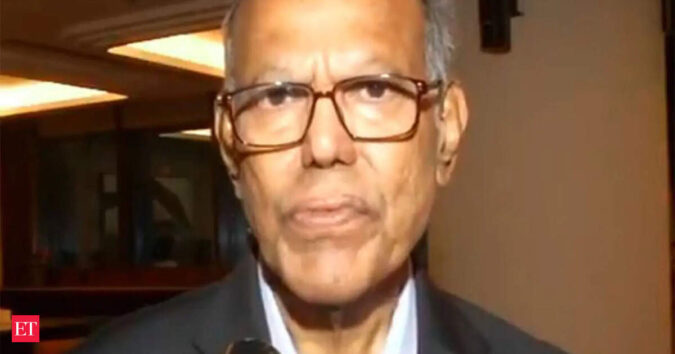
In comments that come days ahead of the second meeting of the rate setting panel for FY27, Subbarao said the monetary policy should be used as a “last resort” to defend the exchange rate.
“RBI may of course tighten monetary policy if it believes that to be justified by inflation concerns,” Subbarao, who served as the RBI governor between 2008 and 2013, said.
Also read | Measures like tax relief, import curbs can shield India from West Asia crisis: Report
“The rupee should be allowed to adjust rather than be rigidly defended because the current pressures reflect a deterioration in India’s external balance. A weaker rupee acts as a natural shock absorber,” former RBI chief told PTI in an interview.
The local currency has been depreciating due to geopolitical uncertainty and the West Asia crisis and touched a lifetime low of 97.15 against the US dollar earlier this month.
According to data compiled from market sources, the rupee has depreciated 5 per cent since the start of the West Asia crisis, around 6.1 per cent since the beginning of the year, and over 10 per cent in one year.Subbarao said stabilising the exchange rate during times of pressure is fundamentally a challenge of managing expectations.
Also read | SC upholds govt retrospective 28% GST levy on online gaming companies
“Exchange-rate crises are ultimately crises of confidence. If investors, importers and households begin to believe the rupee will weaken further, they behave in ways that actually make it weaken further. Exporters delay bringing money back home, importers rush to buy dollars, households move into gold, and investors hedge aggressively,” he said.
“That is why communication becomes as important as intervention.
Policymakers must act decisively, but without appearing panicked or defensive,” he added.
The Monetary Policy Committee has a difficult balancing act with limited room to manoeuvre, Subbarao said, pointing out that lowering interest rates to support growth could aggravate inflation and intensify exchange-rate pressures, while aggressive rate increases could hurt economic activity and impact the GDP growth.
The monetary policy committee of the RBI will meet next week between June 3 and June 5 to decide on the policy rate. This policy becomes important because higher crude oil prices in the international market have led to a rise in retail fuel prices fuelling pressure on the domestic inflation. The panel had unanimously opted for a status quo at the last meeting in April.
So far, the central bank has reduced the repo rate by 1.25 per cent since last year to aid growth, making best use of the space created by softening in inflation. Currently, the repo rate stands at 5.25 per cent.
According to Subbarao, the preferable approach for the RBI at this stage would be to wait and assess whether inflationary pressures become broader through the system, instead of immediately resorting to policy rate hikes.
“A pause in interest rate tightening may be appropriate at this stage because the situation is unusually complex, involving a simultaneous balancing of growth, inflation and exchange-rate stability,” he said.
He added that if inflation starts to harden meaningfully, some actions may become necessary for RBI. “In that case, the tightening could first come through liquidity management rather than outright rate hikes.”