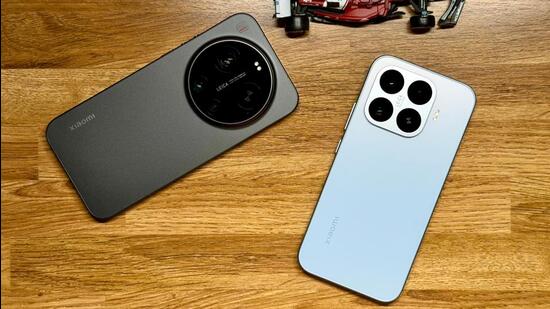
This is as precise as it gets. If the extremely loveable Xiaomi 17 Ultra is understandably too expensive to your budget, and an equally brilliant Xiaomi 17 is perhaps a tad too compact in terms of the display real estate, Xiaomi 17T fits perfectly in a gap many phone makers would otherwise lack the precision to fill. Think of the Xiaomi 17T as an alternate flagship phone, a value flagship or Leica’s photography brilliance with a more restrained monetary outlay.
With price tags of ₹59,999 (12GB RAM and 256GB storage) and ₹64,999 (12GB+ 512GB), the Xiaomi 17T presents a genuine value proposition. This creates a significant gap to the Xiaomi 17 ( ₹89,999) and the Xiaomi 17 Ultra ( ₹1,39,999). It is hard to find a better phone around the ₹60,000 window, than the Xiaomi 17T. What comes to mind? The Motorola Signature with its Pantone certified camera perhaps?. The rather nice looking Vivo X300 FE, but that’s a bit more expensive. You get the point? Choices may look ample at a cursory glance, but that’s hardly the case.
The Xiaomi 17T’s camera is the highlight, retaining fair amount of optical hardware ballpark with the flagship siblings including the Leica Summilux optics, whilst most importantly, not compromising on the Leica image processing algorithms which retains an appreciable warmer realism to photos in a smartphone era otherwise defined by artificial unrealism. As someone who still uses the Xiaomi 17 Ultra for more photos than any other smartphone of this generation, I can confidently say that the Xiaomi 17T very much holds the gravitas for any flagship conversation—the parallels in many photography scenarios, cannot be ignored.
The troika starts with a 50-megapixel wide camera, a 50-megapixel telephoto with 5x optical zoom (and this goes up to a very usable 120x) and a 12-megapixel ultra-wide—the latter may perhaps look like the weakest link in this chain. There are two things the Xiaomi 17T’s camera system does brilliantly for photographers. First, it retains a sense of the moment, with no artificial intelligence boosting to make things the way an algorithm wants them to be, rather than the often lovely messiness of the real world.
Secondly, the telephoto camera is excellent for really zooming in on subjects afar, and that includes rather interestingly, telephoto close-ups. My only observation is that some daytime and outdoor photos tend to be a bit brighter where the shadows should be, something a slight tweak to the processing methodology will solve.
I’ve always liked the welcoming nature of Xiaomi and Leica’s approach, and the camera app remains the start point for that. You’ll want to experiment with different styles and angles, and chances are, you’ll click on something that works. However, I did not notice the AI on or AI off option in the camera interface, as I had appreciated on the 17 Ultra. Low light photos demand your time, because if you frame the shots well, detailing and colour accuracy are this phone’s strongest points for night-time photography.
Beyond the cameras, there seems to be an unmissable theme with the Xiaomi 17T—one of restraint. The specs are underlined by MediaTek’s Dimensity 8500 Ultra chip, though the Motorola Signature with the Qualcomm Snapdragon 8 Gen 5 may have something to say on this. Neither has a superiority claim or the right to call the other inferior, but I’m purely talking about shop floor perceptions that often decide close choices. That restraint also continues with the design.
Credit to Xiaomi for the Violet and Blue colour options alongside a conventional Black, but again, there is little sparkle beyond the colour. A glittery finish for one of these may have brought a bit of excitement with options.
Absolutely no complaints with the overall build and ergonomics. This feels well put together, high quality materials have been used, and the Xiaomi 17T feels more compact than the 6.59-inch screen size would suggest. Speaking of which, this is a rather gorgeous canvas to work with, and one that rated at a peak of 3500 nits brightness, remains very usable even in the outdoor sun. The 6500mAh silicon carbon composition battery is significantly larger than the Motorola Signature’s 5200mAh pack—and the stamina drawn from the optimisation of HyperOS and the hardware means getting through two days of usage with significant camera use.
While it is easy to perceive the Xiaomi 17T as purely a value-oriented flagship Android phone, its versatility and brilliance go much beyond that narrow bucket. Xiaomi has done well to undercut a lot of the other similar propositions from Vivo and Oppo, and that’s not something to be taken lightly. There are no shortcomings as far as overall performance is concerned, and that’s topped off with solid battery stamina as well. For a photography-focused phone, there are no perceptible omissions or rough edges for that experience in particular. If any rivals claim more camera features or greater prowess, they also demand a much higher price.