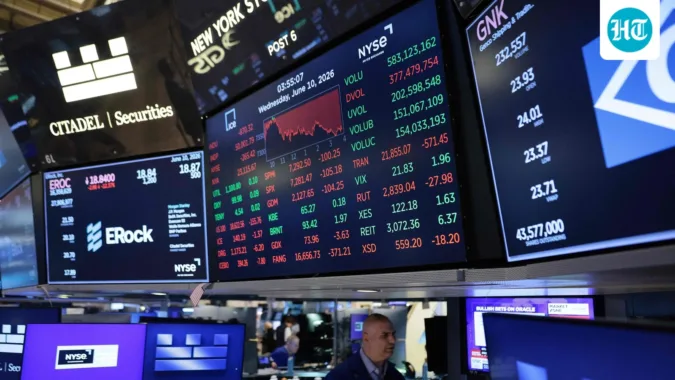
JPMorgan is becoming more bullish on the US stock market. Strategists at JPMorgan Chase & Co. have raised their year-end target for the S&P 500 to 8,000 points, betting that strong corporate earnings and rising artificial intelligence spending can keep stocks moving higher.
The new target was released by a team led by Dubravko Lakos-Bujas, JPMorgan’s chief US equity strategist. The team raised its S&P 500 forecast for the second time in just two months, showing growing confidence in the market.
JPMorgan raises S&P 500 target
JPMorgan had already raised its target to 7,800 from 7,600 in June. The latest 8,000 target means the bank now expects the index to gain about 3% from Friday’s closing level, according to Bloomberg. A survey of 20 strategists by Bloomberg showed an average year-end S&P 500 target of about 7,845 points, or roughly 1% above current levels.
The main reason behind JPMorgan’s bullish call is strong corporate earnings. The bank believes companies are making enough money to support higher stock prices even though market valuations are already high. The latest earnings season has given JPMorgan another reason to be confident. Second-quarter earnings have shown signs that huge AI investments are starting to produce real business demand, the JPMorgan strategists said.
Also read: Mortgage rates today: 30-year rate falls to 6.823% as Fed, inflation and Iran war drive rates
AI spending starts to pay
In simple terms, big technology companies have been spending huge amounts of money on AI data centers, cloud services and other infrastructure. JPMorgan believes this spending is increasingly being turned into actual customer demand and revenue. JPMorgan pointed to stronger cloud growth and growing business backlogs at Alphabet, Amazon and Microsoft as evidence that AI spending is starting to pay off.
JPMorgan strategists said that as these backlogs turn into reported revenue, cloud growth should remain strong. This is important because investors have been asking a major question about the AI boom: Are companies spending too much money on AI without making enough money from it? JPMorgan’s answer, based on current data, is that demand is still strong.
S&P 500 earnings jump
The S&P 500 has also returned to record highs as corporate earnings have jumped sharply. Earnings growth has reached about 32%, one of the strongest increases seen in recent years, according to Bloomberg. That earnings growth is a major part of JPMorgan’s argument. The bank is essentially saying that high stock prices are easier to justify when company profits are also growing rapidly.
JPMorgan expects AI spending to keep increasing. The bank estimates that technology-related spending will make up well over half of the roughly $1.5 trillion in total capital spending expected across S&P 500 companies this year. JPMorgan also expects the share of spending going toward technology and AI to increase further. But there is a major valuation concern hanging over the market: the CAPE ratio, also known as the Shiller price-to-earnings ratio.
CAPE ratio raises concern
Yahoo Finance Executive Editor Brian Sozzi raised the valuation issue during a discussion about JPMorgan’s 8,000 target. Sozzi pointed out that the CAPE ratio is approaching about 44 times, a level close to what was seen during the dot-com bubble in 1999.
Also read: US markets today: Why did stocks struggle? Dow falls as Iran tensions push oil higher
Michael, a panelist on Yahoo Finance’s Opening Bid, said the comparison does not worry him as much because the two markets are driven by different factors. He explained that 1999 was mainly a market driven by expanding valuation multiples, while today’s market is more focused on actual earnings growth. He explained that 1999 was mainly a market driven by expanding valuation multiples, while today’s market is more focused on actual earnings growth.
The discussion also looked at what could cause a longer and deeper market pullback. One possible trigger would be if massive AI investments fail to produce the returns investors currently expect.
Michael said that if these investments do not pay off, the market could face a more prolonged decline. However, he said there are no early signs of that happening yet. One example is Google’s cloud business, which has shown very strong growth. The panel noted that Google reported about 80% growth in its cloud business with margins of around 35%.
AI demand is the key risk
Another panelist, Tom, said the CAPE ratio should not simply be ignored because it is a backward-looking measure. He prefers to focus more on forward earnings, which look at what companies are expected to earn in the future. At the same time, he warned that investors should not assume there is no downside risk just because earnings are currently strong.
The biggest risk, according to Tom, is that expected AI demand may not fully materialize. Much of the current optimism around AI is based on projected earnings growth, cloud revenue and large company backlogs. But a large part of that demand is coming from a relatively small group of major AI companies and other large customers. That creates a concentration risk. If these major AI customers suddenly reduce spending, the companies selling cloud services and AI infrastructure could see slower growth.
Why JPMorgan sees 8,000
This creates the central argument behind JPMorgan’s 8,000 S&P 500 target: valuations may look expensive, but earnings growth is also unusually strong. JPMorgan is therefore betting that profits will matter more than valuation concerns as long as companies continue to deliver strong earnings and AI investments continue producing real demand.
Across Wall Street, the average S&P 500 year-end target is currently around 7,845 points, according to Bloomberg. JPMorgan’s 8,000 target is therefore above the broader strategist average.
Can earnings support valuations?
The bigger question for investors is now whether strong earnings can continue to justify expensive stock valuations. If earnings growth remains close to current levels and AI spending continues to generate revenue, JPMorgan’s 8,000 target becomes easier to understand, according to Yahoo Finance. But if AI spending slows, expected demand fails to appear or companies struggle to turn huge capital investments into profits, the market could face a sharper pullback.
For now, JPMorgan’s message is clear: the S&P 500 may look expensive, but strong earnings and the early returns from AI spending are giving the bank a reason to stay bullish. The debate is therefore no longer simply about whether stocks are expensive. The bigger question is whether earnings growth can stay strong enough to support those high valuations.