The business delegation, led by Canadian Minister of International Trade Maninder Sidhu, will isit Mumbai and Bengaluru from October 12 to 17.
“By matching Canadian expertise in sectors like aerospace, agri-food and clean technology with India’s growing demand, we will diversify our trade and attract new investment,” Sidhu said.
Canadian trade mission to India comes as both countries seek conclusion of negotiations for a Comprehensive Economic Partnership Agreement (CEPA) by the end of this year.
The latest and fifth round of negotiations was held in Ottawa from October 5 to 9.
Sidhu had met India’s Commerce and Industry Minister Piyush Goyal on the sidelines of the G20 Trade Ministers’ Meeting in Milwaukee, US on October 1. The two leaders discussed progress in the negotiations and efforts to deepen bilateral trade and investment ties.
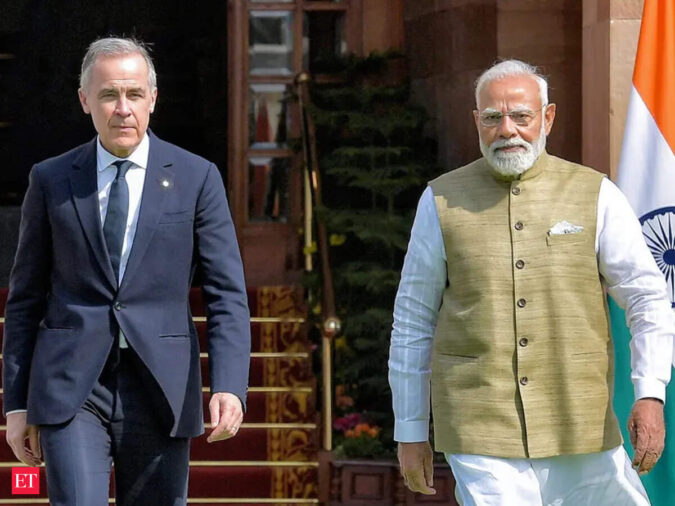
The partner countries had announced a renewed push for a comprehensive trade agreement during Canadian Prime Minister Mark Carney’s visit to India in March 2026, setting a target of raising two-way trade to CAD 70 billion (around Rs. 4.75 lakh crore) by 2030.In 2025, India-Canada bilateral trade in goods and services totalled CAD 30.4 billion, according to the Canadian government data.
Canada’s merchandise exports to India stood at CAD 3.9 billion in 2025, majorly led by vegetables, mineral fuels and oils, and wood pulp, while is merchandise imports from India amounted to CAD 9.7 billion, comprising mainly precious stones and metals, machinery and pharmaceutical products.
The upcoming 300-member trade mission to India would help Canadian businesses connect with Indian decision-makers, industry leaders and potential customers, while building partnerships expected to generate employment in the North American country, according to the official statement.
Canada also seeks to diversify its exports beyond the United States, with India forming a key part of its strategy to expand trade with other markets, the statement said, adding that the Canadian Indo-Pacific Strategy, launched in 2022, identifies trade, security, sustainability, people-to-people ties and regional engagement as its five strategic objectives.