The higher exposure by domestic institutional investors (DIIs) comes against the backdrop of a broader sell-off of Indian equities by foreign portfolio investors due to global macroeconomic headwinds and heightened geopolitical uncertainties.
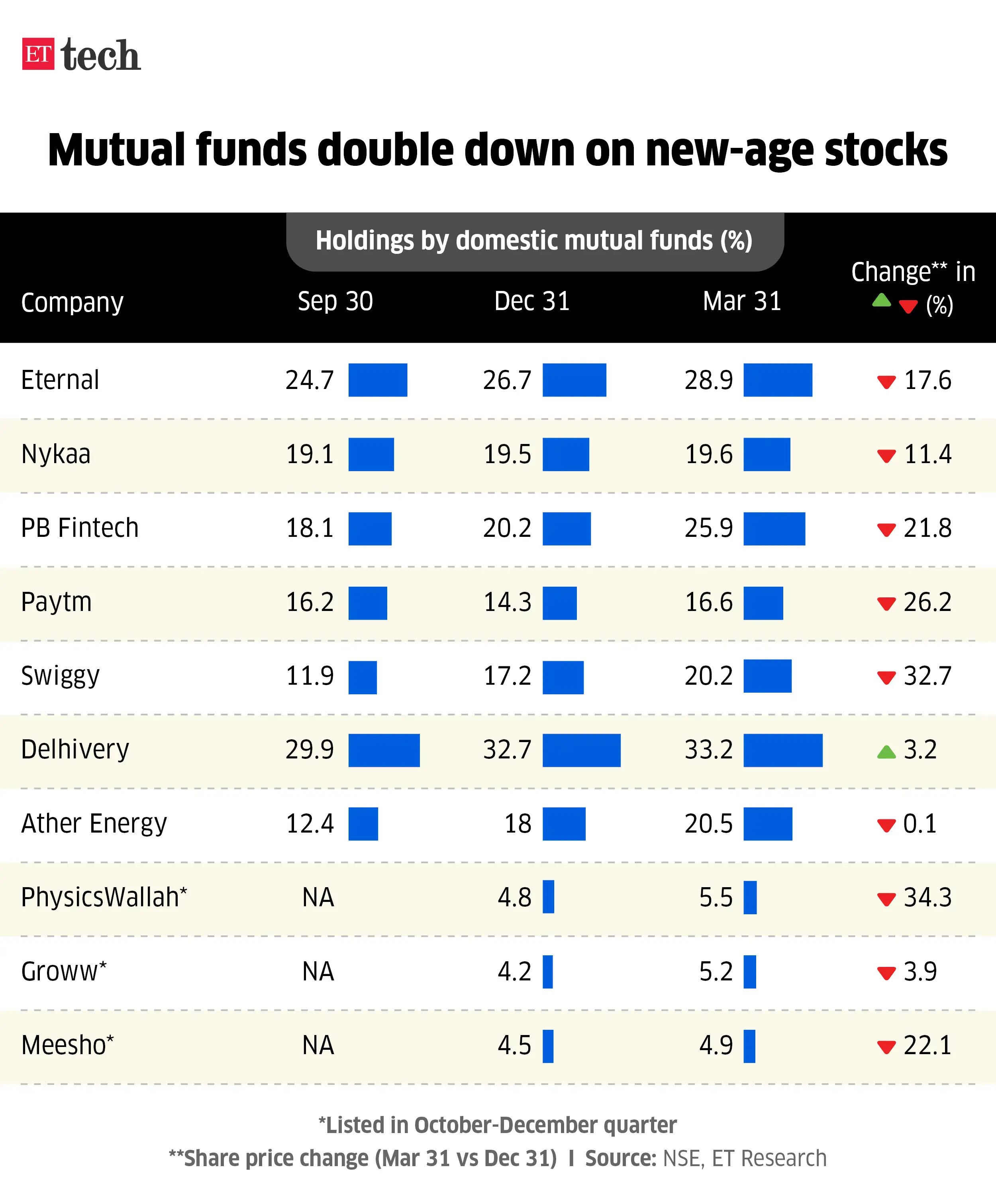
In the case of Eternal, the parent of Zomato and Blinkit, mutual fund ownership increased to 30.3% as of March 31 from 28.3% at the end of December 2025. The value of these holdings, however, fell 11% to Rs 63,889 crore, tracking a 17% drop in the company’s stock price during the quarter. A similar trend was visible at PB Fintech, the parent of Policybazaar.
Pressure on IPO Pipeline
Mutual funds increased their stake in PB Fintech to nearly 28%, from about 20% in the previous quarter, even as the share price declined 22%. For payments company Paytm, mutual fund ownership rose to 16.6% as of March 31, from 14.3% three months earlier.
Some companies that listed during the late 2025 initial public offering (IPO) boom, including Groww, Pine Labs, Capillary Technologies, Physics Wallah, Wakefit and Meesho, have also seen mutual funds build positions.
Bankers and investors said the decline in share prices of some of these companies could influence rivals’ IPO plans, with allocations shifting towards listed peers.
 ETtech
In the quick commerce segment, Eternal and Swiggy’s rival Zepto is preparing for a public markets debut, while PB Fintech’s insurance distribution peers Turtlemint and Acko are also gearing up for IPOs. Walmart-owned PhonePe, which deferred its IPO plans in March amid pricing pressure from institutional investors, competes with listed Paytm.
“Markets have been choppy for quite a bit, especially across internet stocks, forcing a rethink on valuations and growth expectations,” an investment banker working with a new-age company planning to go public said on condition of anonymity. “For companies lining up to list, investors already have comparable listed options that are growing well, trading at reasonable prices and come with an operating history. So domestic funds are more inclined to allocate there… they can see how these businesses perform over time and how management delivers, which isn’t as clear with private companies.”
Among listed names, some companies saw stock declines alongside increased mutual fund buying. Meesho’s stock fell 22% during the quarter after reporting higher losses, but domestic funds raised their exposure to 4.9% as of March 31 from 4.5% at the end of December last year. Meesho listed on December 10.
On April 28, ET reported that several companies are slowing IPO plans amid volatile investor sentiment and the impact on valuations. Mutual fund investors said valuation discipline has sharpened, with pricing now judged more closely against fundamentals.
Fundamentals in play
Within the listed cohort, however, mutual fund holdings declined in companies facing operational or performance challenges, including electric two-wheeler maker Ola Electric and coworking firm Awfis, both of which have underperformed analyst expectations.
“The increase in MF holdings reflects a long-term view on underlying business models. Companies listed since the first wave of new-age IPOs in FY22 have seen an average 2.5-3x rise in DII holdings, driven by greater familiarity and increased research coverage,” said Gaurav Sood, managing director and head of equity capital markets at Avendus Capital.
“With recent listings continuing to deliver on their numbers quarter after quarter, mutual funds have gained confidence that IPO narratives around growth and profitability are playing out. This is leading to sustained, long-term allocations rather than tactical positioning,” he added.
Sood said that higher allocations to listed incumbents do not necessarily crowd out IPO demand. “With rising SIP (systematic investment plan) inflows and surplus capital, mutual funds are willing to back multiple players within a category, provided execution remains strong. For IPO-bound companies, consistent delivery and engagement will remain key to attracting domestic participation,” he said.
In March, mutual fund SIP inflows increased 8% to a record Rs 32,087 crore, compared with Rs 29,845 crore in February, according to data from the Association of Mutual Funds of India.