The Bengaluru-based company sold 2.63 lakh units in FY26, a 69% year-on-year jump. The increase was fuelled by volumes rising to an all-time high of 83,418 units in the March quarter, a 76% surge, as per filings with the NSE.
Revenue from operations grew to Rs 3,671 crore in FY26 from Rs 2,255 crore in FY25, marking a 63% rise. Total income for the year stood at Rs 3,823 crore, up 66%.
Quarterly revenue crossed the Rs 1,000-crore mark for the first time in March, rising to Rs 1,175 crore from Rs 954 crore in the December quarter, marking a 23% sequential increase.
The company’s net loss for the year narrowed to Rs 517 crore from Rs 812 crore in FY25.
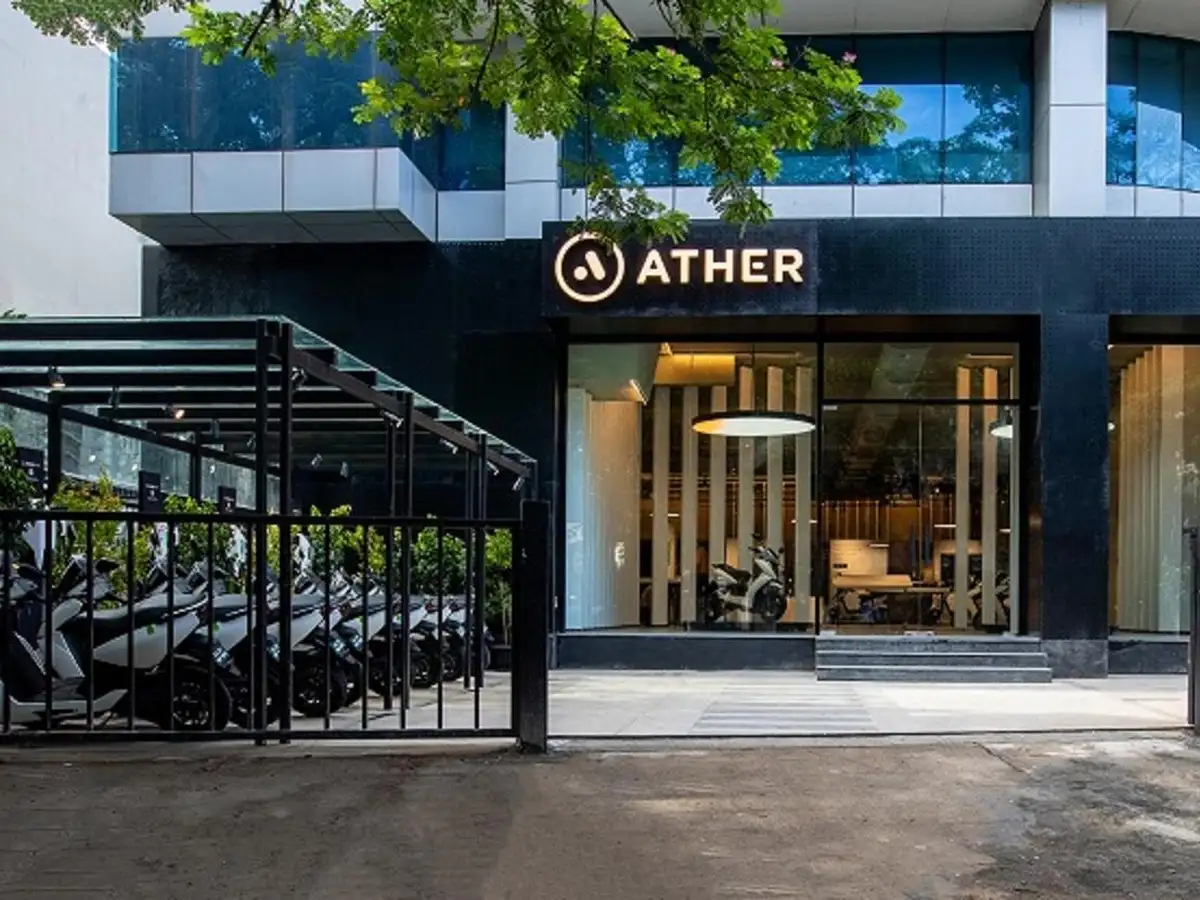
Ather said growth was driven by the strong performance of its family scooter Rizta and an expanded distribution network. The company also doubled its experience centres to 700 during the year, while service centres scaled up to around 548.
Tarun Mehta, cofounder and CEO of Ather, said the company focused on product-led demand and scaling distribution to drive growth.
“Rizta helped us unlock a much larger addressable market, which translated into strong volume growth and better unit economics. With our new EL platform and investments in Factory 3.0 at AURIC, we are preparing for the next phase of growth,” Mehta added.
Supply-chain constraints
The company in its investor’s meeting flagged significant commodity inflation, especially in lithium, rare earth magnets and memory components. It said battery cell costs have risen sharply, with lithium prices increasing up to 2.5-3x from earlier levels.
Mehta said, “We are operating in a highly volatile cost environment. While we’ve mitigated some impact through strategic sourcing and engineering, near-term margin pressure is inevitable.”
Ather sees its upcoming EL platform as the next growth driver. The platform will mark Ather’s entry into the mass segment (Rs1-1.25 lakh), which accounts for nearly 45-50% of the electric two-wheeler market. The company has an addressable market in Evs to about 25-30%. EL is designed with a lower-cost architecture, including reduced use of aluminium and simpler transmission systems.
Mehta during the meeting added that, “EL will allow us to enter a segment where we don’t operate today. It expands our addressable market significantly, with minimal risk of cannibalisation.”
Non-vehicle revenue, including software, charging and services, contributed 13% to total income, reflecting growing ecosystem-led monetisation, the company said. Ather expanded its charging network to over 6,000 points during the year.
The company added that despite continued volatility in commodity prices, cost optimisation and supply chain resilience supported margin expansion.
Ather also incurred capital expenditure of Rs 139 crore to set up an electric two-wheeler manufacturing facility in Maharashtra.
Currently, Ather has 18.6% market share in the electric two-wheeler segment, according to data on government portal Vahan, with southern markets continuing to lead. It competes with legacy names such as TVS, Bajaj Auto, Hero Motocorp and new entrants such as Ola Electric, River and Odysse.