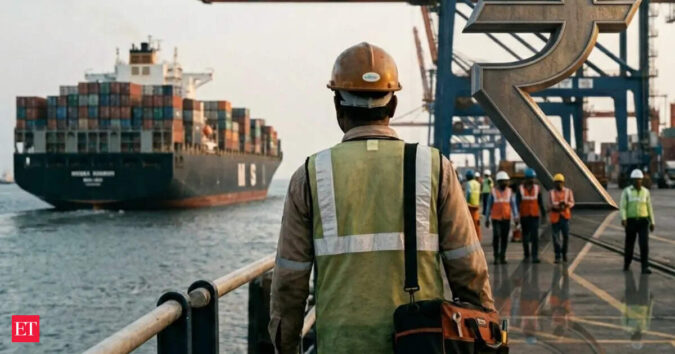
By systematically shortening deployment timelines and sharpening quality control, India aims to transform its massive demographic dividend into a premium export. This strategic migration push is engineered to supply capital-rich, labor-deficient nations with top-tier talent, creating a highly resilient remittance cushion capable of absorbing major macroeconomic shocks.
ALSO READ | Rupee sinks to all-time low of 96.47 vs USD on unrelenting oil pressure, weak risk
Shifting geopolitics of global labour mobility
The global migration map is undergoing a structural realignment as traditional Western destinations actively tighten their immigration frameworks. For decades, destinations like the United States, Canada, the United Kingdom and various Western European nations served as the primary aspirational targets for both skilled professionals and student migrants from India. However, rising domestic nativism, intense local political pressures and increasingly restrictive visa regimes are fundamentally reshaping how international labour pipelines operate. These regulatory contractions in the West are forcing human capital to find alternative pathways, turning a historic challenge into a diversified geopolitical opportunity.
Fortunately, the reduction of access in one hemisphere is coinciding with an unprecedented expansion in another. As advanced Western economies erect barriers, aging and capital-rich but severely labour-deficient economies are opening their doors wider than ever. India is uniquely positioned to leverage this systemic shift by updating its own regulatory framework through the proposed Overseas Mobility Bill. Intended to replace the outdated Emigration Act of 1983, this new bill seeks to construct a modern, comprehensive ecosystem that secures safe placements, ensures fair treatment and establishes structured reintegration protocols for citizens working abroad.
This state-backed initiative guarantees that global geopolitical friction does not choke India’s talent pipelines but instead redirects them toward eager new economic partners who value structural human capital cooperation over transactional labour importation.
Fast-tracking the corridor to Israel
The immediate focal point of this optimised strategy is West Asia, where acute domestic shortages have created an urgent demand for reliable foreign workforces. Following the bilateral signing of three new implementation protocols in February, Israel has committed to absorbing 50,000 Indian workers over the next five years. This recruitment wave spans vital domestic sectors including commerce, manufacturing, services and restaurants. The demand is driven by a necessity to sustain economic momentum in the region, making the timely arrival of vetted, competent personnel a high priority for the host nation.
To meet this demand rapidly, the National Skill Development Corporation has taken direct charge of screening eligible candidates to ensure strict quality control and compliance. India’s emphasis on streamlining the recruitment process flow is designed to eliminate bureaucratic bottlenecks that historically plagued cross-border employment pipelines.
According to Israel’s Population and Immigration Authority, there are already 48,881 Indian nationals residing in the country. This existing base includes 6,700 construction workers and 50 caregivers successfully deployed through government-to-government channels. The aggressive push by the Ministry of External Affairs to shorten logistical delays highlights India’s intention to prove that Indian workforce delivery can be both exceptionally agile and highly secure, setting a benchmark for future bilateral labor corridors.
Tapping the demographic deficit in Russia and Japan
Beyond West Asia, India is establishing deep, long-term human capital partnerships with countries facing severe, long-term demographic crises. Russia is rapidly emerging as a massive destination for Indian technical and industrial talent. The Russian Ministry of Labour has forecast an acute domestic workforce shortage of 3.1 million people by 2030, with the manufacturing sector alone requiring an immediate infusion of at least 800,000 workers to maintain industrial output. While initial projections by some regional business leaders suggesting the immediate arrival of 1 million specialists were overly optimistic, the structural pathways are widening significantly.
To bridge this massive gap, Russia increased its 2025 quota for qualified foreign specialists by 1.5 times to 230,000 people and introduced a highly specialised visa programme. This initiative grants a three-year temporary or permanent residency to skilled foreign nationals without imposing strict language requirements or rigid local quotas. Bilateral agreements signed during the last year’s Modi-Putin summit have cleared the way for Indian specialists to fill critical vacancies across Russian IT, machinery, construction, engineering and electronics sectors.
Simultaneously, Japan is relaxing its traditionally conservative stance on immigration to combat its own demographic imbalances. The India-Japan Action Plan on Human Resources marks a major breakthrough, aiming to facilitate the movement of 500,000 individuals over a five-year period, a target that includes 50,000 skilled and semi-skilled Indian workers. Japan is actively seeking to tap India’s demographic dividend to sustain its heavily strained hospitality, healthcare, manufacturing and caregiving industries. This collaboration reflects a transition toward building shared value systems and deeper professional integration between the two Asian economies.
Corporate agility and the decentralisation of tech talent
The tightening of traditional immigration pipelines has also altered how multinational tech corporations handle elite Indian talent. Rather than navigating the volatility and prolonged delays of Western visa processing systems, global technology firms are adjusting their corporate structures under a new operational philosophy — build teams where the talent already resides. The old model of bringing the engineer to the project is being replaced by decentralised hubs that allow corporations to remain agile despite rising protectionism.
This strategy is clearly reflected in last year’s IIT placement cycles. While premier institutions like IIT Kharagpur recorded zero job offers directly from US-based offices due to visa uncertainties, the overall international dip was heavily compensated for by high-value offers based in the Netherlands, Singapore, the United Kingdom and Japan. Furthermore, the highest-paying packages are increasingly being offered for roles located either within India itself or in these alternative regional hubs. By shifting roles to flexible geographical locations, technology firms are ensuring they retain access to India’s top-tier engineering talent without being bottlenecked by shifting Western political sentiments.
The remittance cushion
The structural acceleration of human resource exports provides an essential macroeconomic defense for the Indian economy. As the rupee faces persistent downward pressure and the goods trade deficit fluctuates due to global commodity volatility, foreign currency inflows sent back by the global Indian diaspora offer unmatched financial resilience. Remittances behave as an unyielding counter-cyclical force, often increasing during times of domestic economic strain and providing immediate liquidity to millions of households.
A sliding rupee incentivises Indians abroad to send more money to India because it buys more rupees. A much enlarged base of overseas Indian workers in future may provide immediate support to the rupee when it slides due to sudden shocks.
In FY25, India received $135.4 billion in remittances, according to the Economic Survey 2025–26, making it the largest remittance recipient in the world for yet another year. During the same period, India’s gross FDI inflows stood at approximately $47 billion. Indian workers abroad sent home nearly three times more money than foreign investors brought into India. This immense inflow of foreign capital has proven structurally shock-resistant, consistently shielding India’s balance of payments against geopolitical crises, energy price spikes and external trade variances. Unlike volatile foreign institutional investment which can flee during global market panics, remittances remain remarkably stable.
By transforming its vast working-age population into a formal, highly organized and globally distributed workforce, India can successfully shift from a passive supplier of labour to a strategic architect of international human resource networks, ensuring long-term stability for its current account.