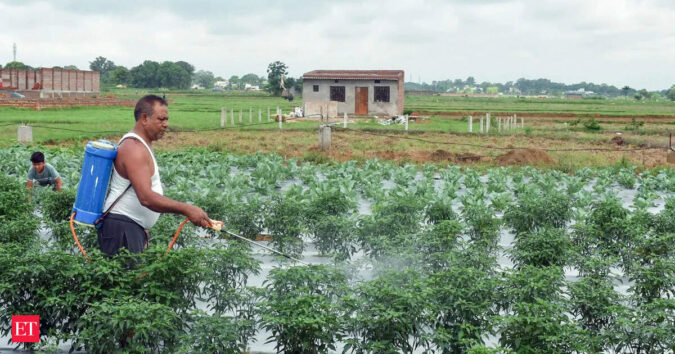
Paddy (rice), the main kharif crop, saw a decline of 25.17% to 2.57 million hectares. Despite the government’s push to plant legumes and oilseeds, pulses sowing was down 30.48% to 1.49 million hectares, while oilseed acreage plunged 53.34% to 1.69 million hectares till June 25, according to the data.
Even millets, which require relatively less water and have been promoted aggressively by the government as climate-resilient crops, recorded an 11.73% decline in acreage.
“The pace of sowing would bear watching from July, given delayed rains,” Barclays said in its latest monsoon tracker report on Monday.
The slow start to sowing comes as the India Meteorological Department has projected a below-normal monsoon this year, with rainfall over the country expected to be 90% of long period average and El Nino conditions expected to strengthen during the June-September season.

The Centre has advised farmers not to begin sowing after isolated showers and instead wait until cumulative rainfall of 75-100 mm is received to improve germination and reduce the need for re-sowing. Agriculture minister Shivraj Singh Chouhan last week stated that contingency plans had been activated across 315 ‘vulnerable’ districts most likely to be affected by low rainfall.
The government has also initiated emergency measures for districts vulnerable to weak rainfall, including promoting short-duration crop varieties, alternative cropping patterns and water conservation measures.