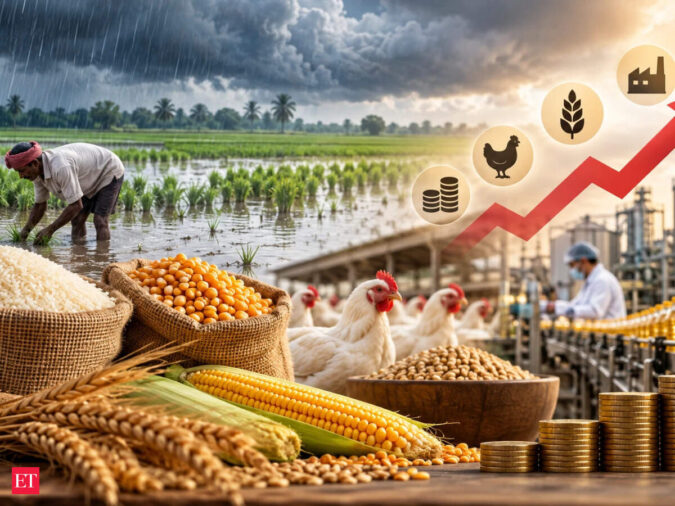
Kharif sowing was 1.1% lower year-on-year as of October 5, 2026, while foodgrain acreage declined 1.6%, pointing to early signs of agricultural stress, the report said. Rice acreage was down 3.5% from a year earlier, while maize acreage fell 2.9%.
The risks extend beyond farm output to industries dependent on agricultural commodities. A shortfall in maize production could affect poultry, livestock, aquaculture, starch, processed food and ethanol supply chains, while raising input costs for businesses that rely on the crop. Unlike rice, where public stocks provide a significant cushion, maize has a more direct link to several industrial and animal-feed applications.
The report cautioned that the economic consequences of El Niño-related monsoon risks would depend on the geographical distribution of rainfall deficits, the stage of crop growth and the availability of irrigation. Reservoir storage is below both the corresponding year-ago level and the 10-year seasonal average, limiting the surface-water buffer for agricultural regions facing rainfall stress.
The exposure is significant across several major food-producing states. Madhya Pradesh, Rajasthan, Telangana, Maharashtra and Andhra Pradesh together accounted for 1,400.3 lakh tonnes, or 37.7%, of foodgrain output across the 20 states analysed for 2025–26.
However, the report does not point to an imminent nationwide food-supply shock. Strong rice inventories and adequate wheat reserves could help absorb a moderate production setback without triggering an immediate rise in consumer prices. The cushion is less pronounced for maize and pulses, leaving specific commodities and supply chains more exposed to weather-related disruptions.
For businesses, the impact could emerge well before any broad-based increase in food inflation. Companies may face higher raw-material procurement costs, the need to hold additional inventory, more complicated logistics and greater working-capital requirements as they seek to secure supplies and manage price volatility.The transmission channel is particularly important for food manufacturing. Agriculture accounts for 57% of intermediate consumption in the manufacture of food products, beverages and tobacco, highlighting the sector’s dependence on agricultural inputs and its exposure to production volatility.
The report’s central assessment is that India’s current monsoon-related risks remain concentrated in particular crops and states rather than pointing to a broad-based food crisis. Public food stocks and irrigation availability continue to provide a degree of protection, but the extent to which that cushion holds will depend on regional rainfall patterns and the resulting impact on crop production and supply chains.