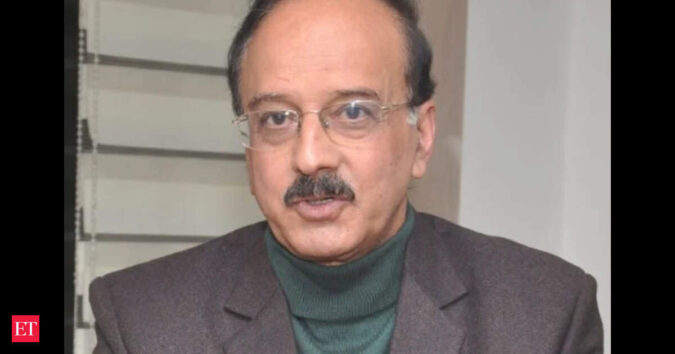
In an interview with The Economic Times Digital, Sharma argues that several current policy choices risk creating disconnects between these objectives. From the diversion of sugar and grains towards ethanol to the continued dependence on chemical fertilisers and the prospect of greater agricultural imports through free trade agreements (FTAs), Sharma says policymakers need to look beyond short-term gains and assess their long-term consequences.
Ethanol push raises concerns
The sugar sector, Sharma says, offers the perfect example of what he describes as a policy disconnect. India has moved from being a sugar exporter to importing sugar, while the government has attributed the recent tightening of availability primarily to factors such as weather, drought, and crop diseases. Sharma, however, believes that the diversion of sugar towards ethanol should also be considered an important factor.
“We cannot exclude ethanol diversion to be one of the reasons, I would say one of the dominant reasons for the crisis that we have,” Sharma says. According to him, the aggressive expansion of ethanol blending was not accompanied by adequate planning on how much agricultural output could safely be diverted from food to fuel. The concern extends beyond sugarcane. Maize and rice are also increasingly being used as ethanol feedstocks, raising questions over the potential impact on food availability, water resources, and cropping patterns.
Sharma argues that policymakers should have established a clear road map for how much agricultural production could be diverted to ethanol without compromising food security. India’s ethanol programme is often justified on the grounds of reducing crude oil imports and improving energy security. But Sharma believes the debate has paid insufficient attention to the benefits accruing directly to farmers.
“Where is the gain for farmers?” he asked, arguing that farmers should receive an identifiable “ethanol premium” if agricultural commodities are diverted towards fuel. He points to maize prices as an example, arguing that farmers have at times received prices below the minimum support price (MSP), despite maize becoming an important ethanol feedstock.‘Food security has to be the top priority’
Sharma also warns that ethanol-led changes in cropping patterns could create an environmental problem over the longer term. If farmers in more states begin cultivating water-intensive crops, such as rice, because of expanding demand for ethanol feedstocks, he argues, groundwater stress could spread beyond traditional rice-growing regions. He says policymakers need to examine not just the energy benefits of ethanol but also its implications for water availability and food security.
The experience of Brazil, he says, should not be copied mechanically. India needs to develop an ethanol strategy that takes into account its land, water, and food requirements. “You have to plan it in a way to see not only the availability of ethanol but also how much it will impact food security,” Sharma says. His larger argument is that India’s food security cannot be treated as a variable that can be traded off against energy security.
‘Rethink chemical fertiliser subsidies’
Sharma also questions India’s fertiliser subsidy architecture, arguing that a significant part of the subsidy ultimately benefits the fertiliser industry rather than farmers. He says the rising cost of fertiliser subsidies is becoming increasingly difficult to sustain, particularly because India remains heavily dependent on imports for several fertilisers. His solution is not an abrupt withdrawal of support but a gradual transition towards more ecological farming systems.
Sharma argues that chemical fertiliser subsidies have encouraged excessive and imbalanced use of nutrients, while farmers themselves should eventually receive a greater share of government support directly. He cites the experience of natural and community-based farming initiatives in Andhra Pradesh, where he said large numbers of farmers have moved away from chemical-intensive agriculture. The broader lesson, according to Sharma, is that India should demonstrate that agricultural productivity and farmer prosperity can coexist with lower chemical dependence.
Direct income support could replace part of input subsidies
Sharma favours shifting from input-based subsidies towards direct income support, but he acknowledged that India’s land-tenancy structure presents a major challenge. A large number of cultivators are tenant farmers who do not own the land they cultivate. As a result, schemes linked to land ownership can fail to reach the actual cultivator. “The big question is how to deliver it,” he says.
Any move towards direct support, therefore, would require mechanisms to identify tenant farmers and ensure that benefits reach those who are actually cultivating the land. Sharma also argues that existing direct income support to farmers should be increased and linked to inflation. He describes the introduction of direct income support as a significant change in India’s agricultural policy because it moved beyond the traditional reliance on price interventions.
‘MSP needs a legal mechanism’
On MSP, Sharma says that farmers need an assured mechanism for receiving minimum support prices. He argues that leaving agricultural prices entirely to market forces has failed to provide adequate income security to farmers. “Markets are not the answer,” he says, pointing to farmer protests in India and other countries as evidence of the vulnerability of agricultural producers to volatile prices.
Sharma’s argument is not simply that every crop must necessarily be procured by the government. Rather, he believes farmers need a credible mechanism that assures them of remunerative prices. He contrasts agriculture with manufactured goods, noting that cars, motorcycles, and other industrial products are sold with clearly established prices, while farmers often have little control over the price of their produce.
The disconnect between farm-gate and retail prices, he argues, illustrates the weakness of agricultural markets. He cites the example of kinnow in Punjab, where farmers can receive a fraction of the price paid by consumers, as evidence that market reforms have not adequately addressed the distribution of value along the agricultural supply chain.
‘Doubling farmers’ income’ remains unfinished
Sharma rejects the view that India has achieved the goal of doubling farmers’ incomes. While agricultural production has increased substantially for several crops, he says higher production has not necessarily been translated into proportionately higher farm incomes. He recalls that the 2016 Economic Survey had highlighted extremely low farm incomes in several states and argues that the structural problems facing farmers remain unresolved. For Sharma, the central issue is not simply productivity but remuneration. “Despite record production… farmers continue to face weak market realisations,” he says.
He also rejects the assumption that moving farmers out of agriculture and into cities is, by itself, a solution to the farm-income problem. Other developed agricultural economies, he argues, continue to face serious farm-sector distress despite having far fewer people employed in agriculture.
India’s edible oil experience offers a policy lesson
Sharma’s concerns over agricultural trade extend to India’s dependence on imported edible oils and pulses. He recalls India’s experience with the Yellow Revolution in the 1980s, when the government sought to increase domestic oilseed production and reduce dependence on imports. According to Sharma, India subsequently weakened the protection provided to domestic oilseed producers by reducing import duties, which eventually undermined the progress made towards self-sufficiency. His argument is that India should learn from this experience as it seeks to revive domestic production of edible oils.
The country has a wide range of oilseed crops, from mustard in northern India to coconut and other crops in the south. Sharma believes greater investment in productivity, processing, and domestic markets could reduce import dependence.
Stronger safeguards for agriculture in FTAs
Sharma is particularly concerned about the growing number of trade agreements India is negotiating. Agriculture, he says, should be treated differently from industrial sectors because imports can directly affect farmers’ livelihoods and the country’s food sovereignty. He cites India’s decision to stay out of the Regional Comprehensive Economic Partnership (RCEP), arguing that protecting the dairy sector was an important consideration. The concern is particularly acute when India negotiates with countries where farmers receive significantly higher levels of government support.
Sharma warns that allowing heavily subsidised agricultural products into India could put millions of small farmers under pressure. He uses cotton and dairy as examples of the vastly different scale and nature of farming systems in India and the US. India’s agriculture is dominated by small and marginal holdings, while agricultural production in countries such as the US is often highly consolidated and backed by substantial government support.
“Opening up our borders is going to be very, very damaging for us,” Sharma says, while clarifying that imports would still be necessary in commodities where domestic supplies are inadequate.