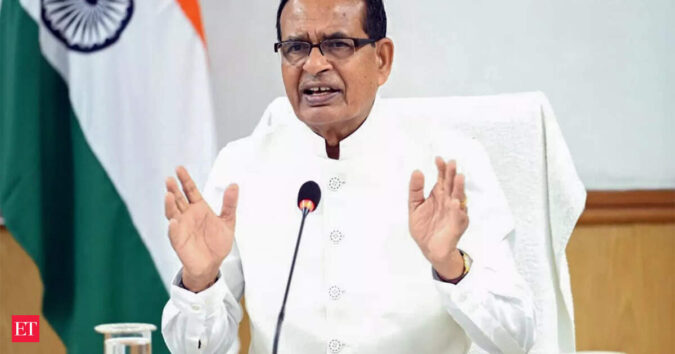
As President of ICAR, Chouhan today chaired a high-level meeting in Delhi with the ICAR Director General and senior officials to review the functioning, accountability, quality and farmer-oriented outcomes of ICAR institutions, according to an official release. He said ICAR institutions are central to India’s agricultural progress and therefore must ensure excellence, vision, accountability and measurable results in their work. The minister directed that a show-cause notice be issued to Dr Kaushik Banerjee, Director of the National Research Centre for Grapes, Pune, and said further action should follow if the response is found unsatisfactory. He also sought detailed presentations on the process for appointing institute directors, recruitment systems for scientists, and the selection mechanism for administrative and scientific leadership to facilitate a comprehensive systemic review.
Chouhan expressed serious displeasure and strong objection over shortcomings, mismanagement and operational weaknesses observed during his surprise inspection of ICAR’s National Research Centre for Grapes in Pune on May 15. The minister said the senior official present at the institute lacked even basic knowledge about the grape research centre, the PIB release said.
“They initially tried to stop me from visiting the field, saying there were no grapes at present. But when I reached the site, I saw weeds growing in the nursery. Saying labourers were not available for cutting the grass is not an acceptable explanation,” Chouhan said. He added that the institute’s senior officials failed to provide satisfactory answers on export preparedness, disease management, or plans for developing and expanding grape varieties.
The institute had no vision and even the presentation made by the grape institute was extremely dull. Farmers told me they source varieties from private nurseries because the institute’s varieties are no longer useful, he said.
Chouhan also questioned Deputy Director General (Horticulture) Dr S K Singh during the meeting, asking how he had monitored the institute, when he last visited it, and whether he was fulfilling his responsibility to ensure institutions under his charge function properly.
The minister said every national agricultural research institute should demonstrate basic preparedness, a clear action plan, farmer-focused research, export-oriented vision, disease management systems and concrete work on developing and disseminating better crop varieties. He also expressed concern that if farmers are compelled to depend on private nurseries and question the usefulness of public institutions, it calls for serious introspection.He stressed that the objective of research institutions should not be limited to routine administration, but should focus on solving the real needs of farmers, fields and markets. Chouhan underlined the need for stronger institutional monitoring and accountability at the highest level, saying every official is responsible for ensuring institutions under them function actively, efficiently and in a farmer-friendly manner.
Chouhan instructed ICAR Director General Dr M L Jat to form an 8–10 member team to conduct surprise inspections across all 113 ICAR institutions. He said he would personally carry out surprise visits to various institutes as well.
The meeting also decided that all ICAR institutions would be evaluated against clear performance benchmarks and parameters. Institutions delivering excellent performance would be encouraged and rewarded, while action would be taken against those failing to meet standards.