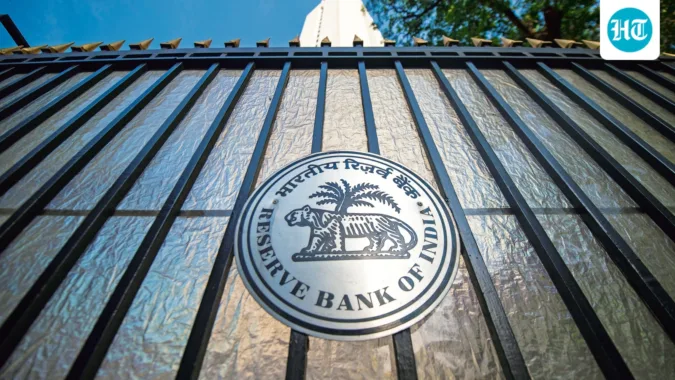
“It is clear that inflation and its outlook are not benign as they were last year…,” RBI governor Sanjay Malhotra said in a statement after the Monetary Policy Committee (MPC) meeting on October 7. Data released by the National Statistics Office (NSO) on Monday vindicates the RBI’s pivot towards a calibrated tightening policy stance.
Retail inflation, as measured by the Consumer Price Index (CPI), came at 5.5% for September, in line with a Bloomberg poll of economists. Monday’s data also puts inflation for the quarter ending September at 4.9%, exactly what the MPC had projected in its October 7 resolution. Quarterly inflation is expected to climb to 6% in the quarter ending December and then come down marginally to 5.7% leaving annual inflation in 2026-27 at 5.2%, according to the RBI’s estimates.
What has really led to a spike in inflation? It has increased consistently between November 2025 and September 2026, reaching its highest-ever level in the latest inflation series, which has a base year of 2024.
Also Read | Rupee set for sharp rally as RBI moves to curb speculative bets, but risks remain
The obvious answer is an increase in food inflation. Food, which now accounts for 37% of the CPI basket, has seen inflation increase from 2.1% to 7.4% between January and September 2026. Because the new inflation series does not provide disaggregated data before January 2026, it tends to obscure the adverse statistical base-effect driving food inflation. In the old CPI series, with a base year of 2012, the food basket saw deflation of 2.3% in September 2025. The previous inflation series also suggests that food inflation could see a further spike next month as October 2025 disinflation increased to 5%.
What is also noteworthy about the latest spike in food inflation is its broad-based nature. Among broad sub-categories, food inflation was highest for sugar, confectionery and desserts (13.8%), fruits and nuts (10.8%), and ready-made food and other products (10%). Among individual items, onion prices saw inflation of 108.1%.
To be sure, some food items, such as potato and tomato, also saw deflation of 11.5% and 8.6%, respectively.
Fuel inflation, a sub-category of the transport group, grew by 7.6% in September 2026, almost unchanged since June 2026. This is in keeping with intuitive wisdom, as the government has not increased petrol and diesel prices since May 2026, even though crude prices have increased following the breakdown of the ceasefire arrangement in West Asia.
Also Read | RBI Tightens Monetary Policy With 25 BPS Rate Hike | HT India
Data from the petroleum ministry shows that India’s crude oil basket price fell from $114.5 per barrel in April to $82 per barrel in July, before rising steadily to reach an average of $121.9 per barrel in October. The decision to keep fuel prices unchanged must be draining oil marketing companies’ profits, a cost that will eventually show up in the fiscal deficit.
The other important takeaway from the latest inflation numbers is the steady rise in core inflation, which measures the non-food, non-fuel part of the CPI basket and is believed to be more immune to seasonal fluctuations. Core inflation, according to data from the Centre for Monitoring Indian Economy (CMIE), was 4.47% in September, the highest since January 2026, the earliest period for which data is available under the latest series.
To be sure, some of the increase in core inflation is due to a rise in prices of precious metals such as gold and silver. However, its steady increase has been taken as evidence that the generalisation of food and fuel price pressures into other prices cannot be ruled out.
Also Read | RBI 25 bps rate hike: How it will impact your home loan EMI and what borrowers should do
“Going forward, the RBI’s policy response will depend on the persistence of underlying price pressures, the evolution of food and energy prices, and the trajectory of the rupee, with the key priority being to prevent temporary supply-side shocks from translating into broader and more persistent inflationary pressures”, Somya Kanti Ghosh, SBI’s Group Chief Economic Advisor, said in a research note issued after the inflation numbers.