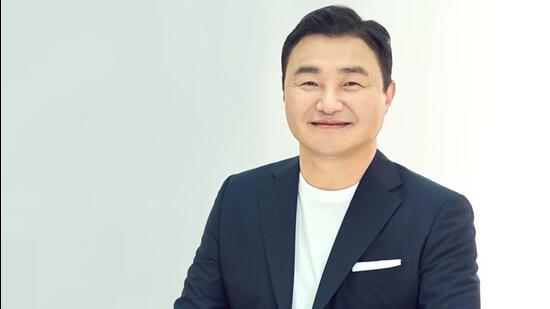
Foldable form factors will undoubtedly underline the smartphone conversation this year. Samsung, which is set to unveil its next flagship foldable phones later this month, and Apple expected to announce its first foldable iPhone in September, will drive this impetus of excitement. Days before the next Galaxy foldables go official, Samsung Electronics president and CEO TM Roh has underlined the company’s vision for foldable phones, including their perspective on artificial intelligence (AI).
Roh talks about a shift to integrating agentic AI, leveraging Samsung’s ecosystem play that includes tablets, smartwatches as well as TVs, and trustworthy experiences. “AI no longer merely answers. It is entering an agentic age, taking action on our behalf while the person carries the final decision. But to act for someone, it must first know them,” he says, referencing that while AI is becoming faster, yet it still grapples with the question about “where, how and into whose hands does this intelligence reach?”
Samsung, Roh insists, understands that AI must first learn about the user before it can truly become relevant. The best AI experiences, as he puts it, will come from devices that know their users. Samsung’s trying to leverage its ecosystem of devices, with many homes having more than one, to build this understanding. The phone, the tablet, smartwatches that carry our health and wellness metrics, with the TV and connected home appliances providing a context of how users live.
“These entry points are powerful together. Signals from across devices become timely assistance: sleep tracked by your watch shapes tomorrow’s schedule, with information always available. AI at its best works quietly in the background, bringing these moments into a cohesive experience. That is why we have spent years building an ecosystem not just to reach, but to connect more moments,” says Roh.
Samsung’s Bespoke AI home appliance ecosystem is built with three key pillars, as HT explained earlier. There’s the Bixby AI assistant that uses large language models (LLMs), a SmartThings app that’s key to monitoring and managing devices, and the Tizen operating system that integrates the Knox Matrix and Knox Vault security layer. Localisation is the next big focus area.
Samsung’s foldable phone launch, called Galaxy Unpacked, has so far teased “A new shape unfolds”. Could this hint at bigger design and form factor changes than the incredible slimming down exhibited by last year’s Galaxy Z Fold7 alongside the Galaxy Z Flip7 foldable form factors, or does the scope go much beyond just design?
Roh is very clear on the point of trust, and makes it clear that openness isn’t the goal, but personal intelligence that’s trustworthy, is the mission.
“The best intelligence in the world should reach people through their everyday devices. But what makes it personal is understanding the user and keeping that understanding safe. That is our responsibility. As AI becomes more personal and agentic, trust becomes the foundation. People need to know what AI is doing for them and remain in control,” he says.
While Roh doesn’t give any details or hints of design or form factor evolutions for Samsung’s upcoming foldable phones, he does insist that for a device to be personal with capable AI, form factor does matter. “This is what makes foldables special: they fold into your hand or open a larger stage. On this journey, Samsung has continued to make foldables thinner, lighter, stronger and more immersive,” Roh added.