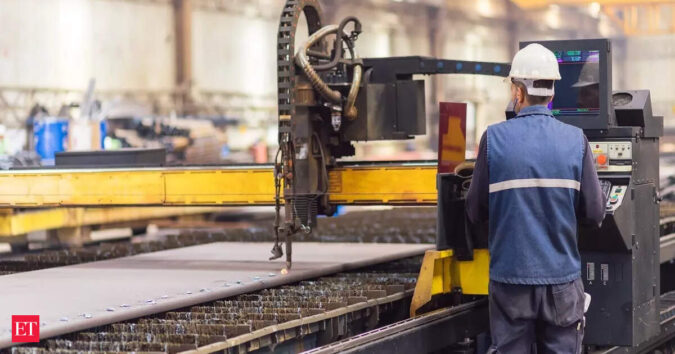
The 70th edition of FICCI’s Quarterly Survey on Manufacturing (QSM), which covered eight major manufacturing sectors and companies with a combined annual turnover of over Rs 4 lakh crore, showed that production expectations weakened compared with the previous quarter.
Around 77% of respondents reported either higher or unchanged production levels in the first quarter of FY27, down from 93% in the January-March quarter. Demand also softened, with 77% of manufacturers reporting higher or stable order books, compared with 89% in the preceding quarter.
The survey attributed the moderation largely to uncertainties arising from the West Asia conflict, even as respondents remained broadly optimistic about the domestic manufacturing outlook.
Capacity utilisation steady
Despite weaker production expectations, capacity utilisation remained stable at around 72%, unchanged from the previous survey, indicating that manufacturers continue to operate at healthy levels.
FICCI said the investment outlook for the next six months remained steady, although companies cited geopolitical developments, including tariffs, trade restrictions and demand uncertainty, along with labour availability, raw material shortages, higher logistics costs and regulatory challenges as key impediments to capacity expansion.Among sectors, metal and metal products reported the highest average capacity utilisation at 80%, followed by chemicals, fertilisers and pharmaceuticals at 76%, while automotive and auto components recorded the lowest at 65%.
Export outlook improves
The survey pointed to an improvement in export performance despite geopolitical uncertainties.
Around 74% of respondents reported higher or unchanged exports in the April-June quarter compared with the same period a year ago, up from 61% in the previous quarter. FICCI attributed the improvement to ongoing export diversification efforts by both the government and industry.
Inventory levels remained largely stable, with 85% of respondents reporting higher or unchanged inventories, compared with 86% in the previous quarter.
Hiring plans soften
Hiring intentions weakened marginally, with 35% of manufacturers planning to recruit additional workers over the next three months, down from 41% in the previous survey.
While 63% of respondents said they were not facing labour shortages, the remaining 37% flagged the continued shortage of skilled workers and called for greater efforts by both industry and the government to bridge the skills gap.
Cost pressures intensify
Manufacturers continued to face elevated input costs during the quarter.
Nearly 79% of respondents reported an increase in production costs as a percentage of sales, compared with 70% in the previous quarter. Companies attributed the rise to higher raw material and energy costs, currency depreciation, as well as increased logistics and utility expenses.
The average interest rate paid by manufacturers remained broadly unchanged at 8.9%, while more than 89% of respondents said they had adequate access to bank credit for working capital and long-term funding.
Sector outlook mixed
The survey expects automotive and auto components, machine tools, and metal and metal products to post moderate-to-strong growth during the quarter.
Growth in capital goods, electronics and electricals, and textiles is expected to remain moderate, while chemicals, fertilisers and pharmaceuticals and the miscellaneous segment are likely to witness moderate-to-low growth.