Despite being the world’s largest producer of rice, India continues to depend heavily on imports of pulses and edible oils. At the same time, many traditional crops once cultivated across regions have lost prominence, contributing to a food system that remains calorie-rich but often nutritionally inadequate.
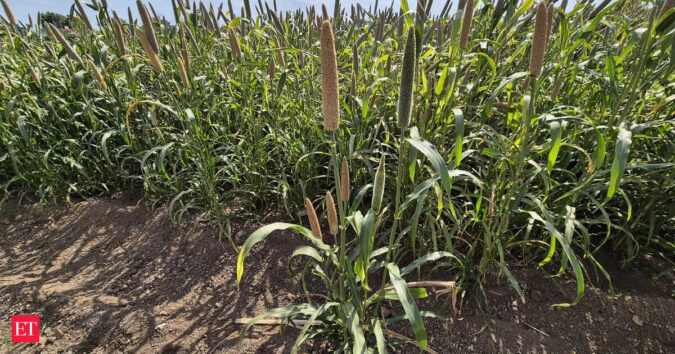
A report by the Good Food Institute (GFI) India highlights the untapped potential of underutilised or “orphan crops”, such as horse gram, winged bean, grass pea, lupin, bambara groundnut, and several indigenous millets and legumes. According to the report, these crops are rich in protein, resilient to climate stress, and require fewer agricultural inputs than many conventional crops.
“Scientists and policymakers increasingly see these crops not as “minor” crops, but as strategic resources for future food and nutrition security, especially under climate variability,” says Padma Ishwarya S., Senior Scientist at GFI India.
The report says that India has a significant opportunity to build domestic ingredient supply chains around indigenous crops and emerge as a major player in the rapidly growing global plant-based food industry.
Countries such as Canada, Australia, the Netherlands, and China have already leveraged alternative crops to develop strong plant-protein ecosystems. India could follow a similar path by investing in processing infrastructure and value-added products derived from traditional crops.
According to GFI India, converting indigenous crops into protein concentrates, plant-based meat products, dairy alternatives, and functional foods could generate substantially greater economic value than selling grains in raw form. The report estimates that the global plant-based meat market could reach between $88 billion and $368 billion by 2035, creating a major export opportunity for India in plant-protein ingredients and smart protein products.Dependence on imports
Globally, only about 170 of the world’s 30,000 edible plant species are cultivated commercially for food. Rice, maize, wheat, and potatoes account for nearly 60% of total calorie consumption, while just a few crops supply the majority of plant-derived proteins.
The plant-based food industry currently relies heavily on soy, pea and wheat gluten, with mung bean and chickpea gaining traction more recently.
In India, however, the emerging smart protein sector remains dependent on imported ingredients from China and Europe.
“The plant-based smart protein sector currently depends heavily on imported protein ingredients from regions such as China and Europe. This reliance arises partly from the limited domestic availability of crops like peas, soy, and chickpeas that meet the functional specifications required for food processing,” the report notes.
High import duties and logistics costs further increase production costs, making plant-based foods less competitive compared to conventional animal-based products, say experts.
Challenges in diversification
For decades, India’s agricultural ecosystem has been built around cereals, supported by extensive procurement systems, irrigation infrastructure, input subsidies, and established markets, note experts.
“Crop diversification in India is a gradual structural transition rather than a single policy shift, because the existing cereal-focused system has significantly contributed to food security, farmer income stability, and national procurement efficiency,” notes Padma Ishwarya S.
Farmers often face practical challenges in shifting to alternative crops, including limited access to quality seeds, weak market linkages, inconsistent demand, and insufficient agronomic support.
While diversification into pulses, oilseeds, horticulture, and other high-value crops offers significant benefits, it also requires stronger post-harvest infrastructure, processing capacity, storage facilities, and reliable markets, many of which remain underdeveloped.
Nevertheless, the report notes that diversification is steadily increasing in several states as awareness grows about the benefits of millets and pulses for soil health, water efficiency and climate resilience.
Structural gaps in protein economy
The report identifies two major barriers to expanding protein-rich crop production. First, productivity levels for pulses and oilseeds remain below potential due to uneven access to quality seeds, irrigation, mechanisation, and region-specific extension services.
Second, cereals continue to enjoy stronger policy support through assured procurement and stable market channels, making them a less risky choice for farmers than pulses and oilseeds, which are often exposed to greater price volatility. As a result, India continues to face shortages in critical protein and oilseed crops despite being a major agricultural producer.
The report argues that India’s agricultural policies have historically focused on improving yields rather than increasing protein output per hectare. While the country has achieved significant gains in cereal production, many staple crops remain relatively low in protein content.
Future agricultural strategies, it says, should prioritise both grain productivity and protein productivity to meet growing demand for affordable, high-quality protein sources.
Many neglected and underutilised crops are attracting renewed global attention because of their climate resilience and low input requirements. However, lower yields continue to limit their adoption by the food processing industry.
To unlock their potential, the report recommends identifying suitable crops, improving breeding programmes, developing efficient protein extraction technologies and creating commercially viable supply chains.
By :- Vaishnavi Kumari