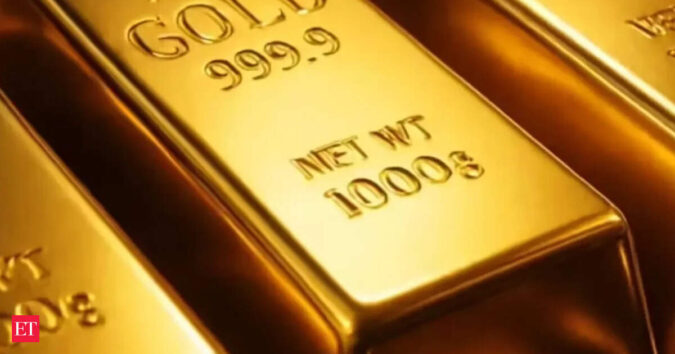
Emphasising that the Centre is trying to shield people from the adverse impact of the conflict in West Asia, Modi on Sunday called for judicious use of fuel, postponement of gold purchases and foreign travel, among other measures, to strengthen the economy.
Here are a few questions and answers to understand gold imports in India.
IMPORT DATA:
India’s gold imports rose over 24 per cent to an all time high of USD 71.98 billion in 2025-26. It was USD 58 billion in 2024-25, USD 45.54 billion in 2023-24, USD 35 billion in 2022-23, USD 46.14 billion in 2021-22, USD 34.62 billion in 2020-21, and USD 28.2 billion in 2019-20.
In volume terms, however, it dipped 4.76 per cent to 721.03 tonnes in 2025-26 from 757.09 tonnes in 2024-25. It was 795.2 tonnes in 2023-24 and 678.3 tonnes in 2022-23.
Also read | India’s booming Dubai gold trade may be built on someone else’s mines
India is the world’s second-biggest gold consumer after China. The imports are largely driven by the jewellery industry. Traditionally seen as a safe-haven asset during periods of geopolitical uncertainty, gold demand in India tends to surge when global risks rise.
REASONS FOR JUMP IN IMPORTS:
According to the commerce ministry, gold import increased is driven by the rise in prices from USD 76,617.48/KG (FY25) to USD 99,825.38/KG (FY26). The prices of the precious metal in the national capital is hovering around Rs 1.5 lakh per 10 gms. In April last year, it had crossed Rs 1 lakh for the first time.
IMPACT OF HIGH IMPORTS:
Higher imports of the precious metal put pressure on the country’s trade deficit and foreign exchange outgo.
The rise in imports has pushed the country’s trade deficit (difference between imports and exports) to USD 333.2 billion during 2025-26.
The imports have implications for India’s current account deficit (CAD).
Also read | India-US trade talks set for next round, but Section 301 probe remains hurdle
India’s CAD rose to USD 13.2 billion, or 1.3 per cent of GDP, in the December quarter from USD 11.3 billion in the year-ago period, mainly due to a higher trade deficit caused by a decline in exports to the US, according to RBI data released on March 2.
The precious metal accounts for over 9 per cent of the country’s total imports. India’s imports in 2025-26 was USD 775 billion.
SOURCE COUNTRIES:
Switzerland is the largest source of gold imports for India, with about 40 per cent share, followed by the UAE (over 16 per cent) and South Africa (about 10 per cent). The total merchandise imports (including gold) from Switzerland rose 11.36 per cent to $24.27 billion during 2025-26.
STEPS TO CURB GOLD IMPORTS:
To discourage these imports, the government has imposed import curbs on all forms of articles of gold, silver and platinum. The move was aimed at checking misuse of free trade agreements and curbing imports of these precious metals in the name of unstudded jewellery from countries like Thailand.
Some traders were trying to use the India-Asean FTA to make a quick buck by exploiting duty differentials and circumventing tariffs, according to experts.
IMPORT DUTY:
In 2022, India hiked gold import duty to 15 per cent from 10.75 per cent to check current account deficit and rising import of the yellow metal. In May 2022, 107 tonnes of gold was imported. In the Budget for 2024-25, the duty was reduced to 6 per cent to boost the domestic gems and jewellery industry, curb illegal smuggling, and bring down local prices.
VIEWS OF EXPERTS:
Think tank GTRI urged the government to review its FTA policies, especially tariff concessions on precious metal offered to Dubai under the India-UAE trade deal as it has significantly contributed to the recent surge in gold imports.
The India-UAE Comprehensive Economic Partnership Agreement (CEPA) came into force in May 2022. Under the agreement, India allowed gold imports from the United Arab Emirates at tariffs one percentage point lower than normal import duties through a Tariff Rate Quota (TRQ) system.
The quota started at 120 tonnes annually and will rise to 200 tonnes from 2027, covering nearly 25 per cent of India’s gold imports.
“The benefit became even bigger after India cut normal gold import duty from 15 per cent to 6 per cent in the 2024 Budget. As a result, gold imported from Dubai effectively entered India at only 5 per cent duty,” GTRI Founder Ajay Srivastava said.
Imports from Dubai have surged since then. India’s gold bar imports from the UAE rose from USD 2.9 billion in 2022 to USD 6.7 billion in 2023 and further to USD 16.5 billion in 2025. Dubai’s share in India’s gold imports increased from 7.9 per cent before the FTA to 28 per cent in 2025, he said.
“The trend raises concerns because the UAE neither mines gold nor carries out major processing activity. Much of the trade appears to involve routing gold from third countries through Dubai simply to benefit from lower Indian tariffs,” he added.
It recommended tighter origin rules, a review of precious metal concessions under FTAs, and exclusion of gold, silver, platinum, and diamonds from future trade agreements to protect India’s trade balance and foreign exchange reserves.