“The company is targeting a pilot launch of the app around July, with a full-scale rollout before the year-end,” said one person in the know.
Flipkart’s move for a standalone app for Minutes comes after Swiggy launched a separate Instamart app in January 2024. Swiggy cofounder and group CEO Sriharsha Majety had attributed this to quick commerce being on track to surpass food delivery in both penetration and scale.
Industry experts said that rolling out separate apps is often linked to better visibility and brand recall.
IPO-bound Flipkart has a team in its tech vertical working on this app while the company is also trying to understand the consumer preference for it. The app’s name is yet to be finalised.
Flipkart did not respond to ET’s queries till press time.
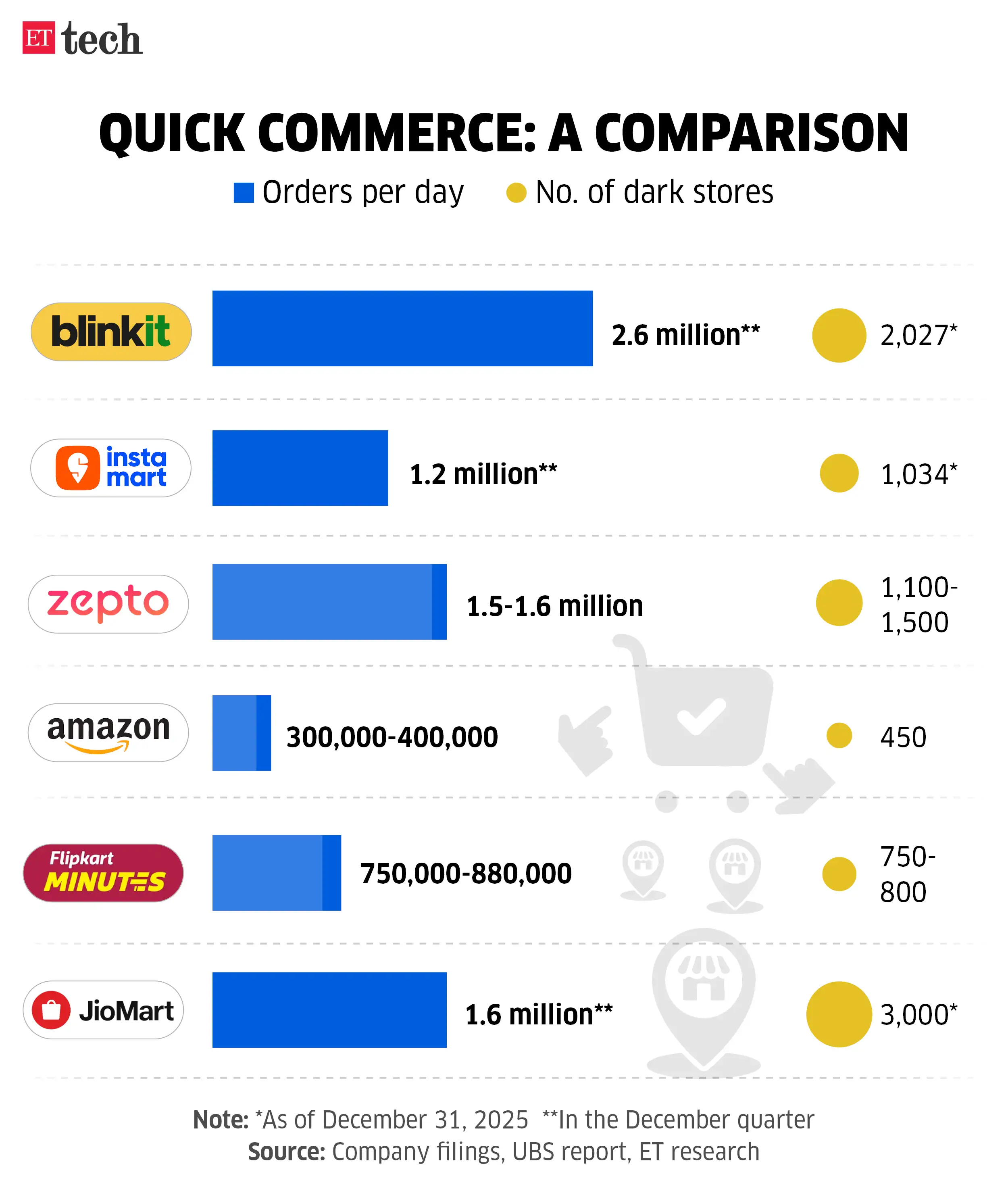
Walmart-owned Flipkart, which launched Minutes in August 2024, had 750-800 dark stores as of March. ET reported that the company has been adding around 100 stores a month this year, and by June it would reach 1,200 stores, on par with Zepto and Instamart.
 Agencies
Meanwhile, rival Amazon India on Thursday announced it will invest Rs 2,800 crore (about $300 million) to strengthen its infrastructure and operations as it plans to double the footprint of its quick commerce vertical Amazon Now.
The adoption of the standalone app for players like Swiggy has been slow, according to brokerage data. Instamart had around 2-3 million daily active users (DAU) from April 2026 till date, per a Bank of America (BofA) report released on Thursday. Instamart is also available on Swiggy’s main app, which accounts for most of its quick commerce orders.
Meanwhile, competitors Blinkit and Zepto, which also have standalone apps, have around 14 million and 12 million DAU, respectively, for the same period.
The Walmart-backed company is preparing for its initial public offering (IPO) next year. In March, it completed its reverse flip, shifting its domicile back to India from Singapore after receiving the government’s approval.
Ahead of its IPO, Flipkart is looking to enter another highly competitive segment, food delivery, as ET reported in February.