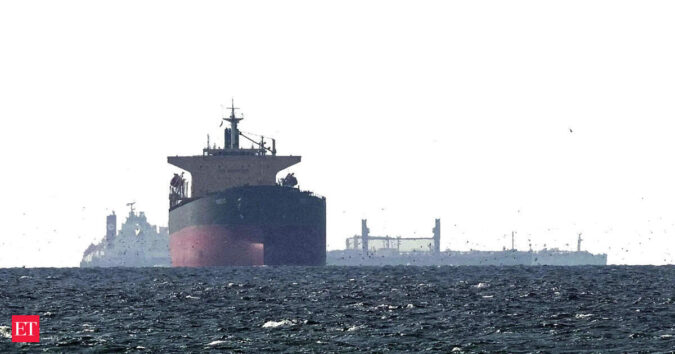
What does flagging of vessels imply?
Flagging a vessel implies it has been registered with a country and adheres with maritime regulations prevalent in the nation. It gives the flag country powers to probe and penalise violations of domestic and international laws. The regulations can vary across nations, encouraging ship owners to scout for an appropriate flag nation to best meet their needs.
What does an Indian flagged vessel mean?
A commercial ship registered with the Directorate General of Shipping is authorised to fly the country’s national flag. These vessels are governed by the Merchant Shipping Act, allowing them to operate under Indian jurisdiction as a sovereign extension on the high seas.
Also Read: Indian refiner Reliance rejects Iran oil cargoes as waiver deadline looms
They are taxed by Indian authorities and adhere with the country’s maritime safety, labour, and environmental regulations. These vessels come to domestic waters for being flagged here and the owner company should be incorporated in the country.What are the benefits for such vessels?
India safeguards interests of flagged vessels through naval and diplomatic interventions. Experts say this entails greater compliance burden for India compared with countries like Panama, and St Kitts, which offer the Flag of Convenience (FoC). According to Rajeev Kumar Yadav, director at Vertex Marine Services, FoC allows vessels to be flagged from anywhere in the world within 3-4 days.
Benefits of being flagged in India can be evaluated on a case-to-case basis. Domestic-flagged ships coming to Indian ports have added advantages through lower port levies and tax liabilities, besides additional priority in government cargo and public sector chartering contracts.
How have Indian flagged vessels fared during the Iran crisis? What about flagged vessels of other countries?
Over two dozen Indian ships were stranded west of the Strait of Hormuz with strict high-risk area designations. The Indian Navy successfully escorted several tankers to safety, but some vessels remain in the Persian Gulf. Fortunately, no direct attacks have taken place on Indian flagged vessels largely due to the balanced approach the country has taken in this crisis.
Can a country exert control over its flagged vessel by deciding tariffs or destinations?
No, being Indian flagged doesn’t allow the government to decide where a ship is going or how much it is charging. The government enforces its civil, criminal, and regulatory frameworks aboard the ship. It dictates compliance with international safety conventions, environmental standards, and crew working conditions.
What are the growth projections for Indian flagged vessels?
The Indian flagged vessel fleet touched 14.2 million Gross Tonnage (GT) this March, with 92 vessels of 1.5 million GT joining the fleet in FY26. This growth is largely driven by the government push. The Maritime Amrit Kaal Vision 2047 aims to significantly increase the Indian-flagged fleet’s global share and boost utilisation of Indian-flagged ships from about 7% to 30-40% by 2047.