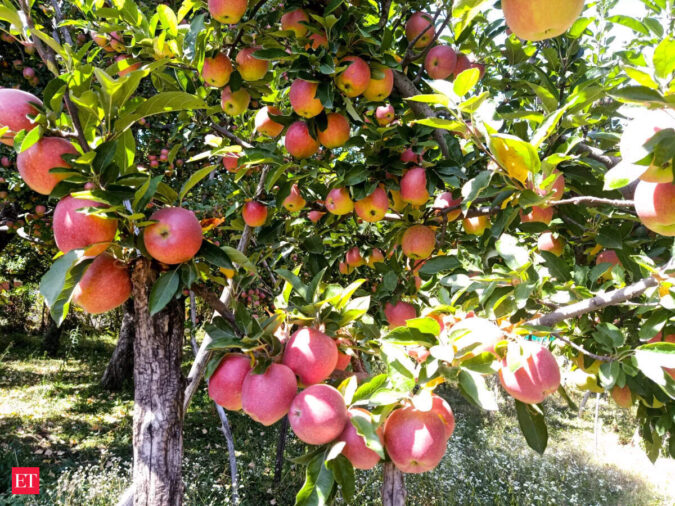
Ganai was speaking at the Apple Conclave organised by the Confederation of Indian Industry (CII) in Srinagar, where orchardists, agri-entrepreneurs, businessmen, academicians and politicians discussed the challenges and opportunities in the horticulture sector, with a particular focus on apples.
Also read | Uttar Pradesh turns to cattle to beef up rural incomes; ₹40,000 subsidy on offer per animal
“We are a Himalayan region, and we should have a sustainable mountain development policy. My suggestion is that every tourist must pay a green cess, through which we can generate revenue of around Rs 1,000 crore,” Ganai said, adding that a nominal research cess should also be collected from orchardists.
“A cess of Rs 100 per kanal, could generate revenue of around Rs 100 crore,” he said.
Ganai said the funds could be used for sustainable development projects, while the research cess could support research at SKUAST and other universities. “We have to take our apples to the global market, and for that, we need to increase production volumes, diversify our varieties and work on certification, supply chain management and traceability of our apple produce,” Ganai said.
Prominent scientist and expert Dr NK Krishna Kumar said Kashmir had immense potential that remained largely unexplored.“Kashmiri apples have not been branded and marketed well. There are also basic problems arising from inadequate cold-chain logistics, which require support from both the J&K and the central governments,” Kumar said. He said Kashmir also had the right climate and geographical conditions to emerge as a seed production hub in North India. “You can produce hybrid seeds that can work wonders for the economy here. Besides, you should focus on walnuts and explore the possibilities of mushroom cultivation,” he said.
Also read | Cotton shortage set to worsen as new deals drive export demand
Earlier, prominent entrepreneur Junaid Altaf said Jammu and Kashmir should aim to increase apple production from 21 lakh metric tonnes to 60 lakh metric tonnes over the next decade. “We need to match global standards in production and technology. The next decade is critical for the apple sector, and Kashmir’s golden age is linked to the future of apples,” Junaid said.
CII convenor Dawar Mir, who moderated a technical session on the region’s apple sector, said collaboration between academicians and businessmen could help explore new possibilities for the emerging class of agri-entrepreneurs.
The Minister for Agriculture Production, Rural Development and Panchayati Raj, Cooperatives and Elections Javed Dar assured participants of the government’s support and expressed hope that academicians and entrepreneurs would come forward with suggestions and ideas that could be implemented on the ground.