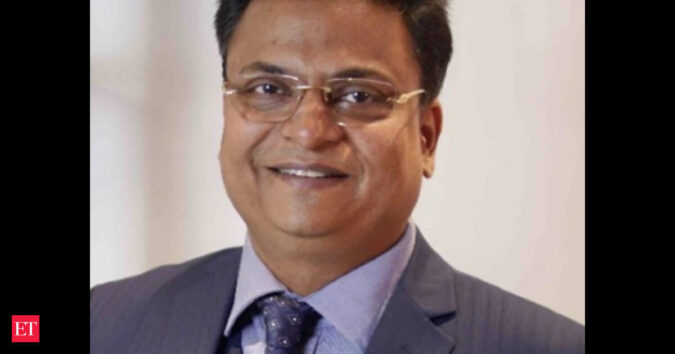
Resistance to chemicals and formulations is an evolving challenge, particularly in crops where the same pest pressures persist over multiple seasons, said Aggarwal in an interview with The Economic Times Digital. For crop-protection companies, this is creating a need to continuously develop technologies that can address changing pest behaviour while improving safety, sustainability and cost-effectiveness, he added.
“Resistance to a formula or chemical is a process that is bringing changes to the technology in Indian agriculture,” said Aggarwal, also Vice-Chairman of the Crop Care Federation of India.
According to him, the emergence of resistance does not automatically mean farmers will shift to every new product entering the market. Adoption depends on whether the technology can demonstrate a meaningful improvement in pest control and justify its cost, he said.
“Farmers are willing to adopt new molecules when they see that these solutions can address their problems more effectively and give them better value for their money. If a new technology delivers the right cost-benefit, they are also willing to pay for it,” he said.
This is making field-level demonstrations increasingly important for the industry, he said. So, companies need to show farmers how new technologies perform under actual crop and pest conditions, rather than relying only on product claims, he added.
“The important part is taking these technologies to the farmers, demonstrating how they work in real field conditions, and helping them understand the benefits. Once farmers see the difference for themselves, adoption becomes much easier,” Aggarwal said.Premium products become central to margin strategy
The shift towards differentiated products is also becoming strategically important for crop-protection companies, as competition remains intense and pricing continues to be closely contested. Aggarwal said raw-material costs have moderated after fluctuations earlier in the season, while continued availability of supplies from China has kept competitive pressure high across the market.
At Insecticides (India), we have focused on pricing discipline rather than pursuing volumes through aggressive pricing, he said. At the same time, we are increasing the contribution of premium and differentiated products, he added.
The strategy has started to reflect in margins. Insecticides (India)’s gross margin increased to 31.6% in Q1 FY27 from 29.2% a year earlier, according to the company.
“We have been working consistently on pricing discipline rather than chasing volumes through aggressive price policies. This approach, combined with a stronger premium product mix, has supported margin improvement,” Aggarwal said.
He expects the pricing environment to remain competitive over the next 12-18 months, but believes margins can progressively benefit from premiumisation, new product launches, operating efficiencies, and the company’s R&D pipeline.
The approach marks a shift from volume-led growth towards differentiated crop-protection solutions where companies can command better realisations by demonstrating a clear value proposition to farmers.
Notably, the company’s consolidated annual revenues increased to Rs 2,140.0 crore in FY26, from Rs 1,999.9 crore in FY25 and Rs 1,966.4 crore in FY24.
Weather volatility masks underlying demand
The push towards innovation comes at a time when weather conditions continue to create significant volatility in India’s agricultural-input markets.
Insecticides (India) reported a 12% year-on-year decline in consolidated revenue for the quarter ended June 30, 2026, with deficient and uneven rainfall disrupting crop activity and delaying demand.
Aggarwal said the slowdown was largely weather-driven, while the possibility of El Niño remains a factor to monitor. However, the eventual impact will depend on the timing and geographical distribution of rainfall across key agricultural regions.
With monsoon conditions improving, the company expects demand to recover gradually in the next crop season, particularly in horticulture crops in southern and western India.
Despite short-term weather-related fluctuations, Aggarwal said the underlying crop-protection market continues to have structural growth drivers. Farmers continue to require crop-protection products to protect yields from evolving pest pressures and increasingly uncertain climatic conditions.
Paddy, soybean, maize, cotton, and sugarcane remain among the major demand centres. At the same time, fruits and vegetables are becoming important markets for newer technologies and specialised crop-protection solutions, he said.
According to him, product categories are also evolving. Herbicides have witnessed increasing demand in recent years, while insecticides continue to grow, with fungicides and plant growth regulators also gaining traction, he said.
This diversification, he said, is important for companies because weather conditions do not affect all crops and geographies in the same manner. A wider product portfolio and presence across multiple crops can, therefore, help companies manage volatility in individual segments.
From products to integrated crop solutions
For Insecticides (India), the response to changing pest pressures is part of a broader transformation from a conventional product-led company towards an integrated crop-solutions provider.
Aggarwal said one of the key milestones in this journey has been the company’s ability to bring newer technologies to farmers through a combination of in-house research and strategic partnerships with global agrochemical companies.
Insecticides (India) has partnerships with Nissan Chemical Corporation, OAT Agrio, and Corteva Agriscience, among others, which allowed the company to access global technologies while combining them with its understanding of Indian agricultural conditions.
The company has also expanded its capabilities across technical synthesis, formulations, biologicals and eco-friendly crop-protection technologies. It has a network of more than 8,500 distributors and 70,000 retailers in India and the company exports to more than 20 countries, according to Aggarwal.
R&D and global partnerships drive new products
Research & development (R&D) has become a central part of this strategy, said Aggarwal. Insecticides (India)’s new-product invention R&D centre in Rajasthan, established through a joint venture with Japan’s OAT Agrio, has strengthened its product-discovery capabilities and work on new molecules. Aggarwal noted that developing new molecules is a long and time-consuming process, making strategic partnerships important for accelerating access to global technology.
The company’s collaboration with Nissan Chemical has resulted in more than six products, with ALTAIR, a pre-emergence herbicide for paddy, among its latest offerings.
The partnership with Corteva Agriscience has resulted in GRANUVIA, which IIL positions as a solution for controlling stem borer and brown plant hopper in paddy.
Collaborations with OAT Agrio and Momentive have also helped the company introduce products such as Chaperone and Agro Spred Max.
“These collaborations complement our in-house R&D, which now works on technical synthesis, new formulations and biologicals,” Aggarwal said.
India eyes a larger role in global crop protection
Beyond the domestic market, Insecticides (India) sees exports as another potential growth avenue. Aggarwal said India’s manufacturing capabilities, R&D strengths, and cost competitiveness create an opportunity for the country to emerge as a credible alternative crop-protection manufacturing and export base.
For Indian companies, however, building a larger global business will be a gradual process. Overseas registrations, product development, customer relationships and consistent quality and supply will remain critical.
Insecticides (India) is expanding its international business across Latin America, Europe and ASEAN, with a focus on technicals, formulations and contract manufacturing. The company has also invested in an export-oriented unit at Dahej SEZ.
“While exports currently form a smaller part of our business, we expect them to increase steadily over the next few years, supported by our innovation pipeline and global partnerships,” Aggarwal said.