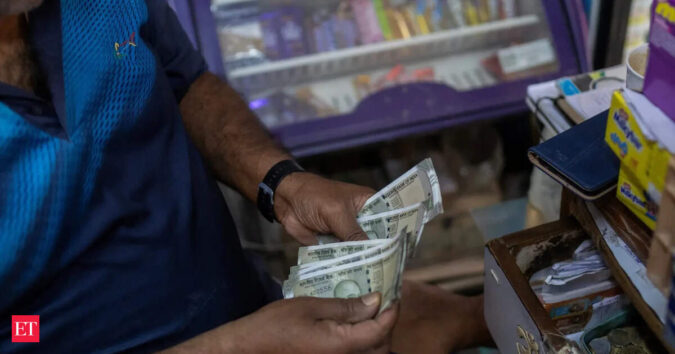
The report says that the activity remains concentrated in core categories, with spending beyond essentials picking up only in a few areas. Within travel, while overall intent has eased after the festive peak, demand is shifting towards premiumisation, with value, comfort and reliability driving preferences.
This pattern extends to food as well, where households continue to prioritise quality. For vehicles, purchase intent has softened even as interest in EVs continues to rise, pointing to a measured approach to big-ticket purchases and a longer-term shift towards new mobility technologies.
“Indian consumers are entering a phase of calibrated consumption. They are becoming more mature and resilient, balancing aspiration with financial discipline and intentional decision-making. Households are not stepping back from consumption; they are becoming sharper about where value lies, prioritising essentials, upgrading experiences and deferring large commitments. Improved food frugality and stable savings behaviour reinforce this shift. At the same time, continued interest in EVs points to a growing focus on future readiness,” said Anand Ramanathan, Partner and Consumer Industry Leader, Deloitte South Asia.
India’s Financial Wellbeing Index (FWBI) reached 111.1 in March 2026, marking an improvement from 109.1 in March 2025. This performance consistently outpaced global counterparts, which stood at 102.7, and the Asia Pacific region, at 102.0, during the same period.
While overall financial confidence remains stable, specific indicators reveal growing caution. The willingness to make large, non-essential purchases dipped by 5 points month-on-month to 65 percent, while 79 percent of consumers remain confident about meeting their upcoming payments.
Concerns regarding rising prices are becoming more pronounced, with 73 percent of Indian consumers now expecting higher prices across most categories next month, a figure notably higher than the global average of 74 percent but lower than the APAC average of 65 percent.Anxiety is particularly concentrated in utilities, with 75 percent of consumers expressing concern, an 8-point month-on-month increase, and gasoline/fuel, where concern surged by 11 points year-on-year.
India’s Food Frugality Index (FFI) rose to 98.3, signalling that households are more actively managing their grocery budgets. Food consumption behaviour reflects a move towards optimisation rather than sacrifice.
Around 31 percent of consumers are reducing food waste, while only 11 percent report buying less than desired, and 12 percent are trading down to lower-cost options, suggesting that most households are maintaining quality while managing costs more efficiently. Additionally, 15 percent of consumers are opting for store brands, highlighting a balance between price sensitivity and brand loyalty.
Travel and hospitality trends reveal a transition towards premium, high-value experiences. While intent for leisure travel has declined slightly following the seasonal peak, including a 7 percent drop in international travel YoY, there is a clear trend towards “trading up” rather than “trading down.”
Consumers are increasingly allocating their budgets towards full-service airlines, upgraded seats and upper-class lodging, with the intent to spend on curated experiences rising by 1 point to 29 percent compared with the same period last year.
Vehicle Purchase Intent (VPI) has moderated, with the index sitting at 85.2 in March 2026. This reflects a more cautious environment where 43 percent of consumers feel their current vehicle still meets their needs, and 12 percent are hesitant to commit large expenses during economic uncertainty.
Conversely, the EV sector remains a robust growth pocket; EV purchase intent has maintained a consistent 60 percent level, driven by consumer desire for tech-forward features, lower maintenance costs, and a move toward sustainable driving alternatives.
As Indian consumers continue to evolve, their behaviour reflects a shift towards purposeful consumption, balancing aspiration with prudence. This pattern underscores a structurally resilient consumer base that is adapting to economic realities while continuing to seek value, quality and meaningful experiences.