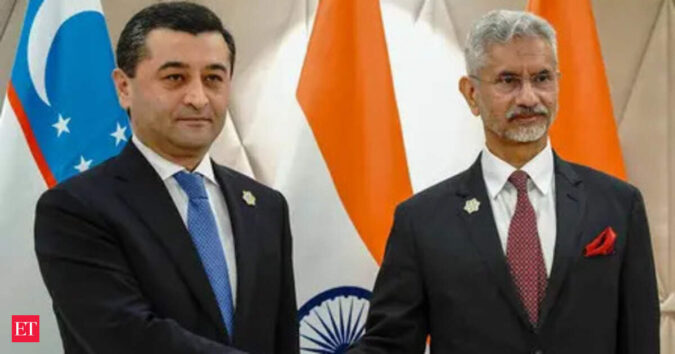
The issues were taken up at the 14th Session of the India-Uzbekistan Intergovernmental Commission on Trade, Economic, Scientific and Technological Cooperation.
India-Uzbekistan goods trade was $672.5 million in FY26.
“The Indian side suggested cooperating on customs data exchange and exploring interlinking of payment infrastructure for secure and efficient payments, with a view to supporting tourism, trade and commerce,” commerce and industry ministry said in a statement.
Agricultural products, processed foods, agricultural machinery, engineering goods, electrical machinery, electronics, smartphones, textiles, chemicals, healthcare services, education services, tourism, logistics and other business services were the other categories where Indian supplies to Uzbekistan can be expanded.
Pharmaceuticals were identified as a priority area as India can supply affordable and quality-assured medicines, vaccines and active pharmaceutical ingredients.Agriculture and allied sectors received focused attention. Both sides recognized India’s capabilities in agriculture and allied exports, processed foods, agricultural machinery, seed development, agricultural research and climate-resilient farming technologies.
The two sides also discussed ICT and digital cooperation and energy as an area of strategic cooperation.
India noted that its fast-growing digital economy, including rising demand from artificial intelligence, data centres and advanced computing, requires reliable and clean baseload power.
Also read: Uzbekistan’s evolution in the international financial system
“In this context, ensuring critical minerals supply was identified as an important area for advancing India-Uzbekistan energy cooperation,” it said.
New Delhi stated that non-tariff barriers relating to approvals, standards, testing, certification, customs procedures and market-access requirements need regular review; and businesses need predictability, regulators need dialogue and standards bodies need direct contact. A time-bound mechanism on resolving non-tariff barriers to trade would help convert goodwill into trade outcomes.