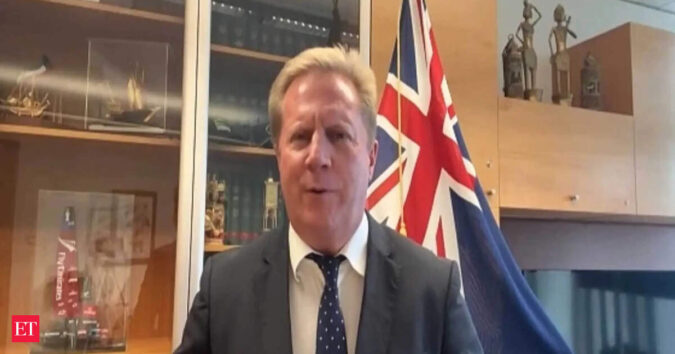
In an interview with ANI, McClay said the FTA is expected to come into force within the next month, with India and New Zealand now working on exchanging official notes to initiate the implementation process.
Also Read: New Zealand parliament passes ‘once-in-a-generation’ India trade deal, cutting tariffs on most exports
“We’re very close now,” McClay said, noting that the agreement had received strong backing in the New Zealand Parliament.
The implementing legislation has since received Royal assent, completing the domestic legislative process in New Zealand.
McClay said the agreement would give Indian exporters zero-tariff access to the New Zealand market from day one, opening opportunities particularly in pharmaceuticals, chemicals, machinery and services.
“On day one, every single thing India wants to sell to New Zealand will be at a zero-tariff rate,” he said.The agreement is also expected to deepen New Zealand’s access to India’s large consumer market, with opportunities in food, services, investment and other sectors.
McClay said he expected the FTA to encourage greater investment in both directions, including in infrastructure, manufacturing, science and innovation.
He cited the example of a New Zealand company planning to establish a manufacturing facility in India, saying the agreement would provide greater confidence for businesses looking at investment opportunities in both countries.
The two countries have set an ambitious target of doubling bilateral trade by 2030. McClay said current two-way trade was around NZ$4 billion and expressed confidence that the target could be exceeded.
New Zealand’s official bilateral framework sets an aspiration of taking two-way trade to NZ$7 billion by 2030.
Also Read: India’s billion-dollar trade juggernaut has an unwanted case of missing balance
The minister also highlighted the people-to-people dimension of the agreement, particularly education.
He said Indian students would continue to be welcomed in New Zealand and pointed to existing arrangements allowing master’s and PhD students to work for longer after their studies.
“I think we can attract students who’ll come, get a good education, and they’ll take those skills and some of the experience they get in New Zealand back to India as that economy continues to grow,” McClay said.
McClay also predicted that direct flights between India and New Zealand could begin within about a year, which he said would boost tourism, business travel and visits by families and friends.
Reflecting on how the two countries managed to conclude negotiations in just nine months after years of discussions, McClay said the key change was political trust.
“There is uncertainty all around the world,” he said, pointing to fluctuating tariff rates faced by businesses globally.
“But between India and New Zealand, we’ve now made a commitment, and the two governments have said, ‘We trust each other. We will honour these commitments’,” he said.
McClay said his negotiations with Goyal had also developed into a close working relationship.
“We decided we wanted to do the highest-quality agreement as quickly as we could,” he said.
Calling the pact “one of the highest-quality agreements” New Zealand and India have negotiated, McClay said it could send a wider message at a time when businesses are looking for certainty.
“I think it can be a beacon for others to also do what we have done, where, when you respect the rules, businesses can grow and flourish,” he said.
“This free trade agreement will create jobs in India and New Zealand,” McClay added.