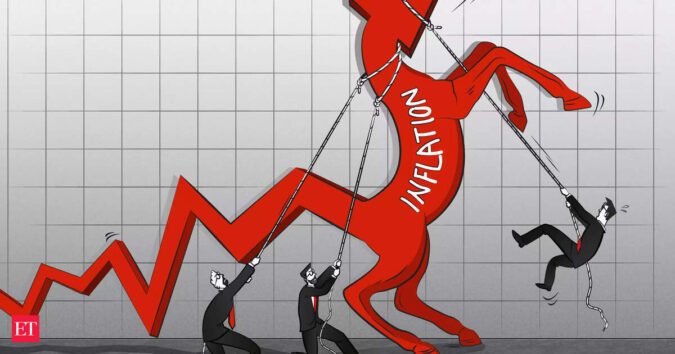
Consumer prices rose 4.38% from a year earlier in June — rising above the Reserve Bank of India’s target for the first time in nearly a year and a half as higher food and fuel costs filtered through the economy. Yet, a majority of economists expect the central bank to keep rates at 5.25% in 2026, saying there’s still little evidence price pressures are broadening.
That outlook is being tested by President Donald Trump’s decision to reinstate a blockade of Iranian ships transiting the Strait of Hormuz, reviving concerns over energy supplies for the world’s third-largest oil importer.
“Oil prices have started to increase once again,” Sameer Narang and Jyoti Sharma of ICICI Bank wrote in a note. “This has added an element of uncertainty to inflation as well as growth.”
Core prices, ex-gold and silver, are inching up too, though they remain at 2.5%. Narang and Sharma estimate this measure to nudge above 4% toward the end of the year — becoming a potential trigger for the RBI to raise rates by 50 basis points “once this inflation gauge sustainably moves above 4%.”
The RBI targets inflation at 4%, with a tolerance band of 2% to 6%. Its next policy decision is due on Aug. 5.
 Bloomberg
Data released Tuesday showed a measure of prices received by wholesalers climbed near 10% in June from a year earlier, exceeding the median estimate for a 9.2% increase. Unlike producer prices, the index also captures commercial mark-ups and has rebounded steadily this year after spending much of last year in deflation.
India’s retail fuel prices also remain elevated following recent increases by state-owned retailers.
Still, economists don’t expect further increases with crude oil trading closer to the mid-$80s a barrel, from above $100 earlier this year. That’s one reason why many have pushed back or abandoned their calls for further tightening, arguing policymakers have room to wait.
Among the outliers is Upasna Bhardwaj at Kotak Mahindra Bank who forecasts half a percentage point of rate hikes in the second half of the fiscal year, possibly beginning in December.
“We remain cautious on the impact of the recent re-escalation of geopolitical tensions and the plausible upside risks on oil prices,” said Bhardwaj. For now, she expects the RBI to “remain on a wait and watch mode” as it assesses the impact of pass through of supply-side pressures into core inflation.
An intensifying El Niño has raised concerns that below-normal rainfall could hurt crop production and lift food prices later this year. Seasonal monsoon rainfall is running 18% below the long-term average. As of July 3, farmers had planted only about one-third of the normal area for kharif, or summer-sown, crops — down 20.8% from a year earlier, Aastha Gudwani, India chief economist at Barclays Plc.
Gudwani expects inflation to accelerate toward the upper end of the RBI’s tolerance band in the December quarter because of unfavorable base effects and weaker rains. However, she still believes policymakers will remain on hold.
“Hopefully, as rains pick up, sowing decline should taper too,” Gudwani said. “That said, should slower sowing yield lower output, we expect the government to dip into its buffer stocks.”