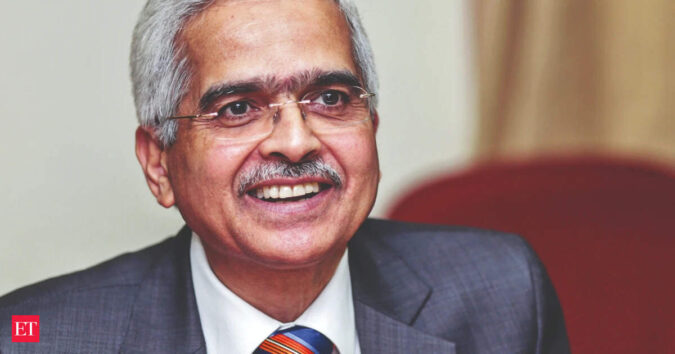
In his address at the launch of the India and Emerging Economic Order Forum (IEOF), organised by the Delhi School of Economics (DSE) and Research and Information System for Developing Countries (RIS) on Tuesday, principal secretary 2 to the prime minister Shaktikanta Das said both urban and rural demand were upbeat, lending support to economic activity. “High-frequency indicators such as GST (goods and services tax) collections, electricity generation, rail freight movement, wholesale and retail vehicle sales and similar other trends point to broad-based economic momentum,” he said, while calling for cutting import dependence in energy.
Also read | MSME data to power National Business Register
India recorded average annual real GDP growth of 7.9% between 2021-22 and 2025-26, while growth in the first quarter of 2026-27 stood at 7.8%, he noted. He attributed the momentum to domestic demand, industrial and services activity, and a series of structural reforms, including GST, the Insolvency and Bankruptcy Code, flexible inflation targeting, public-sector bank recapitalisation, the Real Estate (Regulation and Development) Act (RERA) and India’s digital public infrastructure. He also highlighted developments in three sectors including space, nuclear and domestic energy exploration that could offer lessons for other developing countries.
Global South & India
Das, a former Reserve Bank governor, highlighted India’s potential to play a leading role in shaping the emerging global economic order. He said the changing global landscape presented significant opportunities for developing economies and their collective voice can constitute a powerful force in shaping global economic outcomes.
Also read | Services output grows 13.5%, 17 of 19 sectors expand
“They (Global South economies) continue to face asymmetric challenges from the current developments in the global economy, trade and geopolitics,” Das said, adding that these challenges have to be addressed through strengthened international cooperation, sustainable development financing, and a more inclusive and representative global economic order. He said the economic gravity of the world is shifting eastwards with the Global South steadily increasing its footprint in the world economy and geopolitics. These shifts, he noted, are reshaping the contours of the global economy and will leave behind a lasting impact on the way the world does business and trade in the years to come.”The rise of the Global South is one of the most defining features of the transformation taking place in the international geoeconomic landscape today,” he said, adding that the Global South must dream together and also actualise that dream together.
Das noted that the Global South has not just made strides on the economic front but also on the social indicators front, highlighting reductions in extreme poverty, improvements in life expectancy and wider access to education. However, he said, developing economies continued to face significant challenges, including poverty, debt vulnerabilities, infrastructure gaps, climate change, food and energy insecurity, unequal access to technology, and also the demographic challenge with about 1.2 billion young people expected to reach working age over the next decade.
Das said the newly launched forum could emerge as a platform for research, policy dialogue and knowledge-sharing among countries of the Global South. He suggested that the IEOF focus on global supply chains and innovation ecosystems, policy evaluation, climate finance and resilience, urbanisation and infrastructure finance, local-currency financing and financial inclusion.