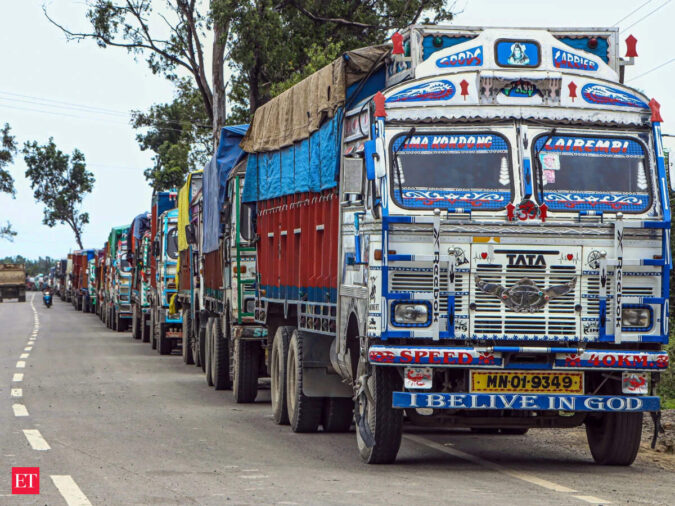
Under the current law, GST officers can stop vehicles in transit irrespective of jurisdiction and ask for documents. An e-way bill is mandatory for transiting goods valued at Rs 50,000 and above both inter and intra states.
On October 8, the 57th GST Council meeting approved that only the state in which the goods started (source state) and the destination state may inspect the goods moving in a conveyance. States along the route will not be able to stop the conveyance.
Once government notifies the new provisions, GST officers will be allowed to stop such vehicles carrying high valued goods only on specific intelligence, and the decision to stop must be authorised in advance by an officer not below the rank of Joint Commissioner.
However, the e-way bill and other documents are still required and will be matched in the system, sources to PTI. “The decision to allow stoppage of vehicle in transit by a GST officer only at origin and destination is to ensure that there is no fishing expedition. Any inspection by an officer will have to be based on inputs,” a source said.
The government had proposed to the GST Council to allow only tax officers at the source state to stop a vehicle for inspection. On the other side, the states wanted destination state officers’ right to inspect as well.
The source cited above said that if a goods vehicle moving from Delhi to Punjab gets stopped in Haryana now, then the legitimacy of stopping the vehicle in Haryana can be questioned legally by the business, the source said.