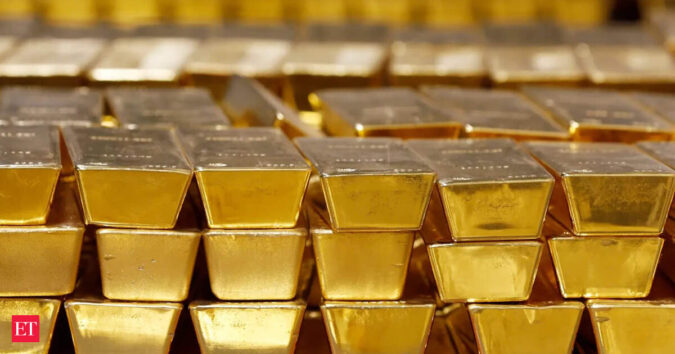
The destinations differ, as do the reasons given by the central banks. The Netherlands cited crisis preparedness and easier access to London’s gold market. France said its New York-held bars did not meet the required purity standard. India’s data shows a rise in domestic holdings, although the Reserve Bank of India has not explained the change.
The moves also come as central banks continue to buy gold and review where their reserves should be stored.
London gets the Dutch gold
De Nederlandsche Bank transferred approximately 86 tonnes of gold from New York and Ottawa to London between March and August 2026.
More than 78 tonnes came from New York and about 7 tonnes from Ottawa. The transfer reduced the share of Dutch gold held in New York from 31.3% to 18.5%. Ottawa’s share also fell from 19.7% to 18.5%.
The Netherlands has not withdrawn all its gold from North America. New York and Ottawa each still hold 18.5% of the country’s total reserves.
London’s share rose from 18.1% to 32.1%, making it the largest overseas location for Dutch gold. The share held at DNB’s cash centre in Zeist remained at 30.8%.DNB’s total gold reserves remained unchanged at 612.4 tonnes. The reserves were worth €72.2 billion at the end of 2025, according to the Dutch central bank.
DNB said it made the move in view of “increasing geopolitical unrest”. It said the relocation would improve the liquidity and tradability of its reserves and make them more readily available during a crisis.
“With this relocation, we have improved the tradability of our gold reserves. We expect that we will never need to use them, but we do need to strengthen our resilience and preparedness,” DNB Governor Olaf Sleijpen said.
The gold did not all travel
The Dutch operation involved both physical transfers and transactions in the gold market.
DNB sold approximately 59 tonnes of gold in New York and bought an equivalent quantity in London. More than 27 tonnes was physically transferred from the United States and Canada to Zeist. A similar quantity was then sent from Zeist to London.
DNB said this process prevented the need to melt and recast the bars.
The central bank said gold held with the Bank of England must meet modern international trading standards. It said London is a major centre for trading physical gold and that gold stored there could be accessed more readily during a crisis.
The Bank of England remains one of the world’s largest gold custodians. About 400,000 bars worth more than £200 billion are held in its vaults, according to the BBC.
France moved for purity, not politics
France also moved gold from New York to Europe, but gave a different reason for the decision.
The Banque de France said 129 tonnes held in New York did not meet the London Bullion Market Association’s 99.99% purity standard. Instead of transporting and remelting the bars, it sold them and bought equivalent gold in Europe.
The transaction generated an exceptional capital gain of €11 billion in 2025, according to the Banque de France.
France’s total gold reserves remained unchanged at 2,437 tonnes. The bank said it had followed a policy since 2005 of bringing its gold reserves in line with market guidelines.
The Banque de France did not attribute the move to geopolitical tensions. Its stated reason was that the bars held in New York did not meet the required market standard.
India’s gold is moving in the opposite direction
India’s latest official figures show a different pattern from the Netherlands.
The RBI held 880.52 tonnes of gold as of March 31, 2026, according to its annual report.
Of this total, 312.32 tonnes was held in India as backing for notes issued. Another 367.73 tonnes was held in India as an asset of the RBI’s Banking Department.
Together, 680.05 tonnes—or about 77% of the RBI’s total gold—was held in India. The RBI held 200.47 tonnes abroad.
In March 2025, 511.98 tonnes was held in India and 367.60 tonnes abroad. The RBI’s figures show that domestic holdings increased by about 168 tonnes in one year, while total holdings rose by less than one tonne.
The RBI’s annual report records the location of its gold but does not provide a specific reason for the change.
The data therefore shows two different approaches. The Netherlands increased the share of its reserves held in London because it considers the metal there more readily tradable. India’s figures show that a larger share of its gold is now held domestically.
Germany’s gold came back earlier
Germany provides an earlier example of a major gold repatriation programme.
The Bundesbank transferred 300 tonnes from New York and 374 tonnes from Paris to Frankfurt between 2013 and 2017. The transfers were part of a plan to hold half of Germany’s gold reserves in its own vaults.
After the programme, Germany held 1,710 tonnes in Frankfurt, 1,236 tonnes in New York and 432 tonnes in London, according to the Bundesbank.
The Bundesbank said it inspected the transferred bars in Frankfurt and found no irregularities relating to their authenticity, purity or weight.
More central banks are reviewing their holdings
The relocation of gold is taking place alongside higher central-bank demand for the metal.
A 2025 World Gold Council survey found that 44% of central banks actively managed their gold reserves during the year, compared with 37% in 2024. The share that held at least some gold domestically rose to 59% from 41%, according to the survey.
The World Gold Council also said central banks accumulated an average of about 1,000 tonnes of gold a year over the previous four years. The average was about 500 tonnes a year during the preceding decade.
Goldman Sachs analysts Lina Thomas and Daan Struyven told the BBC that “where to store your country’s gold is increasingly top of mind for reserve managers”.
“Domestic storage requires investment in physical security, audit infrastructure, and insurance; costs that can be disproportionate for smaller central banks,” they said.
This means that keeping gold at home can give a central bank direct custody, but it also involves spending on vaults, security, audits and insurance. Foreign storage, meanwhile, can provide access to established trading and settlement systems.
Gold prices add to the focus
Gold’s price has also risen sharply in recent years.
The metal passed $5,000 an ounce in January 2026 and reached an inflation-adjusted high of about $5,394 in February. By July, it had fallen to around $4,046 but remained above most historical levels.
Goldman Sachs analysts expect the price to reach $4,900 per troy ounce by the end of 2026.
Joseph Cavatoni, senior market strategist at the World Gold Council, told the BBC that wars and trade tensions were “playing into some of these decisions”, but did not “top the list” of motivating factors. He said inflation, interest rates and the ability to trade gold quickly were also important.
“I don’t get a sense that there’s an impending doom,” Cavatoni told the BBC. “But what I do think is people are being better educated around how to manage their reserve assets, growing their reserve assets, and actually thinking more effectively around how to make the most of those assets.”
The recent movements show that central banks are not following one common storage policy. The Netherlands has increased its holdings in London, France has replaced non-compliant bars in Europe, Germany earlier moved gold to Frankfurt, and India’s data shows a larger share of reserves held at home.