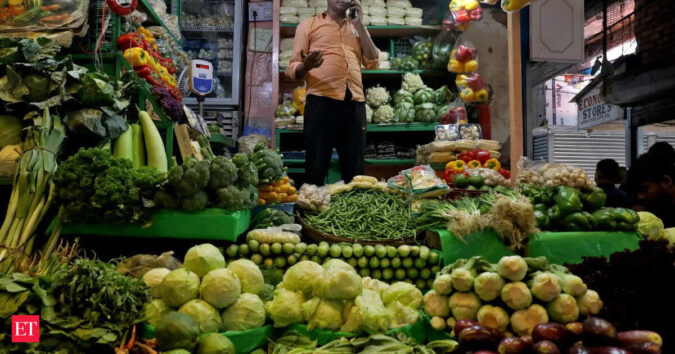
The rise in these everyday kitchen staples comes as India’s food inflation climbed to 5.52% in July from 5.32% in June. But the pressure is not spread evenly across the vegetable basket: potato prices fell 16.56% year-on-year, while tomatoes and peas also became cheaper. Rice and sugar prices, meanwhile, are beginning to add to the pressure, making the food-price picture more complicated than a conventional onion-tomato-potato spike.
The result is a food basket where some of the most visible pressure is coming from ingredients used in everyday cooking rather than from the usual potato-tomato combination.
Dhaniya is the latest price shock
Coriander prices have risen sharply after heavy rainfall disrupted supplies from Nashik, one of the important sourcing centres for the fresh herb. As per an ET Bureau report, the rain disrupted the supply chain, with coriander prices nearing Rs 175/kg in wholesale, Rs 220-230/kg retail.
Green chillies have also faced supply disruptions.
Fresh coriander is particularly vulnerable to a disruption in arrivals because it is highly perishable and moves quickly from farms to wholesale and retail markets.
The rise comes alongside much larger year-on-year increases in ginger and garlic.Ginger inflation accelerated to 83.62% in July from 50.41% in June, while garlic inflation rose to 35.36% from 17.93%. Onion inflation increased to 22.54% from 4.73%.
These increases are happening even as some vegetables have become cheaper, showing that the current food-price movement is being driven by different supply conditions across crops.
The monsoon is doing two different things
The weather backdrop is unusually complicated.
India’s monsoon opened with its fifth-driest June on record, with rainfall 39.8% below normal, according to IMD data. The rains then swung sharply in July, with a sudden deluge in early July followed by another break. By July 19, cumulative national rainfall was about 24% below normal for that point in the season, according to a Bloomberg report.
That pattern matters more than the headline rainfall number.
Dry spells can delay sowing and affect crop development. Heavy rain, when it arrives in concentrated bursts, can damage standing crops, delay harvesting and disrupt the movement of produce to markets.
About half of India’s farmland still depends on rainfall for irrigation, according to the ET report. The swings between dry periods and intense rainfall have already disrupted summer crop sowing and raised concerns about agricultural output.
For perishable crops such as coriander and other greens, the disruption can show up quickly in wholesale arrivals.
El Nino adds another layer of risk
The concern is not only about this year’s rain deficit.
A developing El Niño has added uncertainty to the second half of the monsoon. El Niño and global warming are contributing to increasingly erratic rainfall patterns, with longer breaks followed by intense downpours.
The Reserve Bank of India has also flagged a below-normal and uneven monsoon as a risk to food prices. The central bank’s assessment noted that food accounts for nearly half of the CPI basket and that poor or uneven rainfall can reduce supplies of vegetables, pulses and cereals.
The risk is already visible in pulses. The government recommended temporarily halting open-market sales of tur and chana from its buffer stocks as pulse acreage stood 15% below last year’s level as of July 17. The decline was largely attributed to scant rainfall in central India through June, with the delayed monsoon compressing the sowing window.
So the weather risk extends beyond the vegetable market.
Rice prices are rising too
Rice is a more important indicator for household food costs because it is a major staple and carries a much larger consumption footprint than coriander or ginger.
Retail rice prices have already moved higher. Government data showed the average retail price of rice across India rising from ₹42.92 a kg in May to ₹44.35 a kg in July, an increase of 3.33%.
Also Read: Asia Rice- India rates hit near one-year high on tight supply
The increase was sharper in Telangana, where the average price rose from ₹51.66 to ₹54.06 a kg, or 4.65%, during the same period. Traders in the state attributed the increase partly to concerns over the crop because of El Niño, while experts also pointed to hoarding by private players as a factor.
The rice market, however, has a buffer that several fresh vegetables do not.
India’s foodgrain reserves have risen to a five-year high. As of May 1, the central pool held 42.8 million tonnes of wheat and 38.95 million tonnes of rice, according to ET Agriculture. The stocks give the government room to intervene if supply concerns intensify.
That means a weaker monsoon does not automatically translate into a rice shortage. But paddy sowing, crop conditions and prices will remain important indicators as the kharif season progresses.
Sugar is another pressure point
Sugar is showing a different kind of price movement.
Domestic sugar prices have risen to record levels, with increase driven by concerns over tight supplies and low inventories in Maharashtra and Karnataka. Industry bodies, however, said stocks were adequate to meet domestic demand and expected production to improve in the coming season.
The price rise has been sharp enough to prompt government intervention.
The Centre imposed nationwide stock limits on private sugar traders and dealers from August 1 to November 30, with dealers restricted to holding no more than 4,000 quintals at a single location. The move was aimed at preventing hoarding and speculative trading ahead of the festival season.
Ex-mill sugar prices had risen about 17% in a month, although retail sugar prices had increased by only around 1.8% over the same period. Industry participants differed over whether the rise reflected genuine supply concerns or speculative hoarding.
The sugar market therefore has a different dynamic from coriander or ginger: the immediate price increase is being driven partly by market expectations and inventory concerns, while the next season is expected to bring higher production.
This is not a blanket vegetable price rise
The July data makes that distinction clear.
Potatoes, tomatoes and peas have become cheaper even as ginger, garlic and onions have risen sharply. Rice is moving higher, while sugar prices have climbed in the wholesale market.
That means food inflation is being shaped by several different factors at the same time — crop-specific supply, rainfall, market inventories and expectations about the next harvest.
The broader food basket is already showing the effect. Crisil data showed the average vegetarian thali becoming 4% more expensive in July from a year earlier, while the non-vegetarian thali became 9% more expensive. Onions, vegetable oil and LPG were among the contributors.
Last year, the picture was very different
The contrast with 2025 is sharp.
In July last year, India’s Consumer Food Price Index recorded -1.76% inflation, while urban food inflation was -1.90%. Prices of vegetables, pulses, cereals, eggs and sugar were among the categories that declined. Overall retail inflation fell to 1.55%, its lowest level since June 2017.
That means the current food-price increase is coming against a period of unusually low food inflation.
The difference is visible in the vegetable basket as well. Last year’s easing in food prices was broad, while this year’s movement is much more mixed, with sharp increases in some kitchen staples alongside declines in others.
Now, the immediate question is whether the current price increases remain concentrated in individual commodities or spread across a larger part of the food basket.
The weather will be central to that.