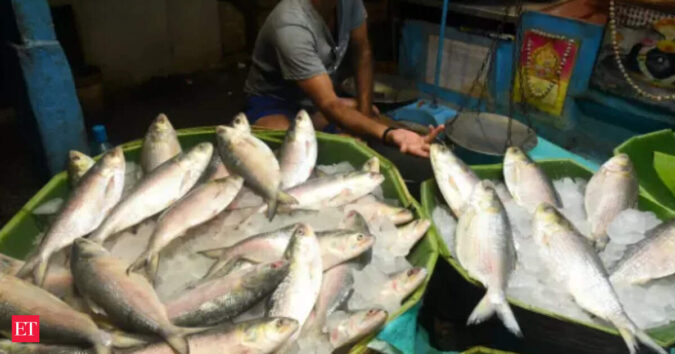
Since India’s eastern neighbour banned hilsa exports in July 2012 to curb excessive fishing, Kolkata-based importers have continued to intensify pressure on Dhaka to relax the curbs, especially during Durga Puja, when demand traditionally peaks in states such as West Bengal, Assam, and Tripura.
Durga Puja starts October 17 this year and importers are pushing Dhaka to allow hilsa exports early.
They said late permissions and tight export deadlines have repeatedly prevented the full permitted quantity of the fish – considered a gastronomic delight – from reaching the Indian market.
Hilsa is a seasonal, wild-caught fish. Its harvesting is limited to a few months each year, primarily the monsoon season, making its availability restricted.

During this time, hilsa migrates upstream to breed in freshwater rivers, and this journey enhances its fat content, enriching both taste and texture.
Also read: India, Canada begin next round of talks on proposed trade pact: OfficialImporters in Kolkata, who have been bringing hilsa from Bangladesh through Benapole and Akhaura land ports since 1996, said they have also repeatedly urged Dhaka to reverse the ban, without success.
This year, importers want the export permission to be granted well before late September and without a cut-off date.
“The permission usually comes with an export window of only 15-20 days, which makes it difficult to execute shipments at scale and therefore the actual import remains much less than the export order issued by the Bangladesh government,” said Syed Anwar Maqsood, secretary of Fish Importers Association in Kolkata. “We were in Bangladesh last month and met the commerce secretary of Bangladesh on the same issue. We have also urged their government to issue export permissions specifically to established fish exporters,” he said. Since September 2019, Bangladesh has allowed special, limited exports of hilsa during the Durga Puja period as a goodwill gesture.
The numbers cited by the association underline the gravity of the matter. “In September 2025, Bangladesh permitted 1,200 tonnes of hilsa exports but only 150 tonnes were actually exported,” said Maqsood. “A year earlier, against a permission of 2,420 tonnes, actual exports stood at 577 tonnes. In 2023, the gap was even wider, with only 587 tonnes exported against permission for 3,950 tonnes.”
While Indian importers continue to push for timely hilsa imports from Bangladesh, notably, the country has exported 500 tonnes of hilsa from Bharuch in Gujarat for the first time.
“This time, Gujarat had overproduction of hilsa,” said Maqsood. “The hilsa from Gujarat has limited demand in India because of its high egg content. What Bangladesh is doing is that they are taking out the egg from the hilsa and exporting them to the US and Europe. The remaining fish are being dried and are sold in the dry fish markets of Chittagong and Sylhet regions of Bangladesh.”
Indian fish importers said permissions have sometimes been granted to entities outside the fish trade by Bangladesh, many of whom failed to export even a kilogram of hilsa.