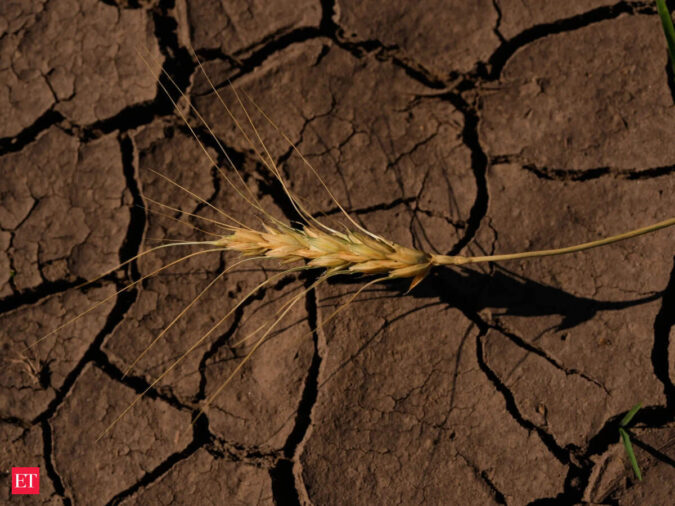
“We are not so much worried for the next few months. What concerns us is the next year–2027,” said Bimal Kothari, president of the Indian Pulses and Grains Association, as the rabi chana harvest emerges as a key determinant of the price of pulses.
Read more: El Nino could rank among strongest since 1950, peak in December, last through February: UN body
Sugar producers fear two difficult seasons ahead.
“We are afraid that 2026-27 and 2027-28 can be extremely challenging for sugar production and availability,” said Dilip Patil of the Indian Federation of Grain Energy. Scientists have also warned of rising temperatures, heat stress and higher water demand.
Read more:India faces weakest monsoon in nearly two decades as El Nino strengthens
Commodity and weather experts have warned that India needs to plan for the long-term impact of El Nino.”The structural inflation risk in sugar is a 2027 problem, not a Diwali 2026 problem and the window to prepare for it is the next six months,” sugar experts Dilip Patil and Shekhar Gaikwad wrote in their note on the sector–A Comfortable Diwali, an Uncomfortable 2027– presented to the Reserve Bank of India recently. “The 2026-27 balance sheet carries very little buffer, and the real inflation test will arrive in mid-2027, not in October 2026.”

The duo predicted that the ex-mill sugar prices could cross Rs 50 per kilogram during June-October 2027 as the thin closing stock becomes the market’s focal point.
On October 5, the El Nino-induced sea surface temperatures in the Pacific Ocean set a new record, and are predicted to increase further. Former earth sciences secretary Madhavan Rajeevan said the country needs to prepare well in advance.
“We should expect continued influences of this strong El Nino during the coming months,” he said on X. “The ensuing winter could be warmer than normal, followed by a potentially hot and challenging pre-monsoon season, with an increased risk of severe heat-wave events.” As prices of tur, chana, urad and yellow peas have already risen, the industry is more worried about the next year. “The real challenge is 2027. We need to see how the rabi plantation takes place. We have drought in Maharashtra and Karnataka, both the states are important for chana,” said Kothari.
There are concerns about production of oilseeds, in which India is already import dependent.
Expect a big impact on sugar and oilseeds output from the Super El Nino, said Atul Chaturvedi, director, Shree Renuka Sugars and head of the Asian Palm Oil Alliance.
“Among oilseeds, soyabean and groundnut seem to be in serious trouble, while sugarcane in Karnataka and parts of Maharashtra is drying up due to water scarcity,” he said.
“Domestic edible oil and sugar production is bound to suffer significantly during kharif. It would be interesting to see how this drought is going to impact rabi and beyond.” The livestock sector is also bracing for challenging times as feed costs have been going up.