It might seem strange to liken the weather to a component of an industrial system, but that’s the way it has worked in India for millennia. The arrival of the southwestern monsoon during June is so weirdly regular that you can set a just-in-time agricultural calendar by it. Europeans had little warning of the heatwave currently bearing down on the continent until recently, but the near two-week delay in rains reaching Mumbai this week was enough to provoke nervous headlines.
Also Read | India likely won’t export sugar for years as El Nino, ethanol squeeze supply
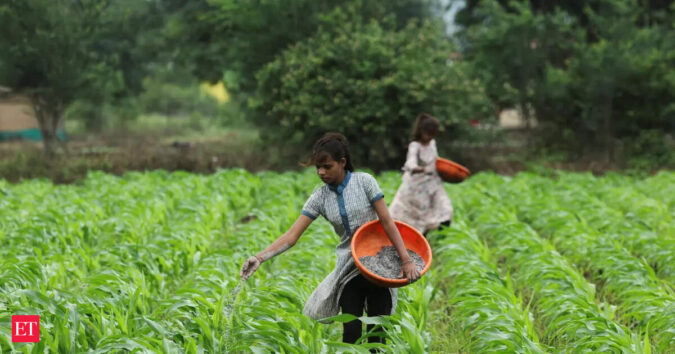
The concern is understandable. June is normally the key planting time for rainy-season kharif crops such as rice, cotton, and millet, but farmers need to wait for the first showers to pass before seeding their fields. With the month almost over, the lack of rainfall is disrupting India’s $300 billion farm economy as decisively as a chip shortage would upend an automotive factory. The super El Niño developing over the Pacific Ocean will make things even worse.

The worst of the dry spell has hit in central India and the Deccan — an agricultural heartland stretching from Rajasthan, Gujarat, Maharashtra and Karnataka states in the west, and through Uttar Pradesh, Madhya Pradesh, Chhattisgarh and Telangana further inland. The region accounts for about 90% of India’s soybean and sugarcane crop, 80% of its cotton production and 70% of its peanuts and pulses, such as lentils and chickpeas. It’s also vital for fruit and vegetables, giving it an outsized impact on the prices paid in markets across the country.
Also Read | ‘The upcoming El Nino event could cost India $1 trillion in losses’
Consider Nashik. The farming district northeast of Mumbai is the heart of India’s onion country. It’s a politically salient crop, because of the way onion price inflation can eat into household spending, and occasionally topple governments. Failures in the monsoon routinely lead to price spikes in August and September as the country runs short. Rainfall in Nashik this month has been running at just 16% of the long-term average.
A few months ago, the main concern for India’s farms was that the conflict in the Strait of Hormuz would interrupt supplies of urea — a fertilizer raw material that India largely obtains from Gulf natural gas. Those fears were overblown, as we said at the time, but rainfall is an even more important input into the farm economy — and the supply tightness there is, if anything, intensifying.
The interaction between the numerous factors affecting the Indian monsoon isn’t fully understood, but it’s unlikely that El Niño, first declared just a few weeks ago, is the key driver of its late onset. As the year goes on, however, it’s expected to drive the weakest monsoon in 11 years. Whatever crops have survived late sowing will take another blow from parched growing conditions.
The effects will be felt well beyond India’s farms. By hitting staple crops for cooking oil, sugar, cotton and cheap protein, current dry conditions will feed through into inflation, which is running at its highest levels since early 2025. The Reserve Bank of India has already flagged the abnormal weather conditions as a risk to its economic forecasts.
Counteracting the impact will spread the pain even further. After the late onset of rains and early-season flooding in 2023, New Delhi steadied the domestic rice market by banning exports, cutting off a global trade that depends on India for about 40% of its supplies. Similar restrictions are now widely expected for sugar.
India’s economy is no longer as vulnerable to natural and human-made disasters as it once was. Stockpiles of fertilizer helped it ride out the impact of the Iran war. The amount of rice in warehouses has grown by nearly half since the 2023 export ban, so that crucial crop is amply supplied. Wheat is in a similar situation. The spread of irrigation, crop science and improved logistics mean the food system as a whole is far more resilient.
All of those innovations, however, are racing to keep up with the widening damage from a climate that is inexorably worsening. Across South Asia, almost a quarter of the world’s population has relied for centuries on the dependable annual pulse of monsoon rainfall. Global warming is making the arrival of that vital input less predictable, and more prone to devastating droughts and floods when it does arrive. As the coming super El Niño develops, we will all feel the impact.
(This is a Bloomberg Opinion piece by the author)