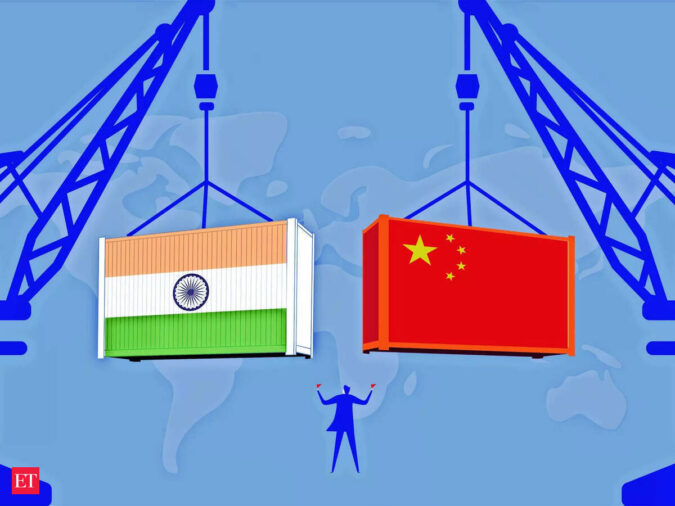
India’s infrastructure spending is rising, but the industrial ecosystem needed to support it remains incomplete. The challenge now is to turn that demand into manufacturing capability rather than simply replace one source of imports with another.
The TBM episode exposes a strategic vulnerability
China’s new controls require exporters of TBMs and other specified machinery to obtain licences under its dual-use export control framework. The measures also cover walking excavators and plateau-type wet shotcrete machines. Beijing says the controls are intended to safeguard national security and interests.
In 2024, Chinese customs clearances for tunnel boring equipment destined for India had already become a bottleneck. Some machines required for major infrastructure projects, including the Mumbai-Ahmedabad bullet train corridor, were manufactured by German company Herrenknecht at facilities in China. The disruption showed that dependence can persist even when the technology belongs to a European manufacturer.
India’s imports of tunnelling machinery from China fell from $18 million in 2022-23 to $3 million in 2023-24. They declined further to $500,000 in 2024-25 before edging up to $800,000 in 2025-26, according to figures cited by Reuters. These numbers capture the disruption in trade but do not measure the full cost of delays to infrastructure projects.
The new restrictions are not expected to derail highway construction on a large scale. Industry executives say India is largely self-sufficient in conventional construction equipment, while alternative import sources are available for some specialised machinery. However, high-duty engines, heavy cranes and tunnelling equipment remain potential pressure points. The impact on projects such as the bullet train corridor will depend on the scope of the controls and the availability of alternative suppliers.
The larger lesson is that a machine’s country of manufacture can matter as much as the nationality of its manufacturer. For infrastructure planners, reliable access to specialised equipment is becoming an industrial security concern.
The incentive scheme must close the gap
The Centre’s proposed scheme, announced in the Union Budget for 2026-27, is nearing final approval after inter-ministerial discussions. Reuters reported in August that the $1.2 billion package would provide incentives over seven years, with the aim of attracting $1.8 billion in additional investment. It is expected to cover equipment ranging from TBMs and firefighting systems to elevators used in high-rise buildings. The framework is also expected to set local value-addition targets for machines that India currently imports almost entirely.
The scale of the opportunity is substantial. India’s mining and construction equipment market was valued at about $17 billion in domestic demand in 2025, according to the Boston Consulting Group and Confederation of Indian Industry report. Demand is growing at 10-12% annually. The market is also benefiting from sustained investment in highways, metro rail, freight corridors, airports, ports and mining.
But the manufacturing base has significant gaps. Overall localisation in construction equipment stands at around 50%, according to the BCG analysis. Backhoe loaders have achieved localisation levels of 85-90%, but excavators are at only 55-60%. High-value components, including hydraulics, electronic controls and undercarriage systems, remain heavily dependent on imports.
India already has established manufacturing capabilities in conventional machinery, supported by domestic companies and the Indian operations of global manufacturers such as Caterpillar, Komatsu and JCB. The bigger challenge is developing technologies and components where local production remains uneconomical or technically difficult.
The scheme could benefit companies such as state-owned BEML, which has plans to manufacture TBMs domestically, alongside equipment makers including Larsen & Toubro and Johnson Lifts. But incentives will need to support more than final assembly. Without domestic suppliers for precision components, control systems and specialised powertrains, a machine labelled as locally manufactured could remain vulnerable to overseas supply disruptions.
Mining and infrastructure demand can give localisation a commercial foundation
The case for domestic manufacturing rests on more than the risk of Chinese export restrictions. India’s infrastructure pipeline is creating a large and expanding market for equipment manufacturers, giving companies a reason to invest in local production if the economics are viable.
The BCG-CII report estimates that capital expenditure across sectors linked to mining and construction equipment could rise from around Rs 5.5 lakh crore in 2025 to Rs 9-10 lakh crore by 2030. Roads generate demand for earthmoving and paving machinery. Railways require TBMs, piling rigs and viaduct cranes, while ports and airports need specialised material-handling systems.
Mining adds another growth driver. India’s efforts to expand domestic production of critical minerals for batteries, electric vehicles and renewable energy equipment will increase demand for excavators, drilling systems, dump trucks, crushing machinery and digital fleet-management technologies.
The wider economic footprint is considerable. The BCG analysis puts India’s mining and construction output at around $430 billion, equivalent to nearly 11% of GDP, with more than 70 million people supported across the value chain. Equipment manufacturing therefore has implications for productivity and resource security well beyond the factory floor.
The incentive scheme’s success will depend on whether it can convert predictable domestic demand into long-term manufacturing commitments. Companies need sufficient production volumes to justify investment in research, tooling and supplier development. Clear localisation milestones, stable procurement policies and sustained demand from infrastructure projects would help create those conditions.
The bigger prize is a global manufacturing and export hub
India’s equipment industry has already made progress in international markets. Exports of mining and construction equipment nearly tripled over the past decade to around $4.9 billion in 2025, according to the BCG-CII analysis. India now exports more equipment than it imports, although its position varies across product categories.
The global market offers considerable headroom. The report estimates the mining and construction equipment industry at roughly $420-440 billion, with annual global imports of about $150 billion. India currently accounts for less than 4% of this import demand.
Developing markets in Southeast Asia, Africa, the Gulf and South America are potential targets. Many are expanding infrastructure and mining operations while relying heavily on imported machinery. China supplies nearly half of equipment imports in many of these markets, creating an opening for buyers seeking alternatives.
However, export growth requires more than competitive factory prices. Indian manufacturers will need stronger overseas distribution, dependable after-sales service and products adapted to local operating conditions. Financing, spare-parts availability and maintenance support can determine whether customers choose Indian machinery over established international brands.
The BCG report envisages India capturing at least 20% of the global export market by 2047, representing an annual opportunity of roughly $75 billion. It also projects that the domestic mining and construction equipment industry could reach $180-200 billion by that year. These are long-term ambitions, not assured outcomes, and would require a major expansion in technology, manufacturing scale and export competitiveness.
China’s latest controls give the government a sharper reason to accelerate that effort. But what matters is whether India can manufacture sophisticated equipment competitively, localise the components that cause supply-chain bottlenecks and build products that overseas buyers actively seek. The objective is not merely to avoid another TBM delay but to make domestic industry a dependable foundation for India’s infrastructure ambitions and a stronger participant in global equipment markets.
Source link
https://www.infinitycompliance.in/product/online-company-registration-in-india/