The move comes amid growing concern over depleting soil health and implementation gaps in the Centre’s Soil Health Card scheme rolled out nationally in 2015.
“Though the government’s soil testing ecosystem exists, the scale of the problem is huge. So we decided to address this issue in our own way,” said Suman Saraswathibatla, Director (Rural Livelihoods and Climate Action) at the foundation.
Also Read: Complaints on quality of seeds, fertilisers and pesticides to be probed, resolved in 7 days: Bharane
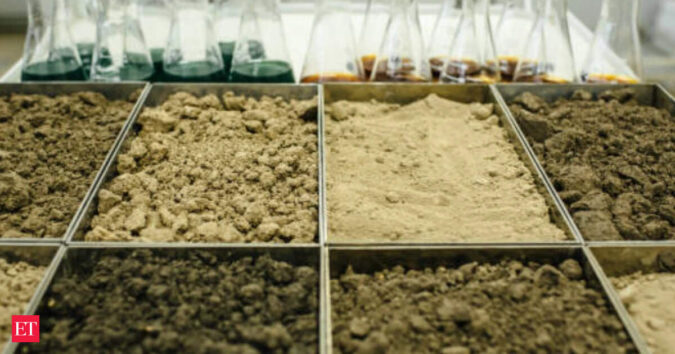
This soil testing facility is central to the Foundation’s broader soil health and regenerative agriculture programme, under which assessing soil condition is treated as the starting point for any intervention.
The push for an in-house facility followed nearly seven years of the Foundation’s own effort to find a reliable soil-testing solution, Saraswathibatla told PTI.
It approached Krishi Vigyan Kendras, agricultural universities, the Indian Council of Agricultural Research (ICAR), CGIAR institutions, and private players offering portable soil-testing devices, but found none of them adequate.Also Read: Onion growers welcome agri market near Vadhvan port, urge govt to develop Nashik as export hub
“If accuracy is there, then consistency is an issue. If consistency is there, accuracy is an issue,” he said, adding that the wet chemistry-based lab infrastructure needed for reliable analysis was “so broken and so under-equipped” that proper soil sample analysis at scale was simply not possible.
A 2023 experience proved to be the turning point. The Foundation sent 5,000 soil samples to one of the global research institutes for analysis and waited a full year for results, by which time two cropping seasons had already passed.
“Two seasons are over. I am talking about 5,000 soil samples,” Saraswathibatla said. “If I need to develop a digital soil map, 5,000 is sufficient for four villages — one block. We are talking about so many lakhs of blocks. So, where is the solution?”
With no institutional option delivering at the scale or speed required, the Foundation decided to build its own facility.
From pilot to scale
The Hyderabad lab became operational in January 2025. In its first year, it processed 20,000 soil samples as the Foundation validated its standard operating procedures. This year, the facility has already analysed more than 40,000 samples across India, with the Foundation targeting between 75,000 and 1 lakh samples ahead of the next Rabi season.
The facility is not restricted to the Foundation’s own project villages. External users like researchers and the government can also access its services, Saraswathibatla said.
The testing facility examines three categories of soil properties — physical, chemical, and biological — each requiring different reassessment cycles.
Physical properties like texture stay stable for 10-20 years, though bulk density and aggregation shift with management. Chemical properties like pH and organic carbon need reassessment every 2-3 years under intensive cultivation. Biological properties are most management-sensitive; annual or seasonal (6-12-month) testing usually suffices under stable cropping systems.;
Most testing programmes, including government ones, focus on 12-14 chemical indicators: N, P, K, secondary nutrients (S, Ca, Mg), micronutrients (Zn, Fe, Mn, Cu, B), plus pH, EC, and organic carbon. “These parameters underpin site-specific nutrient management (SSNM) but often miss biological functioning and physical resilience,” Saraswathibatla said.
The push to scale up soil sampling this year has been driven partly by a combination of El Nino conditions and a fertiliser shortage, which has heightened the need for precise, data-backed fertiliser recommendations, according to Saraswathibatla.
While government advisories typically provide General Recommended Dosage (GRD) at the district level, there is a growing shift toward finer-scale recommendations.
Saraswathibatla said the Foundation is developing village-level nutrient advisories based on stratified sampling (e.g., 20-50 representative samples per village, depending on soil heterogeneity) that can significantly improve recommendation accuracy for clusters of farms.
Farmers also receive extension support — training in balanced fertilization, integrated nutrient management, and climate-smart practices — which Saraswathibatla said is key to converting soil data into better soil health, carbon sequestration, and resilience.
A biological fix for fertilizer issue
The Foundation is separately partnering with a biological startup to introduce an NPK-soluble bacterium consortium — a packaged or bottled formulation designed to mobilise residual nitrogen, phosphorus and potassium that has built up in soil from years of fertiliser application, making these nutrients available to plants again.
“It is not like we have done it. It is there — it is a proven science solution,” Saraswathibatla said. “But it is more about we have to really, really pack it and take it to the farmer.”
The intervention, he said, is aimed at both risk mitigation and farmer safety — helping ensure balanced fertiliser use while recovering value from nutrients already present in the soil.
MoU with ICAR-IISS
Last month, ICAR-Indian Institute of Soil Science, Bhopal, signed an MoU with the Foundation to deepen collaboration on soil health research and technology transfer.
The partnership will focus on building a Digital Soil Health Repository, high-resolution soil maps, nutrient management tools, cropping system modelling, and climate-smart advisories, combining ICAR’s scientific expertise with the Foundation’s field experience to advance data-driven soil management and precise fertiliser use — with a particular focus on supporting small and marginal farmers.