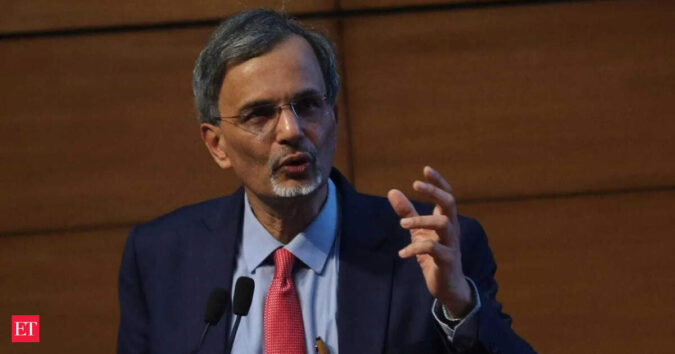
Many companies and entrepreneurs choose to accumulate cash profits and probably set up family offices elsewhere, rather than investing in real assets on the ground, he said at a conference in the national capital. “No matter how difficult the operating environment is, which is often given as an excuse (for holding investments back), that didn’t come in the way of their profitability after the pandemic,” he said.
Also Read: India should create strategic buffers to navigate ‘most difficult’ energy shock: CEA Nageswaran
Companies in a very few countries may have amassed such profits after the pandemic, while the regulatory environment in India has only improved, the CEA stressed. “In spite of that, if there is a reluctance to invest on the ground, then there is also an important reason for the corporate sector, or the private sector, to reflect on its own priorities,” Nageswaran said, urging India Inc to do its bit to spur a broadbased investment resurgence amid external headwinds.
Inadequate investments by the private sector in the aftermath of the pandemic have forced the public sector to do the heavy lifting of boosting growth. He flagged India’s $140 billion annual goods trade deficit, after excluding oil, gems and jewellery (where import dependence is natural), and underscored the cost of below-par investment by domestic companies in not creating capacities to take advantage of domestic opportunities.
 ET Bureau
Diversify Supply Chain
The CEA said the gap between the real effective exchange rates of the rupee and yuan has reduced, which will aid Indian firms’ competitiveness vis-à-vis their Chinese counterparts. “Now it should be relatively expensive to import from China and relatively inexpensive to export, everything else being equal. And therefore, that is a good reason to think of diversifying your supply sources away from China.”
Also Read: CEA Anantha Nageswaran flags energy risk to growth story
Against this backdrop, he said, Indian industry has an opportunity to leverage the country’s free trade pacts with key economies and scale up exports. India needs to set up strategic buffers of key commodities, given the energy shock it’s facing due to the West Asia conflict, Nageswaran emphasised. The war-induced surge in global oil and fertiliser prices will make it challenging for the Centre to realise its fiscal deficit target for FY27, he said, adding that belownormal monsoon rainfall and pass-through of higher energy prices could lead to a potential inflation surge.