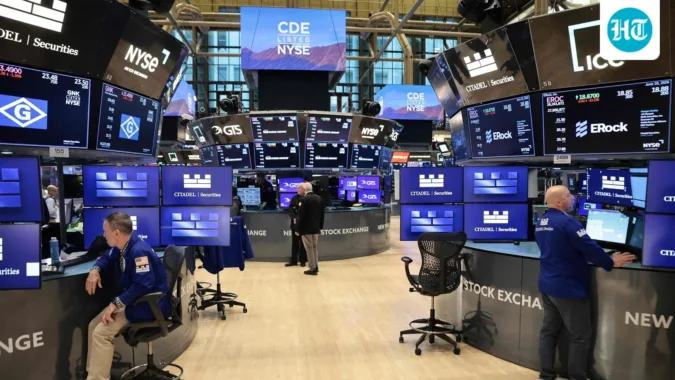
The S&P 500 and Dow Jones were expected to open with modest gains as investors balanced rising tensions between the US and Iran against continued strength in the artificial intelligence trade.
Dow E-minis were up 122 points, or 0.23%. S&P 500 E-minis gained 5.75 points, or 0.08%. Nasdaq 100 E-minis, however, fell 26.75 points, or 0.09%. This showed that investors were still cautious, especially around technology stocks, even as the broader market looked slightly stronger.
Fresh US-Iran clashes have brought geopolitical fears back
New US-Iran strikes have pushed Middle East tensions back to the center of investors’ attention, ending the uneasy calm seen over the past few weeks, according to Reuters. The renewed fighting has also brought back concerns about inflation.
A wider conflict in the Middle East could affect energy supplies and push oil prices higher. Higher energy prices could make inflation harder to control and create another problem for the Federal Reserve as it decides what to do with interest rates.
The AI boom is helping support the stock market
Despite the geopolitical risks, strong demand for AI-related technology is keeping investors interested in tech and AI stocks. Investors are betting that some economic uncertainty will not be enough to stop the AI trade, according to Reuters.
Thomas Kikis, head of markets for the US and Americas at Standard Chartered, said the AI revolution is still at a very early stage. He said the technology and data-management changes linked to AI could become a very significant long-term revolution. This optimism is helping offset some of the worries about interest rates, inflation and global tensions.
Dell became a major premarket winner
Dell Technologies shares jumped 8.94% in premarket trading after the company raised its full-year profit and revenue forecasts, according to Reuters. The stronger outlook gave investors more confidence in spending on AI infrastructure.
Also read: Is the AI boom peaking? Dell and Nvidia results point to stronger demand ahead
Hewlett Packard Enterprise also gained 4.5% as Dell’s results lifted sentiment around companies that provide the hardware and infrastructure needed for AI. The moves show that investors are still closely watching companies that could benefit from huge spending on AI data centers and computing systems.
Nvidia, Apple and Tesla also moved higher
Nvidia shares rose 0.33% in premarket trading, according to Reuters. Apple shares gained 0.47%. Tesla shares also climbed 0.47%. Nvidia remains one of the biggest names in the AI trade, while moves in Apple and Tesla can also influence sentiment toward large technology and growth companies.
High bond yields remain a major problem for stocks
Investors are also worried about rising US Treasury yields. Higher Treasury yields can make stocks less attractive because investors can earn more from relatively safer government bonds. The 10-year Treasury yield fell 2 basis points on Wednesday after moving higher earlier in the session.
Even after the decline, the yield remained close to its highest level since January 2025, according to Reuters. This has added pressure to stocks because expensive borrowing and higher bond returns can reduce demand for riskier assets.
Some investors are taking profits from stocks
Sam Stovall, chief investment strategist at CFRA Research, said investors are worried about the continuing rise in global bond yields. He said some investors are reducing their stock exposure after building up significant profits, according to Reuters.
This means the market could face selling pressure even if companies continue to report strong earnings. The concern is that higher yields could make investors less willing to pay high prices for stocks.
Middle East tensions could make the Fed’s job harder
A fresh escalation in the Middle East could complicate the outlook for US interest rates, according to Reuters. Investors have sharply increased their expectations for a September rate hike over the past week. The shift came after Federal Reserve Chair Kevin Warsh said controlling price pressures is the central bank’s main focus.
Markets are now pricing in a 66% chance of a September rate hike, according to the CME FedWatch tool. That compares with only about 37% a week earlier, showing how quickly rate expectations have changed.
Also read: Uber announces 3,300 layoffs in major restructuring; stock rises 2.4%
September is historically a weak month for US stocks
Investors are also dealing with a seasonal weakness in the stock market. The S&P 500 has lost an average of 0.7% in September since 1926, according to Fisher Investments, which cited data from Finaeon. September is historically the weakest month for the S&P 500.
It is also the only month that has recorded a negative average return over that long period. This does not mean stocks will definitely fall this September, but it is another factor investors are keeping in mind.
Energy stocks gave up some gains
Energy stocks had been among the few parts of the market performing well in recent sessions because of concerns about Middle East supply disruptions. On Wednesday, however, energy stocks slipped slightly as Brent crude erased its earlier gains.
Chevron shares fell 0.58%. Valero Energy shares also dropped 0.58%, according to Reuters. A sustained rise in oil prices could help energy companies but could also increase inflation pressure across the wider economy.
Friday’s jobs report is the next big market test
Investors are now looking ahead to the US jobs report due on Friday. The report could have a major impact on how markets view the economy and the Federal Reserve’s next interest-rate decision. A strong jobs report could suggest that the economy remains healthy but could also make investors worry that inflation and interest rates will stay high.
A weaker report could increase expectations for easier monetary policy but could also raise concerns about economic growth. Recent inflation data has already given investors mixed signals, according to Reuters.
The market is being pulled in different directions
Overall, US stocks are facing a tug-of-war between three major forces: Middle East tensions, high bond yields and the AI boom. Iran-related risks are raising concerns about oil prices and inflation. High Treasury yields are making stocks less attractive.
At the same time, strong AI spending and upbeat forecasts from companies such as Dell are keeping investors optimistic about technology and infrastructure stocks. For now, that mix is pointing to a cautious start for the S&P 500 and Dow rather than a major market move.