Opening thoughts. Toys, realism and diversity? It took a while, but Barbie and Ken finally have a reality check to contend with. Nearly 70 years after the debuts of the impossibly perfect Barbie and Ken, a new study from the Adelaide University and UNSW Sydney which analysed the latest Barbie and Ken dolls for body proportions, notes that key metrics now seem closer to real life. This follows a previous study from 1996, which found that Barbie and Ken’s body proportions were almost unattainable in real life. The reason for this periodic attention on the two popular doll characters is summarised by Associate Professor Sara Grafenauer, from UNSW Medicine & Health.
“Barbie and Ken are among the most recognisable cultural icons globally, and for many children, they’re an early and influential representation of what bodies of adults ‘should’ look like,” explains Grafenauer, who is Lead researcher on the study. “Our study found that Barbie and Ken’s body proportions today have become markedly more realistic, with waist-to-hip and chest-to-waist measurements now falling within the normal range for key female body proportions, albeit still below the typical female averages,” she adds.
The study notes that children’s toys do more than entertain (I can testify to that logic, as an avid die cast car collector even post 40 years), and believes the diversification is a positive trend towards shaping perceptions.
EDITOR’S MARGIN
SAMSUNG HAS MOMENTUM, AND FINESSE
There, I said it. Samsung has momentum and that momentum comes from a finely crafted current generation of foldable phones. There are two important pieces of data to work with. First, Samsung says that preorders for the latest Galaxy Z Fold8 Ultra, Galaxy Z Fold8 and Galaxy Z Flip8 are 30% higher globally when compared with the previous generation.
Secondly, specific to India, the three foldables have shattered pre-order records with 2,71,000 pre-orders received within just 72 hours of their July 22 launch; last year, it took 15 days to receive a similar number of pre-orders for the Galaxy Z Fold7 and Z Flip7, which were fantastic in their own right. That’s astonishing, considering the phones have starting price tags of ₹1,99,999 (Galaxy Z Fold8 Ultra), ₹1,79,999 (Galaxy Z Fold8) and ₹1,24,999 (Galaxy Z Flip8). I’ll touch upon this in a moment. As an aside, I’m not exactly sure how delivery timelines may possibly change, even if the impact is limited to certain buyers.
There is little that surprises me about both pieces of data that Samsung has shared this week. In my analysis of the unique passport-like form factor Samsung Galaxy Z Fold8, I noted how this “ushers a spectacular era for foldables,” and noted how this form factor is surprisingly handy, remarkably fun and the sort of form factor you didn’t know you needed. And much more.
In the analysis of a more familiar book style Samsung Galaxy Z Fold8 Ultra foldable, I wrote how last year’s big design upgrade that underlined the Galaxy Z Fold7 is being built on with more performance, more refinement, more AI and higher battery capacity due to a changed architecture.
All in all, Samsung has for long defined the foldable smartphone space. Every year the benchmark is set, and no matter how much rivals try, that benchmark remains untouched all things considered—only for the goalposts to shift again. Rivals do one or two things well, Samsung’s approach starts with a custom Qualcomm chip and builds across all facets of the experience.
Back to the India pre-order numbers, in the context of the price tag. There are three clear reasons why those who have placed preorders are considering paying this high ticket sticker price. First, Samsung’s 30-month no-cost EMI option, is the first of its kind in the smartphone space. Reduces upfront outlay, and the monthly pinch on budgets. Secondly, the Galaxy Forever subscription which covers two of these new phones (the Galaxy Flip8, not for now) as well—pay for the phone in 24 no-cost EMIs and then get up to assured buyback of up top 55% from the 10th ownership month onwards.
Third, some may be finding benefit in a collective of the exchange bonus (Samsung offers a ₹8,000 additional value promise), 10% cashback on Samsung Axis Bank credit cards (there are two variants) or even paying via an HDFC, ICICI, Axis or SBI credit card to get instant discounts as well as no-cost EMIs. Whatever works for some people, I suppose.
THE LATEST, ON NEURAL DISPATCH
CAR CORNER
HYUNDAI’S CONNECTED CAR VISION
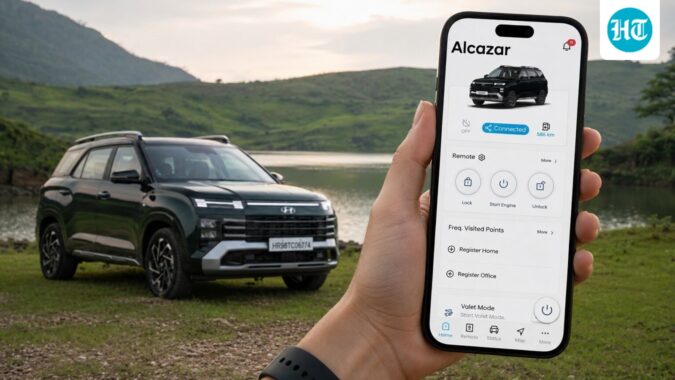
There’s something that’s been on my mind the past few days. Most car makers tend to spend a lot of breath talking in detail about a smart car, a connected car, basically one that can itself connect to the internet and do all sorts of infotainment things. I like Hyundai Motor India’s approach, in which clarity of thought is very apparent. There are two important pieces of data they have started.
First, since the introduction of Hyundai Bluelink connected car tech in 2019, the company has surpassed 0.8 million cumulative connected car sales to date — that’s been helped by a widening portfolio of cars the carmaker sells in India to include variants that offer the Bluelink functionality. Cars sold with this functionality make for 20% of the company’s portfolio, up from 4% in 2019. Hyundai, mind you, was one of the first to make connected features a thing, something other carmakers then have to follow quickly (but many haven’t, as effectively).
Secondly, HMIL is very clear that this momentum will only serve to increase in velocity in the coming years, and intends to achieve a milestone of 2 million connected car sales in 2030. This is building on the carmakers intention to launch 26 new models and refreshes in the country, in the same period.
“As we move towards our goal of 1 million connected car sales by 2027, we remain focused on advancing software-defined mobility and expanding connected technologies across our portfolio. Our upcoming mass-market electric SUV, which will offer next-generation connected car technology as standard across all variants, marks an important step in strengthening the convergence of connected and electric mobility while delivering future-ready ownership experiences for customers,” says Tarun Garg, MD & CEO, HMIL.
In all this time, Bluelink itself has evolved considerably—there are now more than 70 features. And will continue to, as the 2025 milestone of Hyundai’s Connected Car Navigation Cockpit (ccNC) evolution proves. This isn’t simply about entertainment or key travel information, such as an app streaming music via an eSIM embedded into the vehicle or navigating via integrated maps. Hyundai points out that Bluelink’s safety and assistance features have proved useful for 0.5 million motorists through SOS and roadside assistance services, and have generated more than 15,000 crash notification interventions that have also helped the law enforcement machinery to track and help incidents.
Among the 26 new launches and refreshes planned through till 2030, I’m really hoping against hope for the Elantra badge to be reintroduced in India. I’ve driven a previous generation for around 13 years (I have no compliments for the utterly ridiculous GRAP rules in Delhi NCR), and would love to drive one of the current generations again. But well, one can hope. Smile and hope, are not taxed, for now.
Reminds me of something about Hyundai from many years ago. To convey a daughter’s message to her astronaut father based at the International Space Station at the time, Hyundai created “A Message to Space” on the bed of Nevada’s Delamar Dry Lake, using 11 Genesis sedans. They used precise GPS coordinates, the cars drove in synchronised formation to carve a 2.14-square-mile replica of a girl’s handwritten note, “reading Steph <3’s you!”.