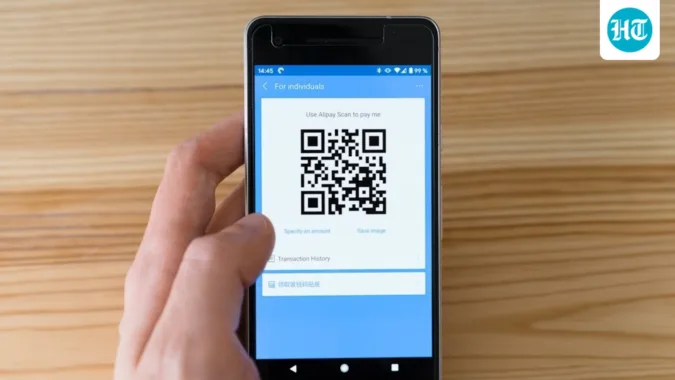
IT SITS ATOP coconuts on Mumbai beach carts, alongside samosas in Delhi snack shops and among Navy Cuts at Kolkata cigarette stalls. It is displayed on rickshaw-drivers’ seat backs, utility companies’ bills and Amazon’s checkout page. It can be scanned to buy ten rupees- (ten cents-) worth of peanuts or a 100,000-rupee iPhone. So ubiquitous has the QR code become—and so quotidian its use—that it is easy to forget just how recent an addition it is to the Indian landscape.
The QR code is the visual signature of Unified Payments Interface, or UPI, a platform that celebrated its tenth birthday on August 25th and which has revolutionised how money moves in India. In the paleolithic era—before 2016—cash was used for almost all transactions by number and two-thirds by value. Cheques accounted for the majority of non-cash dealings. And for some reason everybody pretended they had no small change, giving rise to an alt-currency of one-rupee boiled sweets.