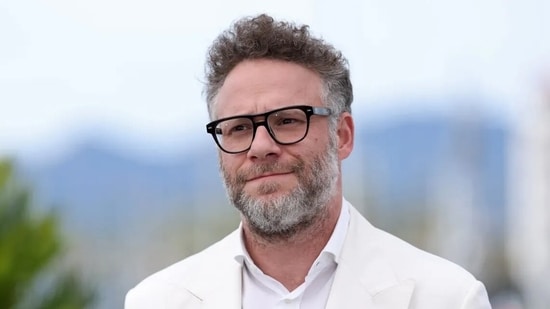
Cognitive warmup. Actor, comedian and filmmaker Seth Rogen has some choice words for creatives using AI to ‘write’. During a promotion of his animated film “Tangles” at the Cannes Film Festival, he said in an interaction that if a writer or a creative’s instinct is to use AI to write, “You shouldn’t be a writer. Because you’re not writing”.
That’s as clear as it gets, before sends out another suggestion. “Go do something else. And if you don’t want to go through the process, you shouldn’t be a writer. The idea of a tool that makes me write less is not appealing to me, because I like writing”.
Inevitable chaos
There is an inevitable certainty that new AI systems such as Anthropic’s Claude Mythos will lead to “some chaos”, according to Adrian Sampson, who is associate professor of computer science at Cornell University. In a note shared with us, Sampson talks about two distinct stories that are playing out with artificial intelligence now claiming to be very capable at finding security risks with the world’s software. As I’d pointed out in my piece regarding Mythos and Project Glasswing, a commercial architecture that’s being created with Claude Mythos means it is still very much a product in Anthropic’s scheme of things—scarcity, capabilities, and therefore premium pricing strategies will be at work. Sampson points out something very simple for starters—“All software has bugs, and most software has serious security bugs. You just have to find them”.
He points out a very relevant aspect of this, that it was expensive to otherwise search for exploitable security bugs. “There was a sort of equilibrium: ‘white hat’ software vendors spent money and engineering time on both searching for vulnerabilities and implementing broad mitigations; ‘black hat’ attackers spent their resources only on the former. But the vendors generally had more resources in aggregate.” That balance no longer remains a sort of an insurance layer, because AI such as Claude Mythos makes it much more affordable to find new vulnerabilities that no one else knows about.
“I think you can make the case for two possible futures: a much broader set of lower-budget attackers can launch plausible attacks, so we’re doomed. Or, well-resourced software vendors have access to the same tools, so they can find and fix these vulnerabilities just as easily, so a new equilibrium will emerge. I think it’s clear that the reality will be some messy combination of these two stories,” he says. The Cornell expert’s estimation is there will be a period of chaos where scary vulnerabilities are discovered and exploited far more rapidly than they have in the past. The hope then is, as he says, “after finding lots of bugs and forcing them to be fixed, the new tools will reach a point of diminishing returns, and the white hats will have a chance to catch up.”
Keeping the neighbourhood clean
Seven in ten Americans do not want data centres near them—the clear takeaway from a Gallup survey released a few days ago. If the AI companies aren’t reading the room or have a pulse of the ground realities, refreshing the stock of this situation may be prudent. And of this number, half are strongly opposed to any data centre construction in their neighbourhood. These data centres in question are the ones that AI companies and businesses require to host the computing power for the technology. The core reasons for the opposition include the extensive electricity consumption requirements, a need for a lot of clean water, the impact on environment, local electricity bills and real estate prices, as well as risks of air and water contamination, as well as AI specific concerns including ethics, privacy and impact on humanity.
“For AI usage to expand in the U.S., data centers that can handle the necessary computing power will have to be built. Such centers have already been built in some areas, usually funded by the large technology companies seeking to offer AI services. But most Americans appear to be adopting a “not in my backyard” attitude to building additional data centers, and that attitude is especially intense, given that nearly half strongly oppose that construction,” notes the survey. It is easy to have an holier than thou attitude from afar, but the concerns of someone who’d live in the immediate neighbourhood of a data centre, cannot be ignored.
A so-called AI playbook
I’ll start by saying, I don’t pay Amazon a single rupee for a Prime subscription (particularly a matter of principle, since they began to stuff ads into Prime Video content, unless one pays even more for an ad-free tier). The less said about this company’s approach to anything human, the better. Now, Amazon CEO Andy Jassy has a rather interesting “playbook” he’d like us all to know about, as per an article on Bloomberg. Ambition? Right up there with Sam Altman once comparing the food humans eat in their lifetimes with the cost of compute power.
“You can choose to howl at the wind, but AI is not going away,” a key quote from Jassy. Remember what I’d noted earlier about Amazon and humans? There’s a sense of urgency at Amazon, which seemingly got into the (rather directionless) AI race much later than a few others. The $50 billion deal with OpenAI earlier this year gets the AI company to now cue in Amazon’s data centres into its infrastructure puzzle. Then came a similar partnership with Anthropic, first to the tune of $13 billion with an option for $20 billion more. Mind you, Amazon reportedly intends to replace 600,000 or so employees with warehouse robots by 2033.