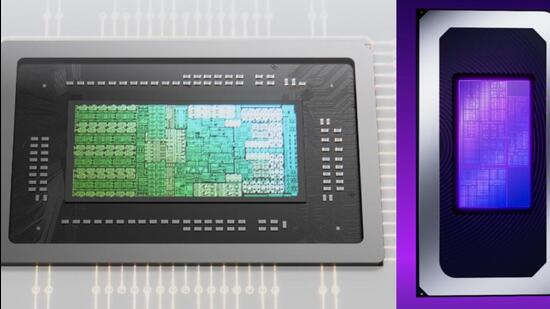
This moment can be bookmarked as an anchor for a fundamental pivot by chipmakers Nvidia, AMD and Qualcomm. Moving perceptibly from their usual playbook—which centered on pursuing higher clock speeds and more cores—they are attempting to find momentum through versatility, particularly for consumer-focused computing devices.
A broader weaving of connections was best described by Lip-Bu Tan, CEO of Intel. In his Computex 2026 keynote, he said, “For more than five decades, Intel, its ecosystem partners, and Taiwan have brought the world the foundational technologies for the PC, Internet, and now AI eras. Today, with the rise of inference, agentic, and physical AI, Intel is poised to bring the world new innovations from the chip to systems level that promise to transform industry and society for the better.”
That is before a nod to the chipmaker’s partners. There is an understanding that the ecosystem needs to work together to counter the long-standing threat from Apple’s powerful in-house silicon efforts as well as an affordable MacBook Neo launched earlier this year. Adding to its recent Panther Lake and Wildcat Lake chips which mark a generational leap for portable and desktop computing devices, Intel’s Arc G3 gaming silicon hopes to build a viable case for handheld gaming consoles.
Key focus areas for the Arc G3, built on Intel’s first 2-nanometer architecture, include battery endurance, performance, and backward compatibility with older generation gaming titles. Microsoft hopes the new Xbox Mode rolling out to Windows 11 PCs at this time, will find its true element on specialised hardware.
Microsoft is also betting on Nvidia to give the PC ecosystem a boost. And since it’s Nvidia, the pitch begins with artificial intelligence (AI) use cases. The chipmaker says the new RTX Spark silicon will provide the foundation for the first Windows PCs built for personal agents, with a claimed 1 petaflop of AI performance built atop the Blackwell RTX graphics chip (this also marks its potential as a gaming PC chip). “The PC is being reinvented,” said Jensen Huang, founder and CEO of Nvidia, at the Computex keynote.
Adobe has already confirmed that it is “re-architecting” the popular Photoshop and Premiere editing tools from scratch. MediaTek, one of the best in Arm-based chip designs, is working with Nvidia on this custom chip.
Microsoft has announced the Surface Laptop Ultra, expected to launch later this year, which will be the most powerful Surface device ever when it does. Brett Ostrum, Corporate Vice President for Surface at Microsoft, says this is “made for a kind of work that does not fit in a standard laptop.” PC makers including HP, Lenovo, Asus and Dell are lining up RTX Spark-based laptops.
In a rather unique pitch, chipmaker AMD re-emphasises that its existing technology is so good that PC users really don’t need to upgrade some of their current components. Until at least 2030, that is. They are promising extended support for their AM5 supporting desktop motherboards with the launch of an iterative Ryzen 7 7700X3D processor. This is likely an evolution of the Ryzen 7800X3D (released in 2023).
“We’re committed to giving gamers high-performance technologies with the flexibility to upgrade their systems over time,” says David McAfee, corporate vice president and general manager, Client Channel and Graphics Business, AMD. As far as graphics chips go, AMD is finally bringing a previously China-exclusive Radeon RX 9070 GRE hardware to more countries, including the US, this summer.
The continued support for older hardware isn’t cursory. AMD is marking ten years of its Socket AM4 boards with a new chip, a special edition of its popular Ryzen 7 5800X3D chip.
Qualcomm, completing the quintet, has the dual moves of a new Snapdragon C platform for affordable laptops, as well as PC maker Asus announcing the first mini-PC based on the Snapdragon X2 Elite platform.
The chipmaker says the former is designed for extremely affordable Windows laptops, clearly realising that critical volume will come from the lower end of the price bands. The pitch for the mini-PC centers on its ability to run advanced AI models, agents and orchestrators locally, such as OpenClaw, Hermes, Cursor, Claude Desktop, OpenAI Codex, and OpenCode.
“As costs rise and customer expectations evolve, Snapdragon C brings together value oriented computing, all-day battery life, AI capabilities and responsive performance in cool-quiet devices for expanded platform choice,” said Kedar Kondap, Senior Vice President and General Manager of Compute and Gaming, Qualcomm Technologies, Inc.
This also ties in with the PC ecosystem’s intent to build a viable competitor to the Apple MacBook Neo, which has delivered a balance of performance and battery life quite resoundingly. At lower price points still, Snapdragon C-powered laptops are expected to go on sale later in the year.