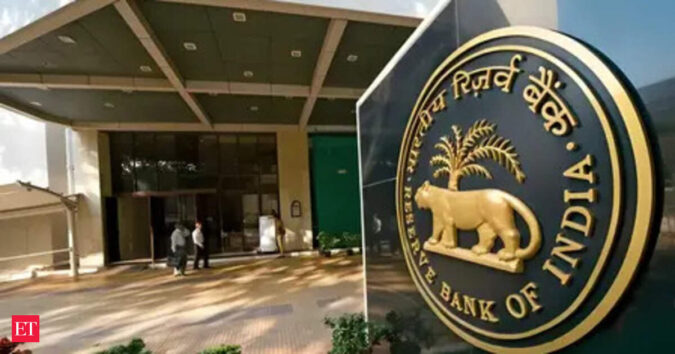
Replying to a question in the Lok Sabha on Monday, Minister of State for Finance Pankaj Chaudhary said the RBI, with the recommendation of its Central Board, had proposed the introduction of one billion pieces each of ₹10 and ₹20 polymer banknotes for field trials, followed by regular issuance after the successful completion of the trials. The proposal has been approved by the government.
Also Read: Economics of plastic notes: Why RBI is considering polymer banknotes
The minister said the RBI has informed the government that international studies show polymer banknotes have a significantly longer lifespan than paper notes, making them more durable.
On concerns about the impact on digital payments, Chaudhary said the introduction of polymer notes is still in a preliminary phase and any effect on digital transactions can only be assessed after their regular issuance. He added that banknotes and digital payment systems are complementary modes of payment available to the public.
The government also clarified that polymer notes will be issued alongside existing paper-substrate banknotes and that there is no proposal to replace paper currency entirely with polymer-based notes.
The development comes weeks after The Economic Times reported that Bharatiya Reserve Bank Note Mudran Pvt Ltd (BRBNMPL), the RBI’s currency printing arm, had invited global expressions of interest (EoIs) from manufacturers to supply polymer substrate sheets with embedded security features for printing polymer banknotes. The tender seeks suppliers capable of manufacturing opacified polymer substrate sheets, although it does not specify the denominations or timeline for their introduction.As first reported by ET Bureau, the tender includes stringent national security conditions. Bidders are required to obtain government security clearance, ring-fence any operations in China or Pakistan from the India contract, avoid sourcing raw materials for India-specific banknote substrate from the two countries, and undertake not to supply the India-specific substrate to any third country.
ET Bureau had also reported that BRBNMPL has indicated an initial requirement of around 68,000 reams of polymer substrate — roughly 34,000 reams each for two denominations — while clarifying that the quantity is only for immediate needs and larger procurement could follow after successful field trials.
Also Read: It’s a revamp! RBI steps ahead on plan for plastic rupee notes
Last month, RBI Governor Sanjay Malhotra had said the central bank was examining the possibility of introducing polymer banknotes, though discussions were still at a preliminary stage.
Polymer banknotes, already used in countries such as Australia, the UK and Canada, are made from durable plastic films that last significantly longer than conventional paper notes and are more resistant to wear and tear, reducing replacement costs over time.
The move comes even as the RBI’s expenditure on printing currency declined nearly 24% to ₹4,875 crore in FY26 due to lower printing requirements. However, demand for cash remains strong, with the value of currency in circulation rising 12% year-on-year to ₹41.23 lakh crore at the end of March 2026, according to the RBI’s annual report. The ₹500 note continues to dominate currency circulation, accounting for 86% of the total value of notes in circulation.