India’s robust growth story and its vision to emerge as a developed nation by 2047, he underscored, are closely tied to the progress of its villages.
States have the critical role of taking benefits of rural schemes to beneficiaries in even furthest corners. So they should suggest new measures, and whether existing programmes need a revamp, the minister said.
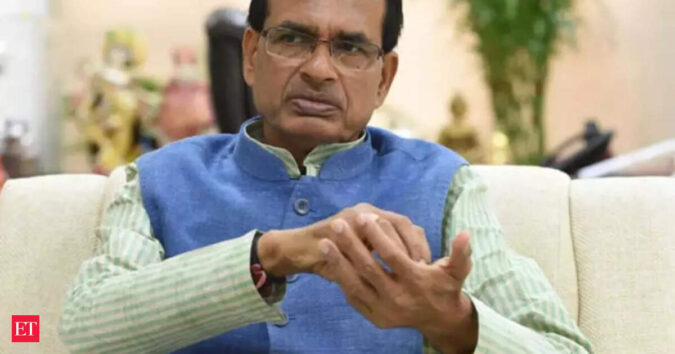
Chouhan was addressing senior central and state government officials at the inaugural session of a two-day event of the ministry in the national capital. The participants will brainstorm ideas to bolster rural growth and development.
The push for fresh rural sector reforms through greater Centre-state coordination comes amid the West Asia war that has disrupted global supply chains and threatened the growth momentum across countries. India is looking to pull all domestic growth levers to beat external woes.
The minister said nearly all states have made budgetary provisions to adopt a new programme that is proposed to replace the Mahatma Gandhi National Rural Employment Guarantee Scheme (MGNREGS) from July 1.
Already, the Centre this month announced the release of its FY27 budgetary outlay of Rs 95,692 crore to states for the proposed Viksit Bharat – Guarantee for Rozgar and Ajeevika Mission-Gramin (VB–G RAM G).Combined with the mandatory contribution by states, the total FY27 allocation for VB–G RAM G will exceed Rs 1.51 lakh crore.
Separately, the Centre had allocated Rs 30,000 crore for the MGNREGS this fiscal year until the new programme replaced it from the second quarter.
VB–G RAM G aims to align the government’s rural job pledge with its broader “developed India by 2047” vision. It seeks to create a modern framework to spur both employment and durable asset creation in hinterlands through four priority verticals—core rural infrastructure, water security, livelihood and climate mitigation.
Rural housing
The minister said the list of new beneficiaries under the rural housing scheme is almost finalised following a new survey.
Chouhan exhorted states to submit the names of intended beneficiaries fast, if some have been left out, so that no eligible person is deprived of such benefits.
The government has raised the budgetary allocation for the Pradhan Mantri Awas Yojana-Gramin to Rs 54,917 crore for the current fiscal year, against Rs 32,500 crore (revised estimate) a year before.
The Cabinet had in 2024 approved Rs 3.06 lakh crore for building 30 million new houses across the country over five years, 20 million of which would be built under the PMAY-G.
Higher rural spending under rural schemes, which help create durable assets in the hinterlands, is expected to spur economic growth while supporting rural demand and job creation.