For the first time in weeks, investors had jitters. About the war in the Middle East. About the runaway chip rally. About higher interest rates. Then came the SpaceX IPO.
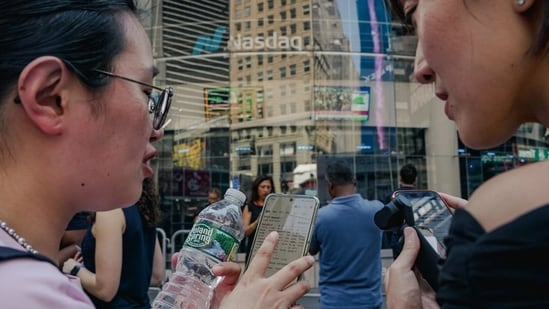
The space-exploration company’s market debut went off without a hitch on Friday, instantly making Elon Musk’s rocket company one of the highest-valued in the U.S., at a market capitalization of $2.1 trillion. One crucial ingredient for the stock’s double-digit price surge proved to be a massive wave of do-it-yourself traders, who bought some $18 million of SpaceX stock in the first 20 minutes of trading, according to Vanda Research.
By the end of the day, net retail purchases totaled roughly $118 million—the biggest IPO for individual investors in recent history, Vanda analysts said.
“This seems to be the ultimate FOMO IPO,” said Zaid Admani, a 34-year-old investor and podcast host, referring to the acronym for “fear of missing out.” Admani spent the day glued to his ultrawide monitor, watching SpaceX stock. “Everyone wants a piece of this thing.”
The widespread enthusiasm was a welcome end to one of the most volatile weeks in markets this year. And it wasn’t just SpaceX that benefited. Almost everything else rose on Friday: banks and financial firms, semiconductor stocks, even shares of smaller companies—extending gains sparked by the latest signs of an end to fighting in the Middle East.
Analysts said the reception to SpaceX was a good omen for two major artificial-intelligence IPOs expected later this year. It was also an encouraging sign that investors might not have totally soured on riskier tech bets, hit in recent days by worries about the artificial-intelligence rally, higher rates and the war.
For weeks, U.S. stocks had marched higher, powered in large part by a frenetic rally in shares of semiconductor firms making big profits off the AI boom. Some chip companies have seen their share price double or triple. As indexes notched back-to-back records, mom-and-pop investors piled in: Total volume for both retail stock and options trades reached new records in May, according to Citadel Securities.
But things turned choppy in the first few days of June. A better-than-expected jobs report on June 5 sparked fears that the Federal Reserve might have to raise borrowing costs. The Nasdaq tumbled 4.2%. President Trump threatened to resume U.S. attacks on Iran; oil prices rose. And traders were once again getting nervous that the staggering momentum of the AI investing boom couldn’t last.
As volatility surged, individual investors took a step back. Last Friday’s drawdown marked the biggest day for retail selling in over a year, according to JPMorgan analysts. Some began to worry that market conditions could spook investors ahead of the coming mega IPOs.
Enter SpaceX, whose debut helped assuage any doubts that traders were losing their appetite for more speculative plays. For some, including Allen Tran, founder of the investing community HaiKhuu Trading, the volatility was the point.
Tran bought and sold SpaceX for a 10% return in a matter of a few minutes, and rode a rebound in shares of Tesla when he saw the stock had dropped after SpaceX’s debut. In total, he took home a tidy five-figure return.
“I’m probably going to get some steak this weekend,” he said. “Thank you Elon.”
Individual investors alone requested around $100 billion of shares in the SpaceX IPO, The Wall Street Journal reported Friday.
Now, the coming days pose new tests. The parabolic rise in chip stocks still has many recalling the surges, and eventual end, of the dot-com boom. The latest reports of a nearing peace deal have lowered oil prices, easing some worries about inflation and relieving some pressure on the bond market. But renewed fighting could reverse that quickly.
Friday’s rally may prove to be more a measure of Musk’s cult status than an overall read on the market’s appetite for risk, said Michael Rosen, chief investment officer at Angeles Investments.
“The strong performance is indicative of a more risk-taking mode,” Rosen said. Still, he added, “I think there’s an aura around Elon that makes this rather specific.”
One key question is whether the enthusiasm fueling gains in a relatively small group of crowded bets can broaden to the rest of the market. Some investors expressed concern that the recent rally was looking narrow, leaving indexes more susceptible to a pullback.
Despite those concerns, real estate, consumer staples and healthcare stocks all ended the week higher, lifted by investors hunting for havens from the chip-stock turbulence. And the equal-weighted S&P 500 index—which weights member companies equally, not by market value—is still hovering near records, a sign investors are buying more than tech, wrote Chris Verrone, chief market strategist at Strategas, in an afternoon note.
“There might be a time when we need to get more worried about breadth, but it’s probably not with the equal-weight S&P 500 at the highs,” he wrote.
Write to Hannah Erin Lang at hannaherin.lang@wsj.com