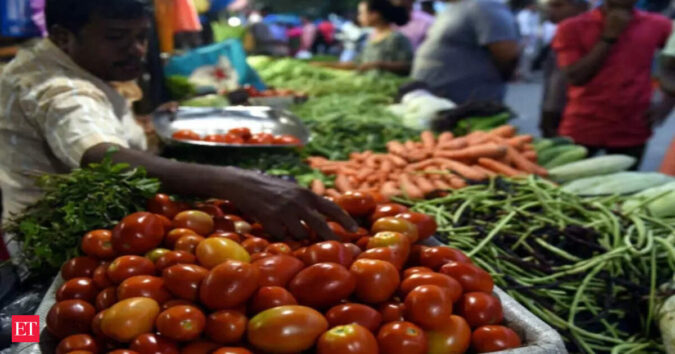
Inflation has remained below the RBI’s 4% target for 15 consecutive months. But that benign trend is unlikely to continue, with state-owned fuel retailers raising fuel prices four times in May alone, pushing up transport costs, while food inflation continued to rise from last year’s low levels.
Also Read: Indians are growing more pessimistic about the economy. RBI Survey shows why
But, with inflation still within target and economic growth remaining robust, the central bank kept key interest rates unchanged last week, as expected. RBI Governor Sanjay Malhotra said underlying inflation pressures remained benign, although second-round effects warranted vigilance.
VEGETABLES AND TRANSPORT DRIVE INFLATION RISE
The June 3-8 poll of 38 economists forecast inflation, measured by the annual change in the consumer price index (CPI), rose to 4.0% in May from 3.48% in April.
“May ’26 CPI likely crossed the 4% threshold … driven primarily by vegetables and transport inflation,” said Kanika Pasricha, chief economic adviser at Union Bank of India.
“Persistence of elevated temperatures across several regions and war-led constraints have adversely impacted the supply of commodities. Vegetable prices have rebounded in the ongoing summer months, coupled with the severe heatwave, all segments of food inflation likely clocked positive month-on-month momentum.”
Also Read: RBI says 4% inflation target not in abeyance; future rate action tied to price persistence
Union Bank of India estimated transport inflation likely jumped to 4.15% in May from -0.01% in April, lifting its contribution to headline inflation to 36 basis points from nearly zero, reflecting the pass-through of higher fuel prices.
RISING WHOLESALE PRICES GRADUALLY FEED THROUGH
While headline inflation in April came in well below expectations, wholesale price inflation accelerated to a 3-1/2-year high of 8.3%. The survey showed wholesale inflation likely rose further to 9.05% in May. Economists expect those higher input costs to gradually feed through to consumer prices.
The central bank raised its inflation forecasts to 5.1% for this fiscal year, up from its earlier estimate of 4.6%.
“The impact of the war should start showing up (in) the May print,” said Sakshi Gupta, principal economist at HDFC Bank, who added the pass-through from wholesale to consumer prices typically works with a lag.
“So far, inflation numbers have come in lower than expected because I think there was very limited pass-through and also lower gold prices were kind of pushing down the inflation print.”
India’s relatively subdued inflation has also been supported by softer-than-usual food price increases. However, economists warn that the tailwind may be fading as rising temperatures begin to push up vegetable prices.
The India Meteorological Department has warned this year’s monsoon could be the weakest in 11 years.
Core inflation, which excludes volatile food and fuel prices, is expected at 3.80% in May. India does not publish official core inflation data.