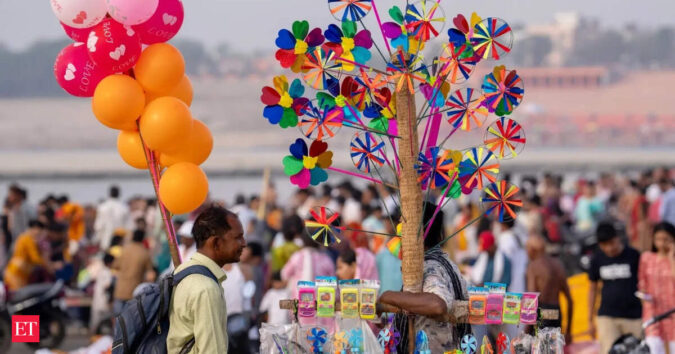
The impact assessment of the microcredit facility introduced for street vendors in the wake of the Covid-19 outbreak has revealed that digital transactions undertaken by street vendors have almost doubled from 43% in 2023 to over 83% in two years.
Also Read: PFRDA targets to bring 50 lakh SVANidhi scheme beneficiaries under Atal Pension Yojana
PM-SVANidhi, or the Prime Minister Street Vendor’s Atma Nirbhar scheme, was initiated in June 2020 to provide collateral-free loans to street vendors in three tranches of ₹15,000, ₹25,000 and ₹50,000. As per government statistics, 1.05 crore collateral-free loans worth ₹17,800 crore have been disbursed under the scheme across the country. Of these, 51.84 lakh loans have been disbursed to women street vendors, benefiting 34.81 lakh women.
Defaults in repayment are very low. According to ministry statistics, 60 lakh loans have already been fully repaid. A senior official said, “Defaults usually occur only in cases of health-related shocks or business disruption. The default rate declines as borrowers move to higher tranches – by the second or third tranche, we see a steady reduction in defaults.”
According to Ministry of Housing and Urban Affairs sources, as the scheme completes six years, the impact assessment shows it has improved the creditworthiness of street vendors. A senior official, who did not wish to be identified, told ET, “The government stood as guarantor for these loans, enabling street vendors with no prior credit history to access formal finance. They then began transacting digitally, creating a digital footprint. After repaying the first tranche, they built a credit history. With three tranches disbursed, they have expanded their digital footprint and improved their creditworthiness, making them eligible for loans from other financial institutions.”
The assessment shows that about 40% of street vendors covered have now moved beyond the scheme and are taking loans from other banks. “This will create a permanent credit history,” the official said.
The scheme has been restructured to make it more vendor-friendly. Initially, the first tranche was ₹10,000, which has now been increased to ₹15,000. With 66% of the urban workforce in the informal sector, the scheme has a target of disbursing 1.5 crore loans.