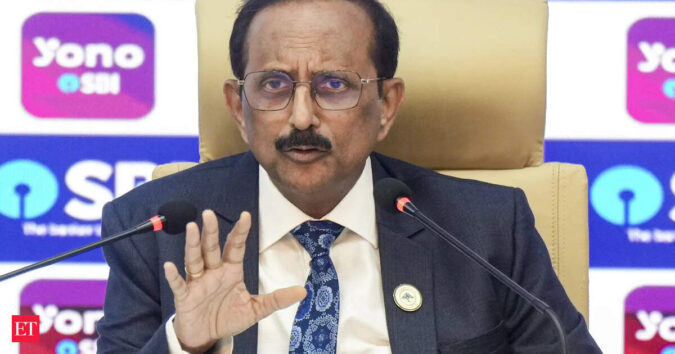
In his message to shareholders in the bank’s annual report, Setty said the last financial year unfolded against a backdrop of “heightened geopolitical tensions, evolving trade dynamics, and persistent global economic uncertainty.”
“The global gross domestic product (GDP) growth is projected to slow down, largely on account of the West Asia conflict,” he said.
Setty cautioned that the risks emerging from the conflict were not just cyclical, but increasingly structural in nature, pointing to elevated public debt levels, volatile energy prices and growing geopolitical fragmentation as long-term risks to global growth.
While India has so far managed to weather global turbulence better than many economies, backed by strong domestic demand, public investment and improving private consumption, he said the spillover effects of the Gulf conflict could become more difficult to contain going forward.
“The recent challenges posed by West Asia conflict are proactively being accommodated through regulatory dispensation by the RBI and fiscal measures… however, the economic fallout of the conflict may lead to lower GDP growth and higher inflation in FY2027,” Setty said.
He added that India’s macroeconomic fundamentals remain robust, with inflation likely to stay within the Reserve Bank of India’s comfort band and fiscal policy maintaining a balance between growth and consolidation.At the same time, he flagged that continued geopolitical tensions could increase volatility in energy markets and capital flows, indicating that policymakers and financial institutions may need to stay agile as inflation and growth dynamics shift globally.
(With inputs from TOI)