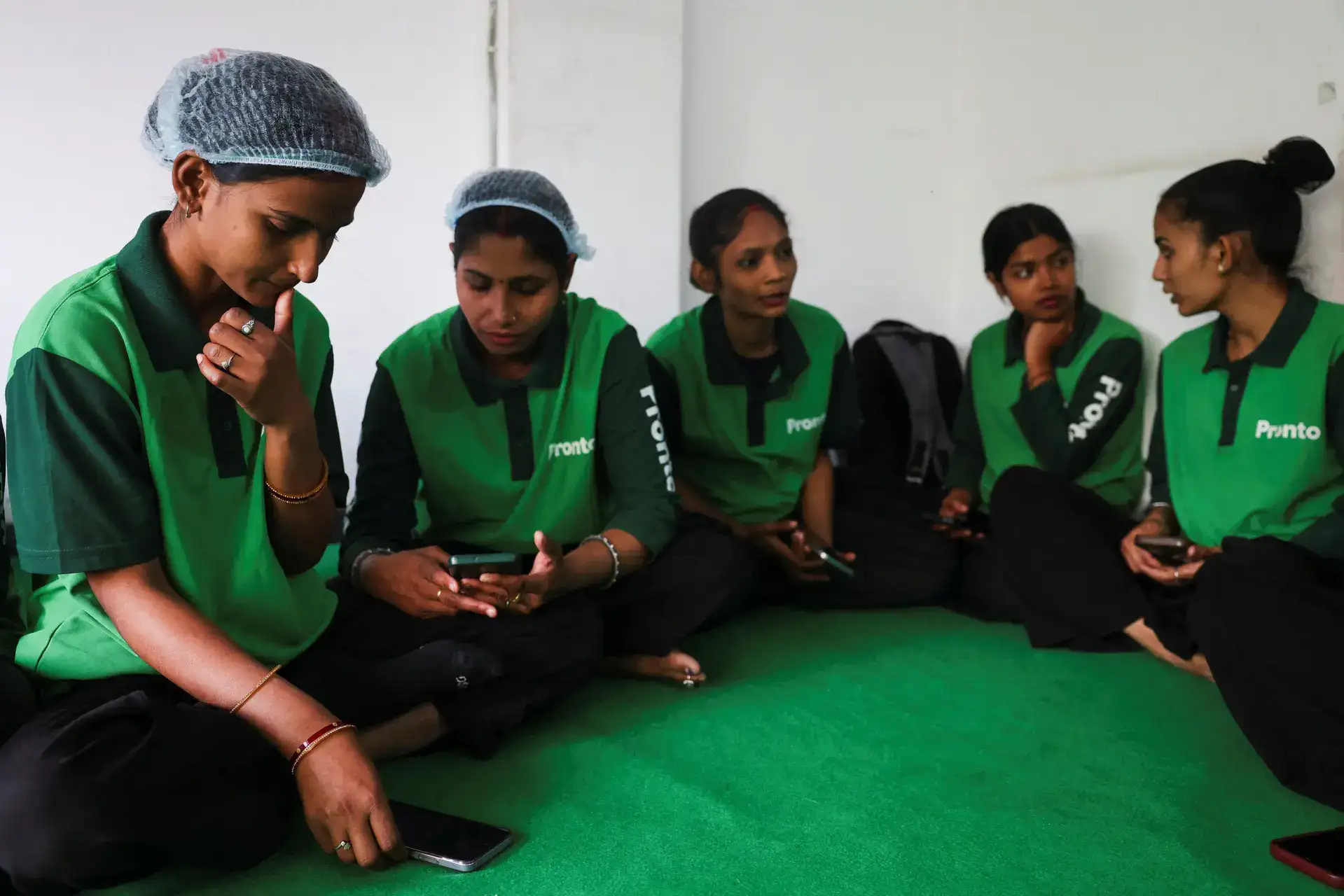
This means Pronto’s service professionals — who provide cleaning, washing, and meal preparation services — record their activities, generating videos that can help train physical AI systems.
Following privacy concerns, the founders of rival platforms Urban Company and Snabbit clarified that they do not engage in such practices and have no plans to do so.
ETtech decodes Pronto’s modus operandi and what this means for user privacy.
What exactly is Pronto doing?
Pronto is running a pilot for its AI-related initiatives, where its professionals wear small cameras which record tasks like washing dishes and folding laundry in customers’ homes. Entrackr was the first to report the development, citing an internal memo from Pronto’s investor, Glade Brook Capital.
Responding to ET’s queries, the Bengaluru-based company said the pilot was initiated recently. “It is a strictly opt-in feature, available only to customers who actively choose it at the time of booking. The pilot currently reaches less than 0.01% of our customers,” the company said.
While users raised safety and privacy concerns after the news broke, Pronto reiterated that no recording occurs unless the customer explicitly opts into the program.
What happens to the data?
While reports suggested Pronto is partnering with an AI lab to leverage this data, the company denied any such collaboration and stated that the recorded videos are deleted after 48 hours.
“Customers enrolled in the pilot pay for this feature and receive anonymized footage in the app, which is available for 48 hours. There are specific use cases where customers prefer a recording — such as wanting a task done while they are away and having the reassurance of seeing afterward that the work was done as expected,” the company said.
Collecting video data of humans performing physical activities is not a new practice. AI and robotics firms frequently record people performing routine tasks, like tailoring or factory work, to train their models.
However, Pronto is drawing flak because its operations take place inside consumers’ homes, a setting where ensuring privacy and safety is extremely important for service platforms.
What about user privacy?
While the pilot is limited to a small group of opt-in users, privacy experts have raised concerns regarding its long-term consequences and legality under the Digital Personal Data Protection (DPDP) Act, 2023.
“Companies must obtain informed consent from users under the DPDP Act. Unless the user is fully aware of what they are agreeing to, their consent is invalid,” said Amitabh Kumar, a trust and safety expert and cofounder of cybersecurity firm Contrails AI.
Kumar explained that storing this data could lead to potential security risks.
“These are videos recorded inside people’s homes. The domestic service professionals may not understand the nuances of data security or how these videos could be compromised. If leaked, they could be misused for deepfakes, cybercrime, and other offenses,” he added.
Experts also noted that India currently lacks adequate frameworks to hold entities criminally liable or enforce accountability in the event of a data leak.
Can Urban Company and Snabbit do it too?
The short answer is yes. Other platforms could technically do this and have been approached by AI developers. However, both rivals denied indulging in these practices.
In a LinkedIn post, Snabbit founder Aayush Agarwal said, “We were approached by a few players and have studied how this technology works. But understanding the technology and deploying it in our customers’ homes are two very different things.”
Similarly, Urban Company cofounder and CEO Abhiraj Singh Bhal stated in a post on X that the company does not engage in this practice and has no plans to do so in future.