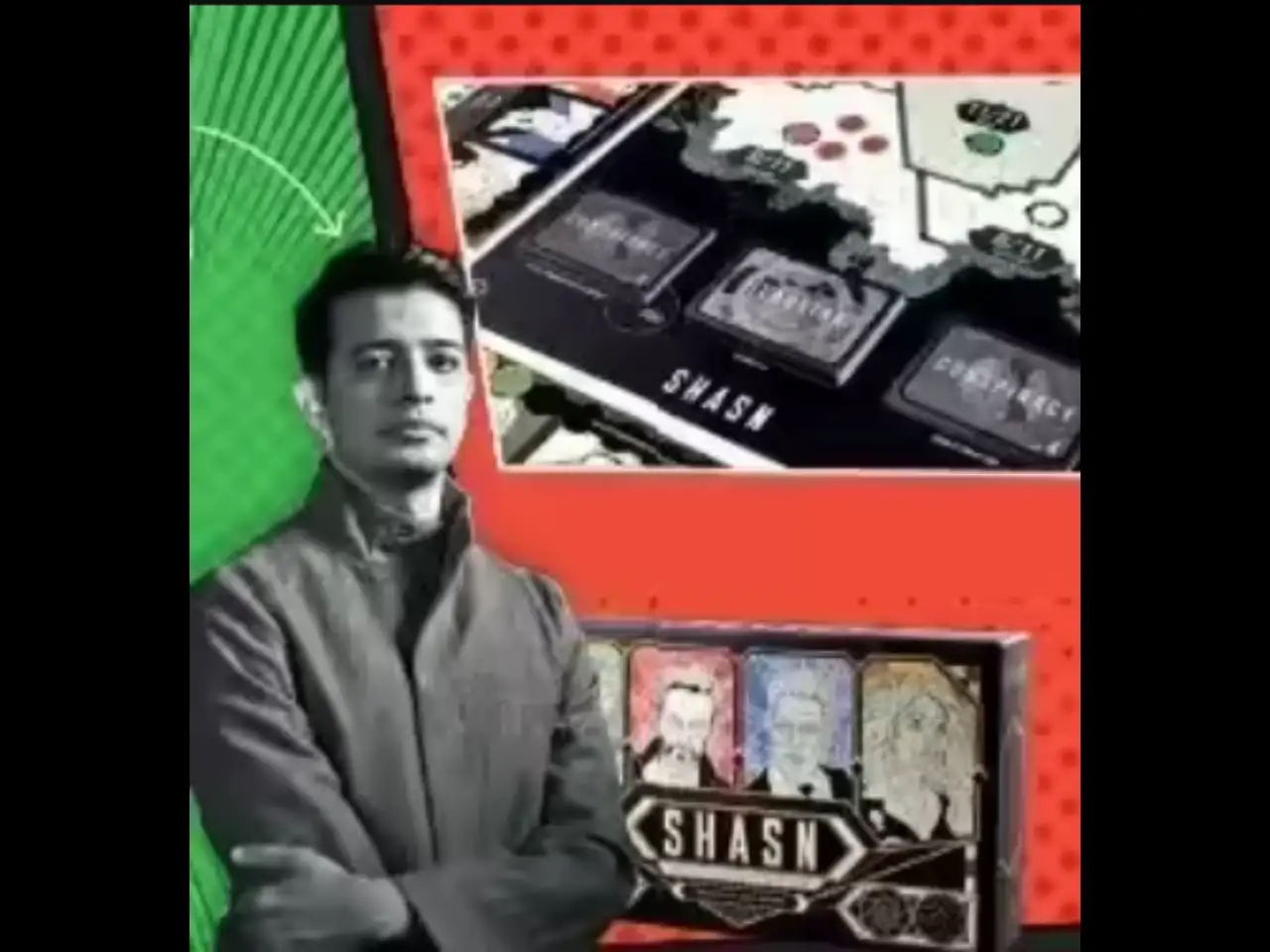
This would please Zain Memon, SHASN’s designer and executive producer of the documentary An Insignificant Man. The game, he says, sets out to answer a question: “How does power behave, and why do good people make the choices they make once they’re inside the machine?” Memon believes a game can do something no film can: it makes you complicit.
Also Read: Crude surge lifts toy prices ahead of summer rush
Launched in 2019, SHASN has sold 30,000 units in India, has two print runs a year, each larger than the last, and is available in over 75 countries.
Says Memon: “It turns out the discomfort is universal, even when the politics is specifically Indian.” In India, he notes, it has become a gateway game—often the first Indian board game someone picks up. Saha says she enjoyed the cultural context.
The number of gamers like Saha is growing rapidly. Phalgun Polepalli, who co-founded Mozaic Games with his wife Shwetha Badarinath in 2018 to create culturally rooted Indian board games, says the tabletop gaming industry saw demand surge by nearly 800% post-Covid. Mozaic’s internal study estimates the Indian tabletop market at $50–70 million in 2024. It is projected to reach $90–120 million by 2030, growing at a CAGR of 8–10%.
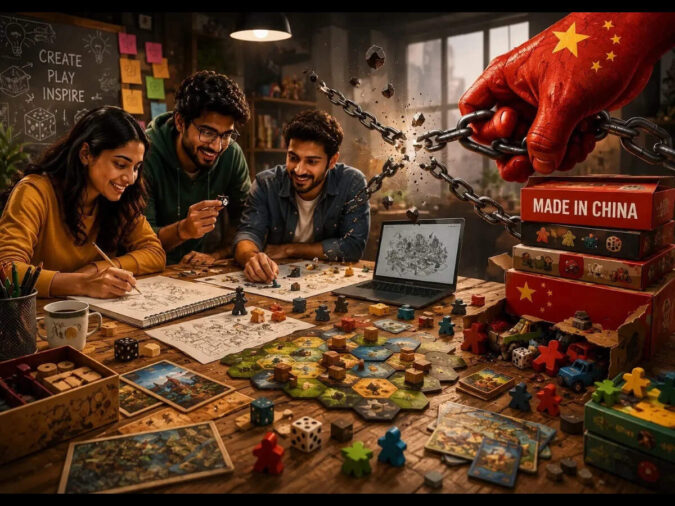
The ecosystem has dramatically shifted over the past few years—but there are obstacle courses. While Indian board games have the art and the heart in the right place, is it getting enough money to play big? Can it beat the flashy cars, the lure of Lego and cheap toys made in China?
Play time
Even though India is decades behind markets like the US, Japan and Germany in board game adoption, Memon says the ecosystem has matured since he started in 2019: “Back then, there was no audience, no infrastructure, nothing to plug into.” Today, he says, designers are creating exciting work, cafés are building communities around games, and more international titles are arriving. “The market is growing on the back of upwardly mobile young Indians who are actively hunting for new experiences.”
Digital fatigue has accelerated the category. Mozaic’s annual board game expo, GAMX, and its biannual tabletop convention, TTOX, in Bengaluru have seen participation rise from a few hundred people to 2,500 visitors over three days. For Polepalli, a bigger opportunity lies in Indian narratives finding confidence in themselves. “We are sitting on a goldmine of stories—history, mythology, architecture, food, traditions, classical music,” he says. “For the longest time, Western designers were making games on India using the usual stereotypes. Indian creators are now reclaiming those stories with authenticity.”
Also Read: Indian toy brand Legend of Toys raises Rs 21 crore in Pre-Series A round
And everyone has a story to share. Mozaic Games’ bestsellers include Uninvited Guests at a Wedding, Vallamkali and Chai Garam. Chittam makes culturally rooted games for ages 2–16, including Samvidhan, a trivia game on the Constitution.
Meanwhile, Ladakh-based communications designer Varun Manoharan has turned his years in Leh into a board game, A World Above the Cloud. “We are trying to preserve cultural memory through games. Toys and board games can introduce younger people to traditions and ways of life that may otherwise disappear.”
In Chennai, Girin Nayak gave up his job in the auto industry to design board games. His idea of a travel-based game didn’t fly, but Athangudi—inspired by Chettinad tiles—found its niche. His company XOtoXO Games has since launched Masala Lab, based on a book by food writer Krish Ashok. Nayak says, “While the segment is buzzing, it’s still a cottage industry—usually one or two people building games together or small family-run cafés investing in the ecosystem. To become a classic industry, big money needs to come into gaming.” He is optimistic: “One thing is clear: Indian themes are becoming a strong way for designers to differentiate themselves.”
Desi toy story
The India-first impulse is driving a parallel boom in culturally rooted toys. Suhas Ramegowda and Sunita Suhas of The Good Doll moved to the Nilgiris in 2018 to live off the grid. While working with local communities, they started upskilling them to make quilts and home décor items, including a newborn basket with a rag doll that took off. In 2025, they launched the doll Nilah, which became popular as parents latched on to the idea of an “Indian Barbie”. From 70 lakh in revenue from just the dolls in FY2024, The Good Doll mopped up 2.3 crore in FY2026 and is looking at `10 crore this year, thanks to Nilah.
Suhas Ramegowda says, “The whole toy industry is evolving. Earlier, nearly 75% of toys came from China, but regulations like the Bureau of Indian Standards (BIS) certification and the larger ‘Made in India, for India’ push have made the ecosystem more conducive for brands like ours. But we are still scratching the surface. It’s highly unorganised and in many ways we are creating this category as we go along.” The challenge is not just selling a doll but building an entire universe around their hero product Nilah. The strategy seems to be working, with the brand seeing 50% return customers.
Money games
Charanya Kumar, who founded Chittam, has the backing of Sun Icon Ventures and two angel investors, but she says most brands don’t. “Parents today understand the need to educate children about their roots and the ill effects of screens. They are driving demand. The real challenge is funding,” she says. “This is still seen as a niche category and investors are hesitant because they are not convinced about non-digital businesses.”
Meanwhile, brands like Coimbatore-based Maniams prefer to stay niche. Founder Kanaka Ananth, an architect-turned-NID-trained toy designer, crafts toys inspired by Indian culture in solid wood. “Handmade products are difficult to scale and educating customers about why handcrafted solid-wood toys cost more than mass-produced products is a challenge,” she says. “But we are okay growing like a boutique brand as customers are willing to invest in good-quality toys.” Her products retail at Rs 1,400–2,000.
For Fairkraft Creations, which works with the Channapatna toy cluster in Karnataka, the challenge lies in making artisanal products go mainstream. Dr Ashwin Mahesh, founder of LVBL, an accelerator for sustainable products and services that works with Fairkraft, says, “We cannot expect people to embrace these products just because they are traditional or artisanal. The buyer buys for reasons like design, colour, price, customer experience, etc. We must compete on those metrics, and not expect empathy-buying.” The aim is to compete with mainstream choices. “We need to get to a point where buying such products is not an alternative, but the default.” What’s needed is a wider product range. “New products can lead to new channels.”
While India drives interest through narratives and craft, Polepalli says game entrepreneurs face major hurdles. “We are still solving the basics—awareness, discovery and distribution. Board games are experiential products, but there are very few distribution channels, which is why we started conventions like TTOX and GAMX and even began converting cafés into retail spaces.” He adds that BIS certification norms, though useful in keeping Chinese goods out, are expensive for startups. Also, the Indian consumer behaves differently from global gamers. “They want games with more players and shorter rulebooks. This has forced us to rethink our product strategy.”
Founders say the rise of desi games and toys is fuelled by consumers seeking alternatives to a globalised play culture dominated by Western references. Bengaluru-based Gubbachhi founders Abhijith and Pallavi Shetty make India-inspired puzzles and wooden toys for children aged 0–8 years, after getting interested in the segment as young parents themselves.
The folks are in
Parents are playing along. Harsimran Kaur Kapoor, a parenting coach, picked handmade wooden toys for her baby daughter. Architect Brunda Ganesh picks Channapatna toys and Indian rag dolls for daughters aged 8 and 10 years. Bhavica Appachu, child nutrition facilitator, only gave her baby Channapatna toys: “They felt safe, simple and not overstimulating.”
Raminder Kaur, national marketing manager of Sasha, which works with artisans primarily in West Bengal, says simplicity is making a comeback. For small brands, the challenge is to merge contemporary designs with traditional skills. Kaur says they have managed to crack the code, but what’s also heartening is that parents are seeking change. “Today’s trendy toys have a very short life cycle and parents are responding to toys that align playtime with environmental and social values.”
Says Abhijith: “We are fighting the Legos of the world, which have seemingly endless portfolios and massive visibility. On Amazon, there’s a deluge of cheap, imported toys. Brands like ours are competing not just on creativity but also against scale, pricing and supply-chain challenges.” Still, there are encouraging signs. Gubbachhi has seen a 70% topline growth in the last six months and a 50% jump in monthly repeat rate. “Customer and investor interest is there but there is still a long way to go.” Gubbachhi has raised a pre-seed. But what concerns Shetty most is marketing costs going up by 2–4x compared with the early days of D2C.
Last year, Mozaic’s informal industry report predicted India could become a manufacturing and consumption powerhouse for tabletop gaming if it addresses issues in manufacturing, retail discovery, safety certifications and consumer education. Distribution is a major hurdle, says Sunil Jalihal of Indic Inspirations: “You should be able to find these products easily at airports, museums and cultural centres across India, the way you do abroad.”
As Kumar of Chittam says, parents are ready, the child is game and teachers are willing: “The challenge is creating long-term support for entrepreneurs.” The board is set, but the dice is yet to roll in their favour.
SHASN
Founder:
Zain Memon, Mumbai. Its OG strategy board game has sold over 30,000 units in India
Known for:
SHASN, SHASN: Azadi | Rs 3,500–15,000
“The market is growing fast on the back of upwardly mobile young Indians who are actively hunting for new experiences. That’s the shift,” Zain Memon
The Good Doll
Founders:
Suhas Ramegowda & Sunita Suhas, Udhagamandalam, Tamil Nadu. It is looking at Rs 10 crore in revenue this year
Known for:
Nilah: Rs 1,250; Younger Siblings: Rs 650. “Parents are conscious about what children are playing with and its impact on their mind,” — Suhas Ramegowda
XOtoXO Games
Founder:
Girin Nayak, Chennai
Its big hit is Athangudi, a game rooted in handmade tiles of Chettinad
Known for: Athangudi and Masala Lab | Rs 1,899–2,399
“To develop the next classic game, big money needs to come into the gaming industry,” — Girin Nayak
Mozaic Games
Founders:
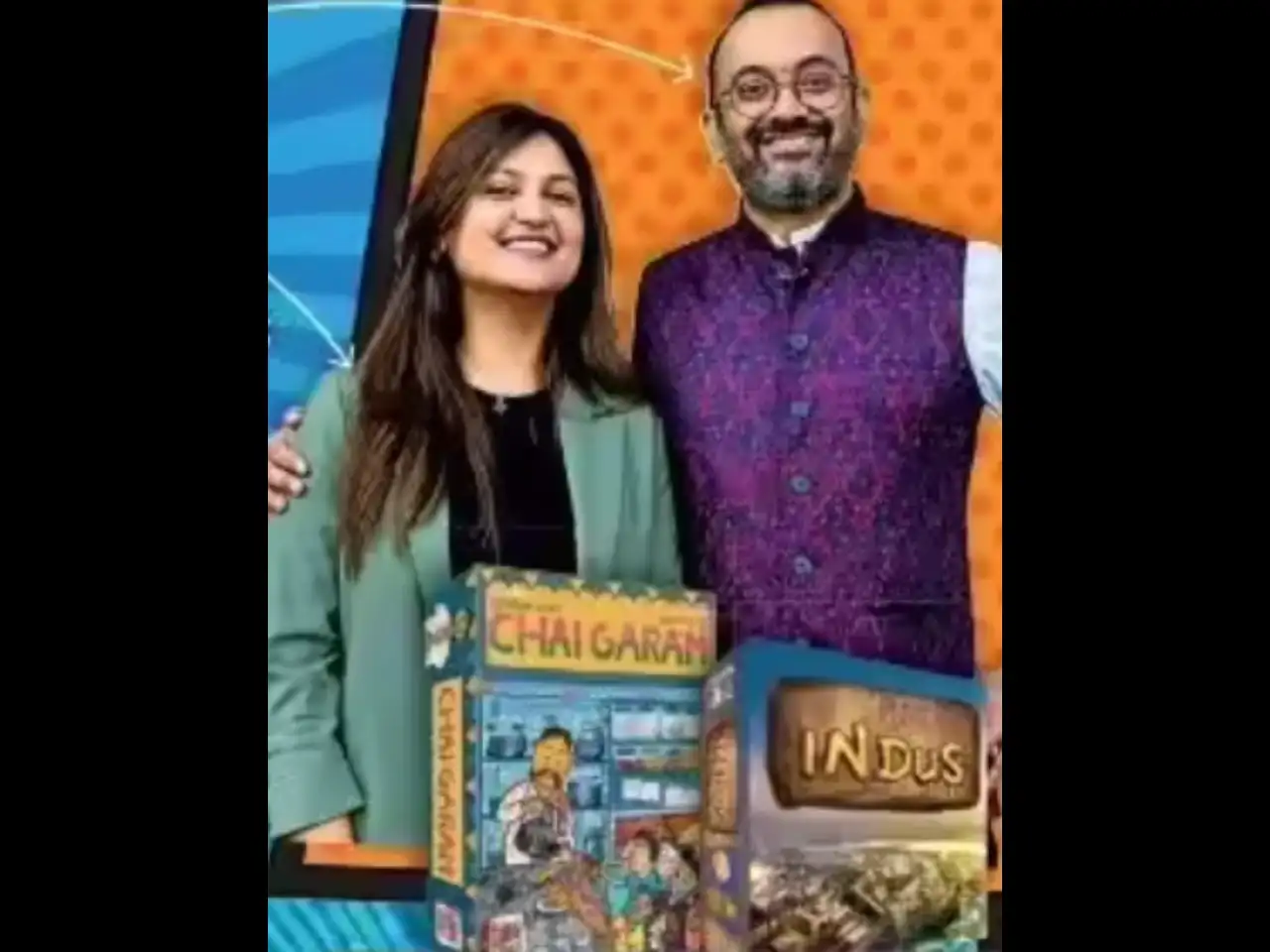
Phalgun Polepalli undefined holds board game expo GAMX and tabletop games convention TTOX
Known for: Chai Garam, Uninvited Guests, Vallamkali | Rs 799–4,000
“History, mythology, tradition, culture—any aspect of India is ripe to be made into a game. The next evergreen game can be Indian,” — Phalgun Polepalli
Gubbachhi
Founders:
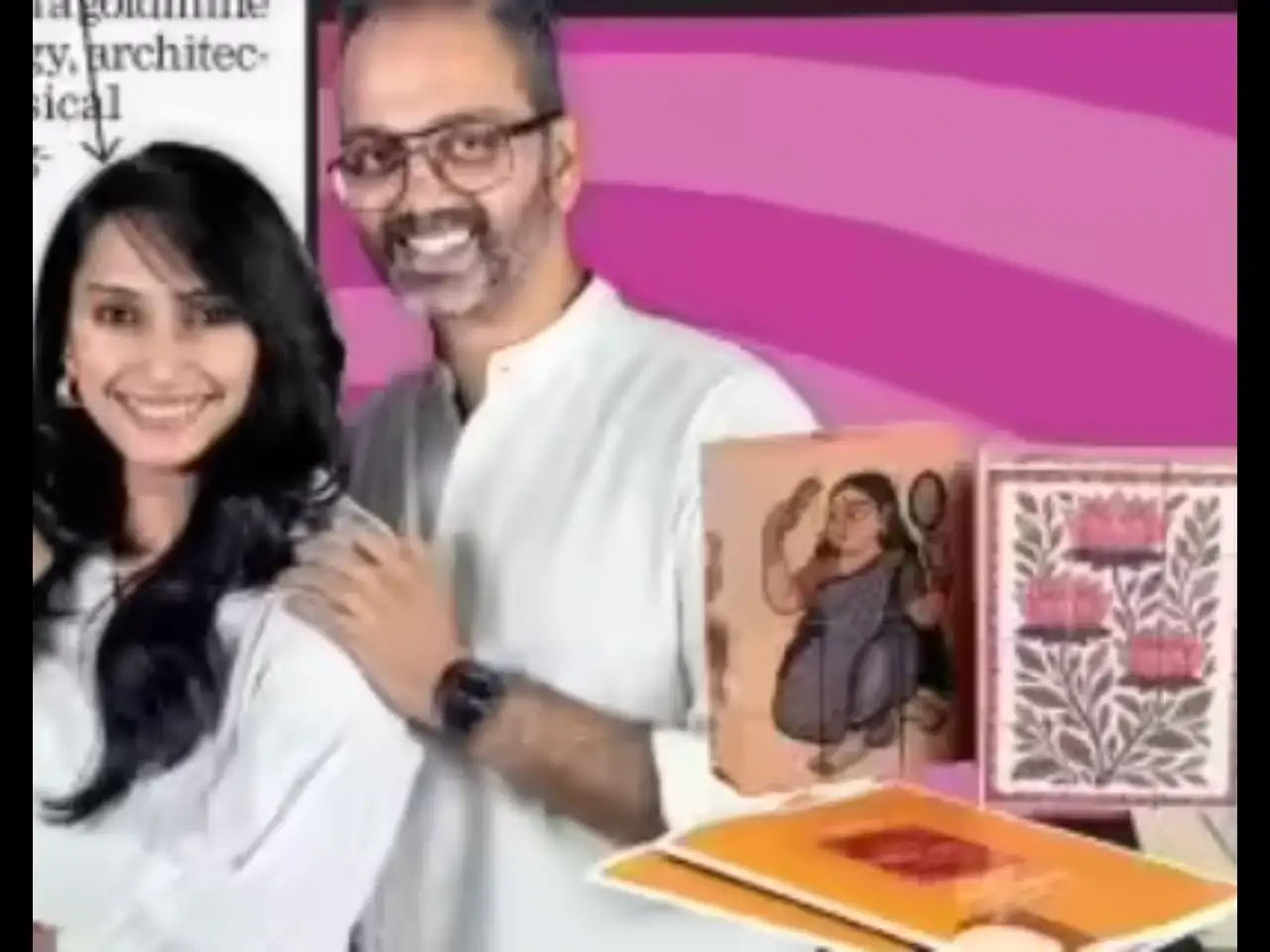
Abhijith Shetty & Pallavi Shetty, Bengaluru. Gubbachhi, meaning ‘sparrow’ in Kannada, was created as a gateway to Indian heritage, culture and art for ages 0–8 years
Known for: Folk art puzzle blocks, stamp art kits, wooden animal sets | Rs 399–3,500
“‘India-inspired’ is a great hook for the buyer (parents and grandparents), but the magic lies in making it equally appealing to the end user (the child) as well,” — Abhijith Shetty
 Agencies
Chittam
Founder:
Charanya Kumar, Chennai. Games rooted in Indian culture, philosophy and spirituality for kids aged 2–16 years
Known for: Bhojan Express, Samvidhan | Rs 500–3,500
“Demand is not the problem. Funding is. Investors are still hesitant because this is not digital.”