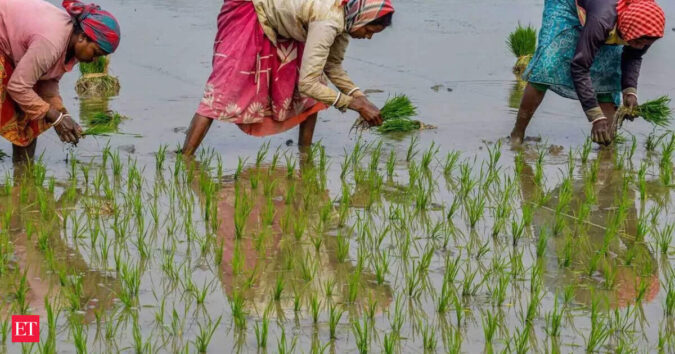
It has directed states to prepare district-wise crop strategies, and promote short-duration crops such as pulses, certain millets and vegetables during the kharif season because they require less water, mature quickly and help mitigate the vagaries of weather, said officials.
Also Read:‘India needs to raise food grains production to 450 million tonnes by 2047’
The India Meteorological Department has projected monsoon rainfall at around 92% of the long-term average and warned that there is a 35% probability of drought-like conditions due to the emergence of El Nino, a climate pattern associated with a weak monsoon and lower agricultural output.
In some districts, where the effect of El Nino is expected to be more pronounced, the government is distributing drought-resistant varieties of seeds, said a senior official aware of the matter.
Unlike regular preparations for the kharif season, this year the stress is on weather monitoring and types of seeds being distributed, the official said, adding that the ministry is working in mission mode to provide timely advice, resources and alternatives to farmers through area-specific and crop-specific strategies.
Also Read: El Nino spells trouble for kharif harvests across India

Weather Advisories
The kharif season begins with planting of key crops such as paddy, pulses, oilseeds, sugarcane and cotton across the country in June and July, and culminates in harvesting in September and October. The preparations coincide with mounting concerns over soaring fertiliser prices, driven by global supply chain disruptions stemming from tensions around the Strait of Hormuz amid the Iran war. The government has also issued region-specific sowing and weather advisories to increase awareness among farmers in a challenging year to avoid crop failures from erratic weather and minimise economic losses through targeted, localised measures.
The ministry has also directed state agriculture departments to monitor irrigation and reservoir levels closely in a bid to counter the impact of El Nino.
Union agriculture and farmers’ welfare minister Shivraj Singh Chouhan had last month directed officials, at a meeting to evaluate the status of the agriculture sector and preparations for the upcoming kharif season, to develop “action plans to cope with potential adverse weather conditions”.
The minister also directed officials to ensure availability of seeds, fertilisers and other essential agricultural inputs, alternative crop options, delayed sowing strategies and promotion of drought-tolerant varieties, so that farmers receive practical and prompt solutions.
According to a study by a group of farm scientists from an Indian Council of Agricultural Research-affiliated institution, output of key kharif crops dips more than 10% in many districts during the El Nino years, necessitating remedial measures by the government.