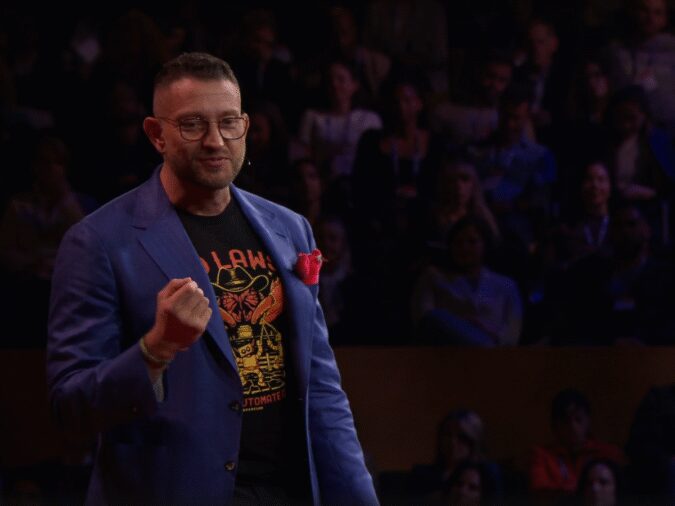
Steinberger said the release of OpenClaw followed a prolonged period of uncertainty marked by travel and even relocation to two countries. That phase ultimately set the stage for a breakthrough in early 2025, when he began experimenting with coding agents. “For three years, nothing clicked. No reason to be out of bed,” he said.
In that moment, he realised that large parts of software development could be automated. AI systems could now handle tasks that once required sustained effort. “Building software felt like playing a video game. I couldn’t stop until I did.,” he said.
“All the boring parts of software, AI could do all of it. The bottleneck is no longer building; it’s syncing. I built 44 projects in a few months,” the founder revealed.
OpenClaw for testing
The turning point came with a simple WhatsApp-based agent that he released into a public online community for open testing.
The system was intentionally left to operate on its own. Within hours, it handled hundreds of interactions. That experiment marked the beginning of what would become OpenClaw, he revealed.
Steinberger framed OpenClaw not as a single application but as an “operating system” for personal AI. These agents can manage communication, automate routine work and act continuously in the background.
Real world impact with OpenClaw
Steinberger said OpenClaw is being adopted not just by engineers but also by entrepreneurs and individuals with no formal programming background. “They’re not programmers. They’re builders.The real transformation is not the technology, it’s the access.”
He pointed to examples of small-scale business automation, where users incrementally assign daily tasks to AI agents. “The next breakthrough can come from anyone,” he added.
The address comes just weeks after Peter Steinberger joined OpenAI and transitioned OpenClaw into a nonprofit, open-source project.
OpenClaw has had a viral rise since it was first introduced in November, receiving more than 100,000 stars on the code repository GitHub and drawing 2 million visitors in a single week, according to a blog post by Steinberger.
Jensen Huang, CEO of Nvidia also hailed the tool this month as “the next ChatGPT“.
Ending the remarks Steinberger said: “The lobster is loose, and it’s not going back into the tank.”